
Back to blog
Wellness
What a Genetic Panel Reveals and How to Use It
7 min read
Ajolote Azul Team
genetic panel
DNA variants
nutrigenetics
pharmacogenetics
genetic predisposition
A laboratory result can change a conversation with your doctor, but it should not dictate your life. Understanding what a genetic panel reveals lets you move from curiosity about DNA to more precise decisions about nutrition, medications, prevention, and clinical follow-up. The difference is in interpreting findings with context: your health history, your symptoms, family history, and habits count as well.
A genetic panel analyzes specific variants in your DNA related to a concrete question. It does not try to "read your whole genome" or predict the future with certainty. It looks for actionable information: how your body processes certain nutrients, what response you might have to particular drugs, or whether there are variants that justify a deeper clinical assessment.
What a genetic panel reveals in practice
DNA contains biological instructions that influence many processes, from enzyme activity to the way we metabolize substances. A panel studies a selection of genes or variants with scientific evidence for a defined goal. Depending on the type of test, the report can reveal predispositions, metabolic capacities, or factors that modify risk.
In personalized nutrition, for example, it can identify variants linked to lipid metabolism, caffeine sensitivity, absorption of certain micronutrients, response to exercise, or a tendency to regain weight. This does not mean a variant forces a person to develop overweight, high cholesterol, or caffeine intolerance. It indicates that, under certain conditions, that person may benefit from a more specific strategy.
In pharmacogenetics, the focus changes. Some genes code for enzymes that activate, transform, or clear medications. A variant can be associated with slow, intermediate, normal, or accelerated metabolism of a given drug. With that information, the doctor can consider alternatives, dose adjustments, or closer monitoring. It is especially relevant for people taking multiple medications, with repeated adverse effects, chronic pain, mental health treatments, cardiovascular disease, or an oncology history.
More complex clinical panels can study genes associated with hereditary diseases. In that setting, a result can guide the need for follow-up studies, early prevention, or evaluation of relatives. Interpretation should be done with special care, ideally with a professional trained in clinical genetics.
Predisposition is not a diagnosis
This is the most important point. Finding a variant related to a condition is not the same as having that condition. Genetics usually changes probabilities; it does not hand down sentences.
A person can carry a variant associated with higher risk and never develop the disease. Another person may not have that variant and still become ill because of age, environment, habits, infections, other genes, or factors the test does not analyze. That is why a panel does not replace clinical studies, preventive checkups, a medical examination, or a professional diagnosis.
The opposite can also happen: a result with no relevant findings does not mean zero risk. It means that, within the genes and variants included in that panel, no known change was detected that clearly explains or raises the risk being evaluated. The quality of a decision depends as much on knowing what was found as on understanding what the test does not cover.
Types of results that can appear
Most genetic reports communicate results in categories that help interpret their usefulness. A result can be informative and applicable to lifestyle, such as a tendency to metabolize caffeine slowly. It can indicate a variant with pharmacogenetic implications, useful for discussing a treatment with your doctor. Or it can point to a clinically relevant finding that warrants confirmation and specialized counseling.
In clinical tests there is also the possibility of a variant of uncertain significance. This happens when a change in the DNA is detected, but current evidence does not make it possible to determine clearly whether it affects health. It should not be interpreted as a diagnosis or as a reason to make definitive medical decisions. Genetic science moves forward and, over time, some of these variants can be reclassified.
A good report does not stop at gene names and technical codes. It translates the finding into concrete questions: what might it mean for you? which habits are worth prioritizing? what should you discuss with your specialist? when is follow-up recommended?
From a genetic data point to a useful decision
The usefulness of a panel begins after you receive the result. For the analysis to become a prevention tool, it helps to integrate three layers: genetics, your current clinical situation, and lifestyle.
If a nutrigenetic panel shows greater sensitivity to certain eating patterns, the response is not a restrictive diet designed by an algorithm. It is building a sustainable plan with food, physical activity, rest, and measurable goals. A person who wants to improve energy and body composition needs different recommendations from someone who wants to manage glucose, cholesterol, or inflammation.
If the result is pharmacogenetic, do not stop, start, or change a medication on your own. Take the report to your treating doctor. Genetics can supply a key piece, but the dose and the treatment choice also depend on the diagnosis, kidney and liver function, age, other drugs, and previous clinical response.
When there is a family history of early cancer, sudden death, very high cholesterol, or another hereditary disease, a wellness panel does not replace a clinical genetic evaluation. In those cases, the right question is not only which test to buy, but which study responsibly answers your family's history.
What to look for before choosing a test
Not every panel has the same purpose, methodology, or level of support. Before you give a sample, check that the test clearly explains what it analyzes, who it is indicated for, and what kind of decisions it can support.
How the sample is processed matters too. Targeted genotyping analyzes specific variants previously selected for their relevance, while sequencing can study broader regions depending on the clinical goal. No methodology is automatically better: the choice depends on the question you are trying to answer. For nutrition and pharmacogenetics, a targeted, validated panel can be very efficient; for complex hereditary suspicions, a different scope may be required.
Look for support from certified laboratories, quality controls, and an explicit genetic privacy policy. Your DNA is sensitive information. You should know how the data are protected, who can access them, and whether the sample is kept or destroyed after analysis.
Finally, consider the interpretation. Receiving a PDF of variants with no explanation can create anxiety or lead to wrong conclusions. At Ajolote Azul, the model combines buccal swab sample collection, variant analysis, and a specialized consultation to turn the results into practical decisions. That conversation is as valuable as the data point: it turns complex information into a plan you can sustain.
A test for each goal
A healthy person who wants to optimize sports recovery, satiety, or energy may benefit from a nutrigenetic panel oriented to habits. Someone who has had side effects, little response to a treatment, or who takes several medications may find more value in pharmacogenetics. And someone with concerning symptoms or a significant family history should start with a medical visit to define whether they need a clinical panel and genetic counseling.
This is not about doing more tests, but about choosing the one that answers a useful question. A well-indicated genetic panel helps you prioritize: which conversation to have with your doctor, which biomarkers to watch, which habit to adjust first, and when it makes sense to broaden the workup.
Your DNA is not a verdict. It is a source of personal information that, interpreted with rigor and professional support, can help you act with more clarity years before a problem appears.
A
Ajolote Azul Team
Specialist in wellness, nutrition and holistic health. Passionate about sharing science-based knowledge to improve quality of life.
Keep Reading
Related Articles
Discover more content on this topic that might interest you
Wellness
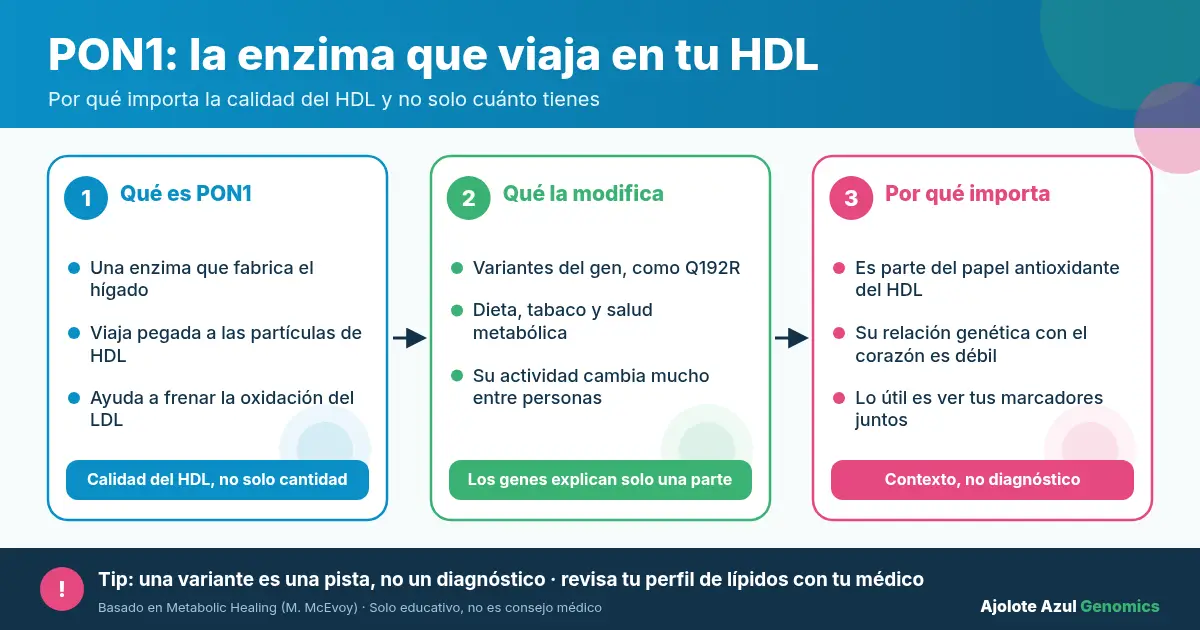
PON1 Gene: Function, HDL, and the Q192R Variant
What does the PON1 gene do? How it relates to paraoxonase, HDL cholesterol, and the Q192R variant—what the evidence shows and its limits.
7 min readRead more
Wellness
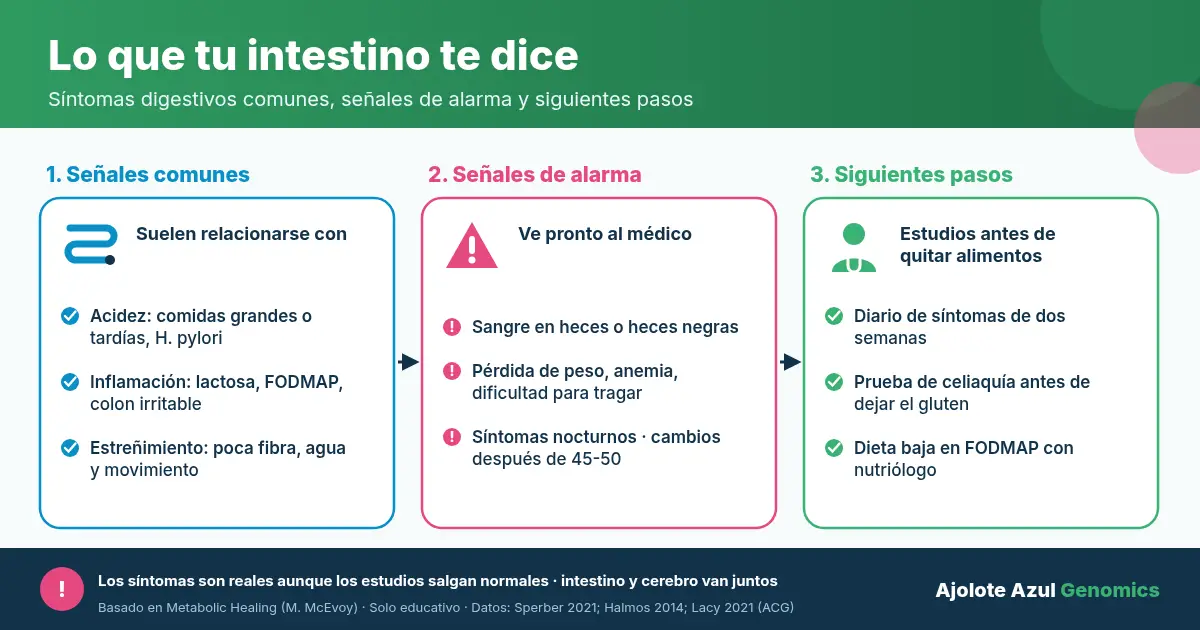
Digestive Symptoms: What Your Gut Is Telling You
Bloating, heartburn, or constipation can have several causes. Learn the warning signs and how a genetic test looks at lactose, gluten, and B12.
8 min readRead more
Wellness
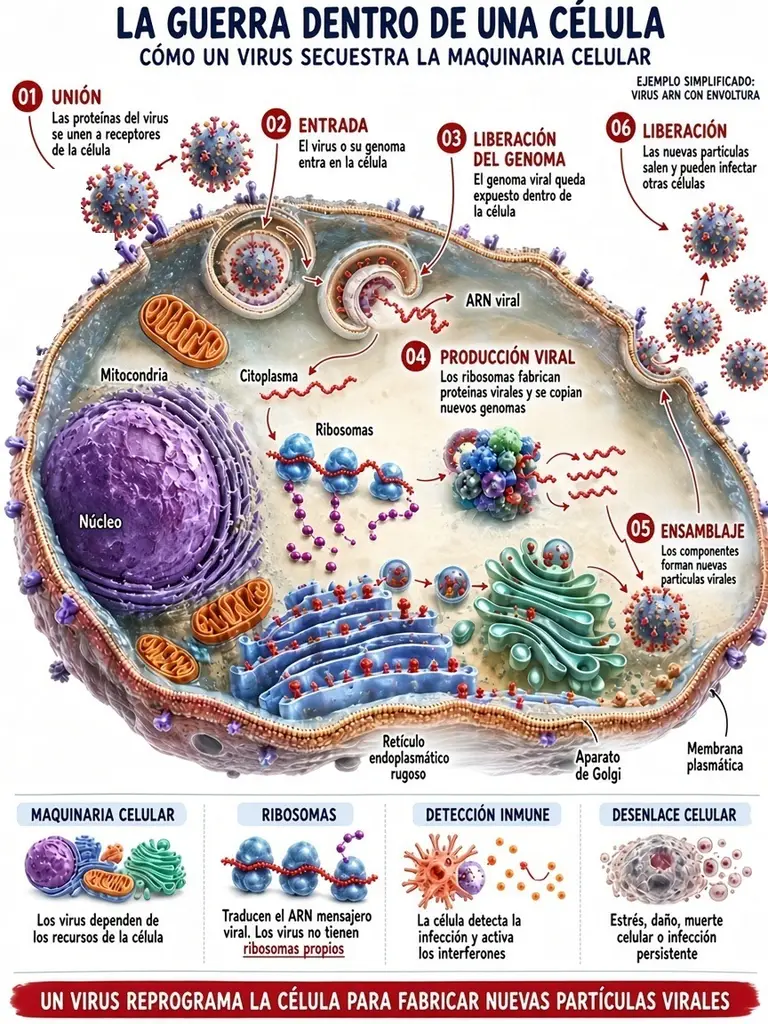
How a Virus Infects a Cell and How the Body Defends
Step by step: how a virus hijacks a cell to multiply, and the defenses your body uses—interferons, sensors, and apoptosis.
5 min readRead more
Did you like this article?
Discover how you can optimize your health with a personalized nutrigenetic test