
Back to blog
Wellness
Commercial clinical genetics to decide better
7 min read
Ajolote Azul Team
commercial clinical genetics
genetic testing
nutrigenetics
pharmacogenetics
genetic privacy
CLIA CAP
An adverse reaction to a medication, a persistent difficulty controlling weight, or a family history of cancer is not solved by a generic answer. Commercial clinical genetics opens the possibility of learning relevant DNA variants and turning them into a more precise conversation with health professionals. The difference is that the result should not stay a digital curiosity: it should help you make responsible decisions about prevention, nutrition, or treatment.
Not every genetic study pursues the same goal or needs the same level of support. A wellness test can guide everyday habits; a pharmacogenetic test can provide useful information for discussing treatment adjustments with the doctor; and a more complex clinical study can require genetic counseling, diagnostic confirmation, and specialized follow-up. Choosing well starts by understanding that difference.
What commercial clinical genetics means
Commercial clinical genetics brings together genetic tests that can be ordered directly, but that analyze information with possible applications in health. It is a model that brings genomics closer to more people through kits sent to the home, noninvasive sample collection, and digital reports. Being accessible, though, does not mean it should be treated like any other consumer product.
Clinical value depends on three elements: which variants are studied, how solid the available evidence is, and who interprets the findings in the context of the person. A genetic variant does not exist in isolation. Its impact can change with age, family history, diagnosis, current medications, lifestyle, and the results of other studies.
That is why the best commercial genetics does not promise to predict the future, and it does not diagnose by itself. It delivers information to reduce uncertainty, ask more specific questions, and act earlier when there is a real opportunity for prevention or personalization.
From a saliva sample to a useful decision
The process usually starts with a cheek-swab kit sent to your home. Collecting the sample is simple: you rub the inside of the cheek following the instructions, you protect the sample, and you send it to the laboratory. From there, the method matters.
In targeted tests, the laboratory analyzes specific variants related to defined goals. Targeted genotyping on platforms such as Agena/Sequenom MassARRAY makes it possible to review concrete markers with high efficiency. In other cases, especially when there is clinical suspicion or a complex history, broader sequencing may be appropriate. There is no universally superior technique: the right one depends on the question you are trying to answer.
A responsible report should explain what was analyzed, what each finding means, and what its limits are. It should also distinguish between associations that guide a preventive strategy and variants with clinical relevance that warrant medical evaluation. That clarity avoids two common mistakes: ignoring relevant information, or becoming alarmed by results that are not deterministic.
Nutrition: personalize without falling into determinism
Nutrigenetics studies variants associated with processes such as lipid metabolism, sensitivity to certain nutrients, response to caffeine, folate handling, or predisposition to metabolic patterns. It can be a practical tool for someone who has tried multiple diets without finding a sustainable approach.
But a genetic result does not dictate a perfect diet. Genetics influences, yet it does not replace the quality of food, sleep, movement, stress, or existing medical conditions. Its usefulness is in setting priorities: maybe one person benefits from watching a metabolic marker more closely, adjusting their macronutrient distribution, or being more strategic about timing and recovery.
The recommendation makes sense when it becomes a measurable plan, with realistic changes and follow-up. Knowing a predisposition is not a sentence. It is a chance to act years earlier.
Pharmacogenetics: a more informed conversation about medications
Pharmacogenetics analyzes genes that can influence the way the body metabolizes or responds to certain drugs. For people with polypharmacy, mental health treatments, chronic pain, cardiovascular disease, cancer, or other complex conditions, this information can be especially valuable.
Some variants are related to slower or faster metabolism, a lower likelihood of response, or a higher risk of adverse effects with specific medications. The result should not be used to start, stop, or change a dose on your own. It can help the treating doctor evaluate alternatives, extra monitoring, or adjustments backed by clinical guidelines and the patient's full history.
The most concrete benefit is arriving at the visit with better questions. Instead of assuming that a poor response to treatment is due to lack of adherence or bad luck, pharmacogenetics can add one more piece for understanding what is happening.
What a reliable test should offer
The genetics market has grown fast, and that calls for judgment. A visually attractive report is not necessarily a useful test. Before you choose, look for clear signs of quality:
- A method that is explained, with the genes or variants analyzed and the purpose of each panel.
- Processing in laboratories with recognized standards, such as CLIA and CAP certifications when they apply.
- Professional interpretation that translates findings into possible actions and clinical limits.
- Explicit protocols for privacy, consent, and handling of genetic data.
- A follow-up path for results that need confirmation or a specialized medical consultation.
It is also worth asking what the test cannot answer. No targeted genotyping test detects every possible variant, and a negative result does not automatically remove a hereditary risk when there is a significant family history. In that situation, a specialist may recommend genetic counseling or a different diagnostic test.
When to choose a wellness test and when to choose a clinical one
A wellness-oriented test can be appropriate if you want to personalize nutrition, exercise, recovery, energy, or preventive habits, without a known hereditary diagnosis. It is an accessible way to move from general recommendations to more individual hypotheses.
A clinical evaluation deserves priority if there is cancer at a young age in the family, several relatives with the same condition, rare diseases, premature cardiovascular events, severe reactions to medications, or symptoms that still have no explanation. In these cases, the question stops being "which diet suits me?" and becomes "is there a risk that needs medical evaluation?"
Sometimes both routes complement each other. A person can use nutrigenetics and pharmacogenetics to sharpen everyday decisions, while their doctor or genetic counselor determines whether the history justifies a broader clinical test. The responsible approach is not to mix up the goals.
Genetic privacy is not an administrative detail
Genetic data are highly sensitive personal information. They can reveal aspects of present or future health and, to some extent, about biological relatives. Before you send a sample, review what data are collected, what they are used for, who has access, how long they are kept, and whether there is separate authorization for research.
Consent should be understandable, not a box hidden among legal terms. The company should also offer clear ways to request information, withdraw consent when that applies, and know what happens to the biological sample. Trust is not built with technology alone: it is built with transparency.
Turn results into an action plan
The most valuable moment comes after the report. An interpretation visit can prioritize findings, correct mistaken readings, and define changes you can actually reach. For someone focused on performance, that can become a recovery and nutrition strategy. For a patient with complex treatments, it can become concrete questions for their doctor. For someone seeking longevity, it can become preventive markers worth monitoring over time.
Ajolote Azul combines nutrition and pharmacogenetic tests with a specialized consultation so genetic information does not stay as percentages or colors inside a platform. The goal is to turn data into decisions that respect your context, your goals, and your health needs.
Your DNA does not replace your decisions, but it can make them better informed. If you are going to learn your genetics, choose a test that gives you evidence, data protection, and a trained person to help you use that information with judgment.
A
Ajolote Azul Team
Specialist in wellness, nutrition and holistic health. Passionate about sharing science-based knowledge to improve quality of life.
Keep Reading
Related Articles
Discover more content on this topic that might interest you
Wellness
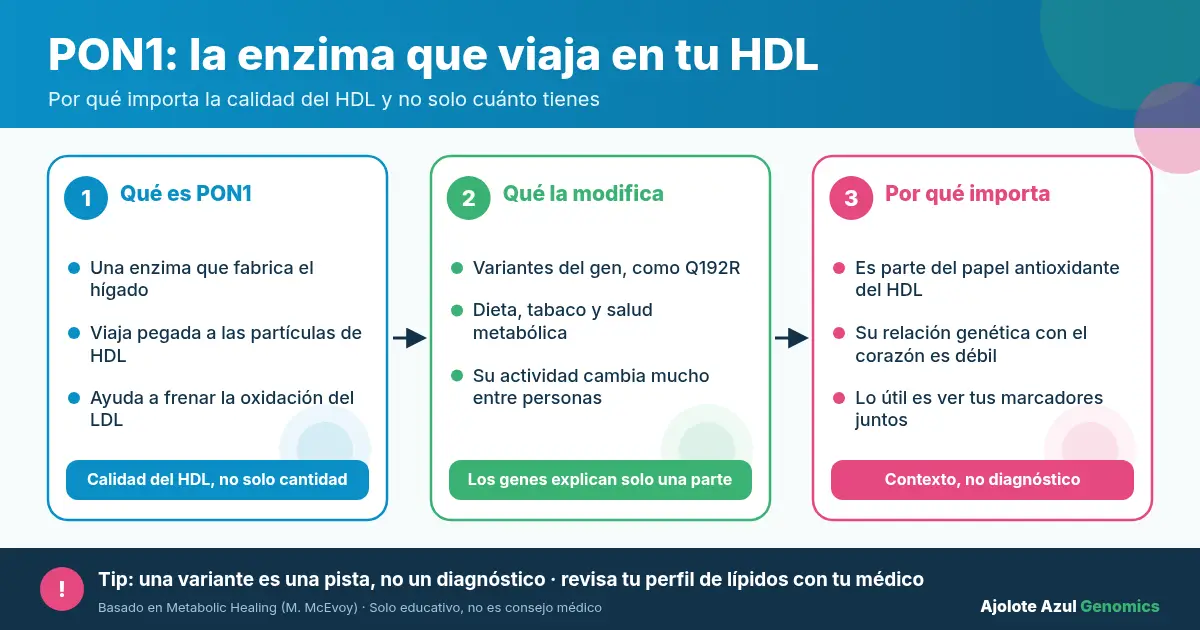
PON1 Gene: Function, HDL, and the Q192R Variant
What does the PON1 gene do? How it relates to paraoxonase, HDL cholesterol, and the Q192R variant—what the evidence shows and its limits.
7 min readRead more
Wellness
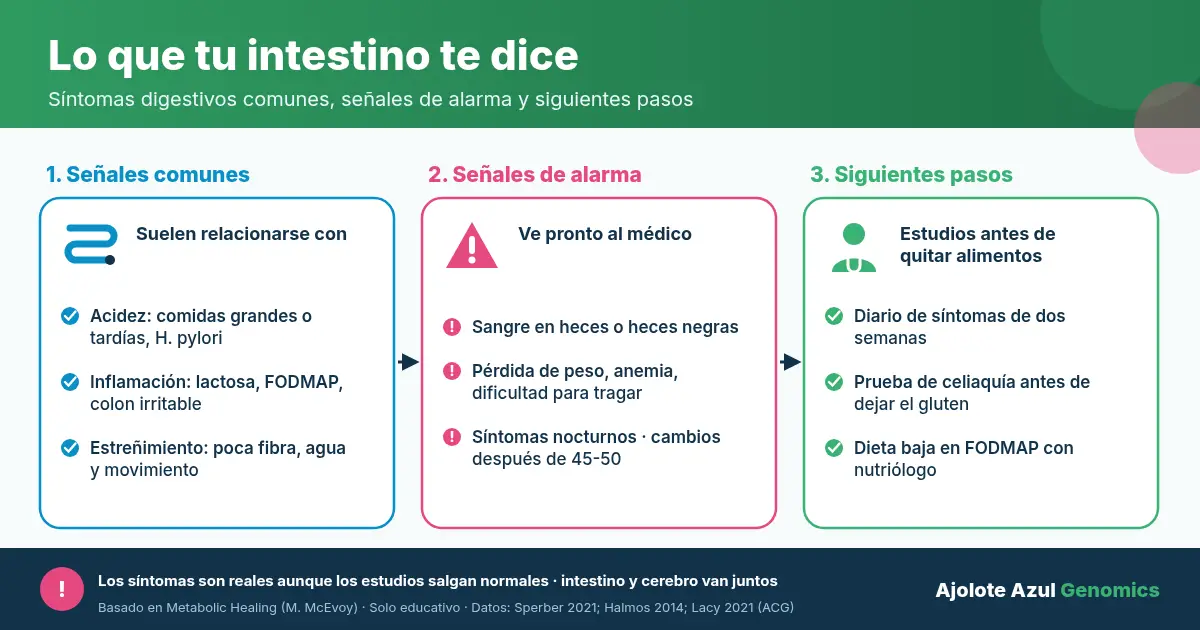
Digestive Symptoms: What Your Gut Is Telling You
Bloating, heartburn, or constipation can have several causes. Learn the warning signs and how a genetic test looks at lactose, gluten, and B12.
8 min readRead more

Wellness
How a Virus Infects a Cell and How the Body Defends
Step by step: how a virus hijacks a cell to multiply, and the defenses your body uses—interferons, sensors, and apoptosis.
5 min readRead more
Did you like this article?
Discover how you can optimize your health with a personalized nutrigenetic test