Back to blog
Reportes genéticos
How to Interpret a Genetic Report?
5 min read
Ajolote Azul Team
genetic report
how to interpret a genetic report
genetic results
nutrigenetics
pharmacogenetics
genetic test
When someone receives their first genetic report, the most common thing we hear is: "I got the PDF… but I don't understand anything." And that's completely normal: at first it looks like a lot of information. But there's good news: reports are designed so anyone can understand them, without needing to be a scientist.
In this guide we explain, step by step, how to read your genetic report simply and practically, what its sections mean and which mistakes to avoid when interpreting it.
Don't have your report yet? Explore Ajolote Azul's genetic tests and discover what your DNA can tell you.
What sections does a genetic report usually include?
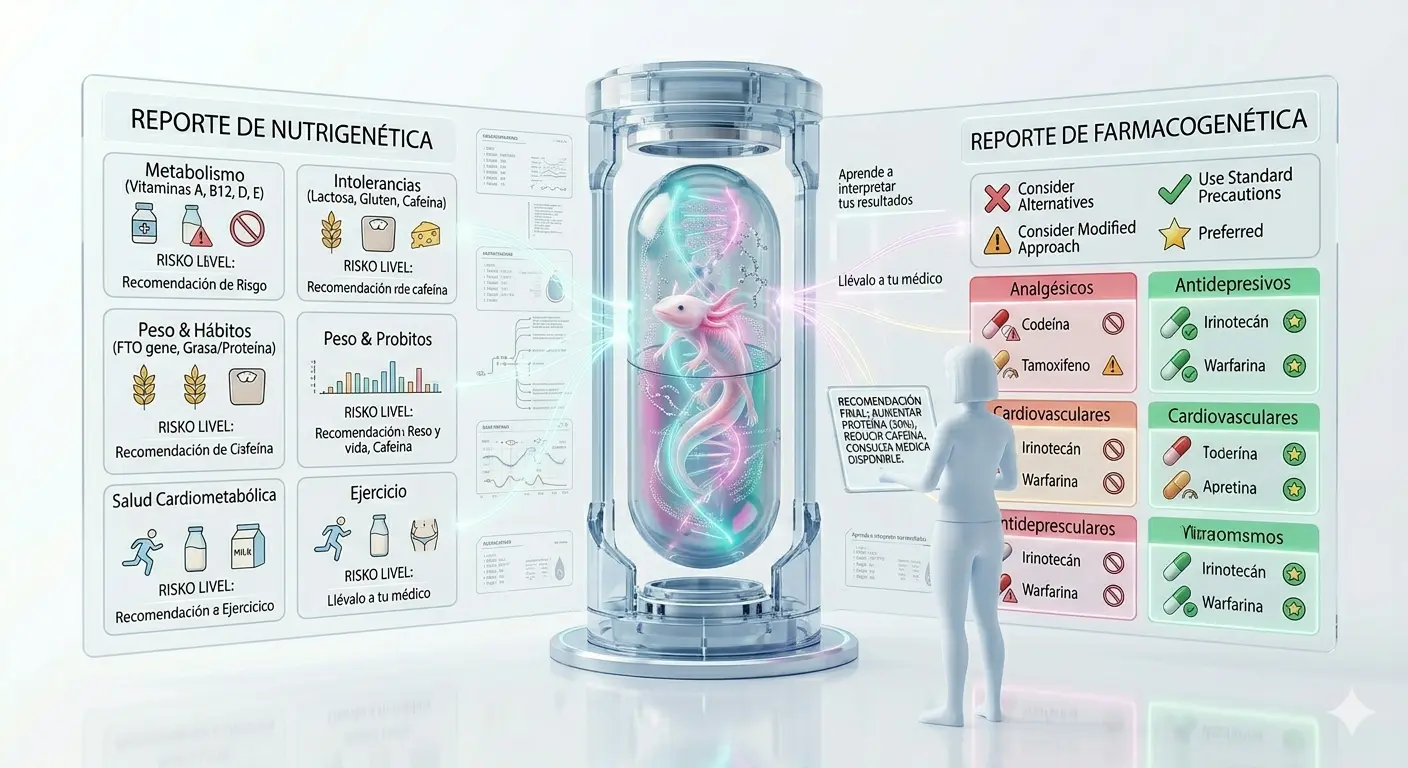
It depends on the type of test, but you'll generally find two main reports. The nutrigenetics one (personalized nutrition) is usually divided into clear sections:
- Nutrient metabolism: vitamins and minerals (A, B12, D, E, folate, calcium, iron…), each with a risk level (Elevated, Typical or Improved) and an exact recommendation.
- Intolerances and sensitivities: your real risk of lactose and gluten intolerance and your caffeine response.
- Cardiometabolic health: caffeine, whole grains, sodium, omega-3 and omega-6, and recommended physical activity.
- Weight and body composition: genes like FTO, how much protein suits you and how you respond to fats.
- Eating habits: likelihood of snacking between meals, sugar preference or fatty-taste sensitivity.
- Exercise physiology: whether you're better at power or endurance and your risk of fatigue or injury.
At the end of each section there's always a clear, actionable recommendation: you don't have to interpret anything complicated, just follow the guidance.
What do variants and findings mean?
A variant (or polymorphism) is a small difference in a gene that influences how your body works. In the report they don't appear as isolated data, but translated into a level and a recommendation. For example, an "Elevated" level in vitamin D doesn't mean a disease: it means it's worth reinforcing that vitamin, and the report tells you how.
The key: a finding indicates a tendency, not a sentence. It guides you on how to work in your body's favor.
How to read risk results and classifications?
The pharmacogenetics report is even more visual. It uses a very easy color system:
| Classification | Color | What it means | | ------------------------------------ | ----------------- | ------------------------------------------------------------------------------------------- | | Consider Alternatives | Red | The drug probably won't work well for you or may cause side effects. Better another option. | | Consider Modified Approach | Orange | It may work, but you might need to adjust the dose or monitor. | | Use Standard Precautions | Green | No significant variants detected: use it normally. | | Use Standard Precautions (Preferred) | Green with a star | Your genes make it work even better than usual. |
It's organized by medication categories (antidepressants, painkillers, anticoagulants, etc.) so it's easy to check when your doctor prescribes something.
Want to understand how you respond to medications? Explore Ajolote Azul's pharmacogenetics test.
Which questions should you resolve with a specialist?
The report is meant to be shared. Bring these questions especially to your doctor or nutritionist:
- How to apply the recommendations to your specific case (medications you already take, prior conditions).
- Suggested dose adjustments in the pharmacogenetics section.
- How to integrate the findings with your usual clinical tests.
- Priorities: where to start based on your health goals.
A few practical tips for reading it:
- Don't read it all at once. Start with what interests you most (weight, or the medications you take).
- Focus on the recommendations, not just the colors or levels.
- Share it with your doctor or nutritionist.
- Remember the context: genetics is one piece; your lifestyle, age and other conditions also matter.
Common mistakes when interpreting a genetic report
Avoid these frequent traps:
- Stopping at the colors or levels without reading the recommendation below.
- Interpreting a risk as a diagnosis. An "Elevated" level is not a disease.
- Making medication decisions on your own. The pharmacogenetic part is applied with your doctor.
- Reading it all at once and feeling overwhelmed, instead of going section by section.
- Ignoring lifestyle, as if genetics explained everything.
The first time Laura opened her report she felt overwhelmed, but reading the recommendations one by one, everything made sense and was easy to apply. The same happened to Carlos with the pharmacogenetics one.
In short: how to get the most out of your genetic report?
A genetic report isn't made to scare you, but to empower you. Read it by sections, focus on the actionable recommendations, share it with your specialist and remember that genetics is a guide, not a destiny.
Did you already receive your report and feel a bit lost, or are you thinking about taking the test and want to know what to expect?
Take your test now with Ajolote Azul or book a consultation if you need help interpreting it. Your genetic information is yours, and it deserves to be understood.
Want to dig deeper? We recommend:
- What can a genetic test reveal?
- What is a genetic test and what can it reveal?
- How long do genetic test results take?
Sources
A
Ajolote Azul Team
Specialist in wellness, nutrition and holistic health. Passionate about sharing science-based knowledge to improve quality of life.
Did you like this article?
Discover how you can optimize your health with a personalized nutrigenetic test