Back to blog
Genetic testing
What Is a Genetic Test and What Can It Reveal?
6 min read
Ajolote Azul Team
genetic test
what is a genetic test
DNA
genetic testing
nutrigenetics
pharmacogenetics
Ever felt like "nothing works for you the way it works for everyone else"? The diet that gave your sister amazing results does nothing for you, or the painkiller that eases your mom's pain in minutes makes you nauseous. It's not that your body is broken: it's simply unique, and that uniqueness is written in your DNA.
A genetic test is the tool that lets you read that personal manual. It's not science fiction or a crystal ball: it's a simple test that analyzes specific variations in your genes to understand how your body processes food, responds to medications, metabolizes vitamins and reacts to exercise. In this guide we explain, in plain language, what it is, what it can reveal and when it's worth taking one.
Want to get straight to the point? Explore Ajolote Azul's genetic tests and discover what your DNA says about you.
What is a genetic test and what is it for?
A genetic test is a laboratory analysis that studies your DNA to identify specific variations in your genes —called polymorphisms or variants— that influence different functions in your body.
Contrary to what many people think, a wellness-focused genetic test does not tell you which diseases you'll develop. It tells you how your body works so you can make better decisions today. It's information that empowers you, not that scares you.
It's mainly useful to:
- Understand how you metabolize nutrients, vitamins and minerals.
- Personalize your diet and your exercise plan.
- Anticipate how you'll respond to certain medications.
- Make prevention and wellbeing decisions based on data, not guesswork.
What exactly does a genetic test analyze?
A health- and wellness-focused genetic test doesn't sequence "all of your DNA": it analyzes specific gene panels that science has linked to particular areas of your life. For example, the Nutrigenomix reports we offer at Ajolote Azul include clear sections such as:
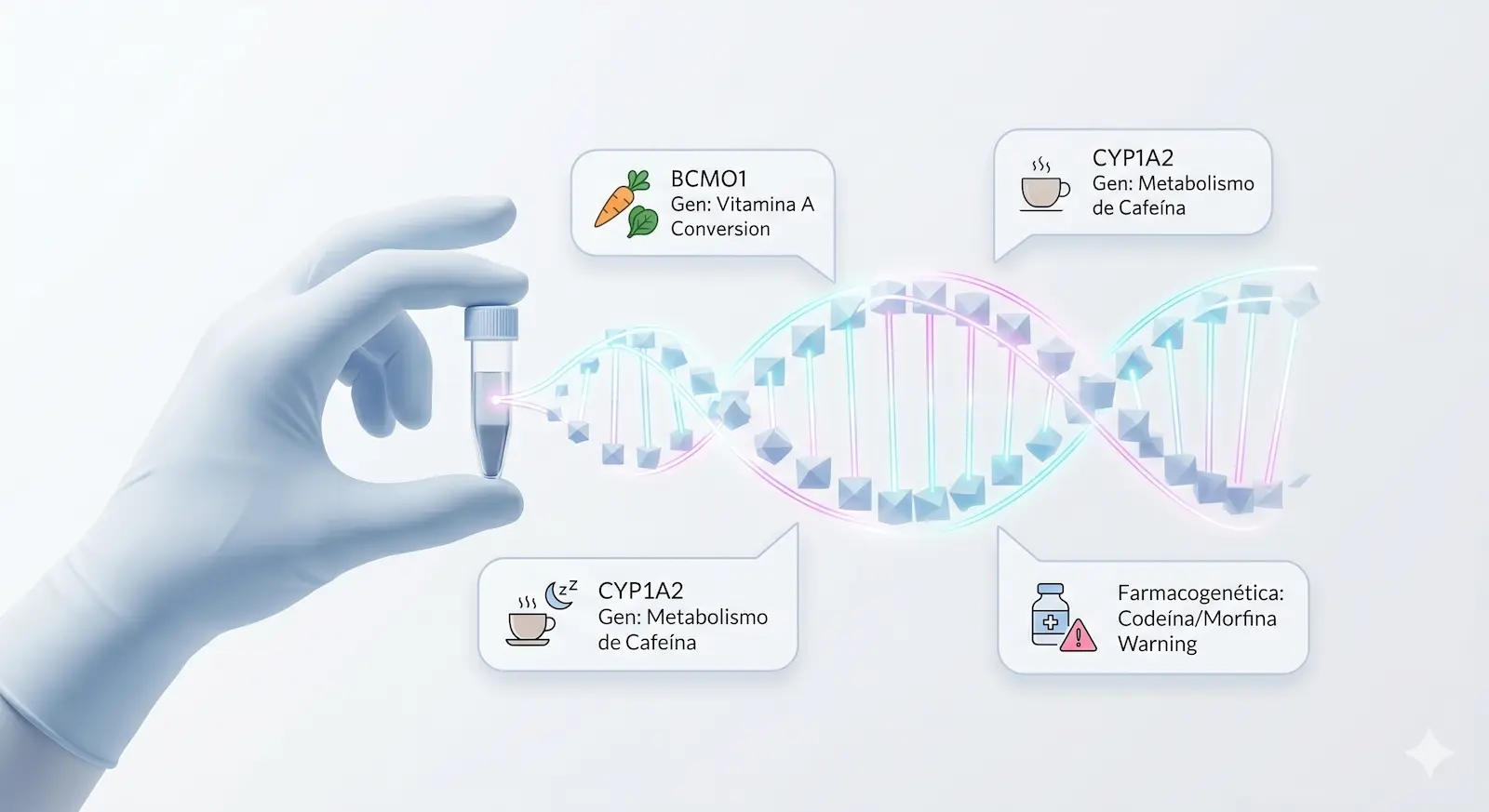
| Area analyzed | Example gene | What it reveals | | ---------------------- | ------------ | ----------------------------------------------------- | | Nutrient metabolism | BCMO1 | Whether you convert beta-carotene into vitamin A well | | Cardiometabolic health | CYP1A2 | Whether you're a slow or fast caffeine metabolizer | | Weight management | FTO | Your genetic tendency toward appetite and fat storage | | Exercise response | ACTN3 | Whether you favor power or endurance | | Medication response | CYP2D6 | How you process certain common drugs |
A real example: if you carry the GG variant in the BCMO1 gene, your body converts the beta-carotene in carrots and spinach into active vitamin A less efficiently. That's why the report gives you something actionable like: "prioritize preformed sources of vitamin A: liver, eggs and dairy."
Interested in the nutrition side? Explore Ajolote Azul's nutrigenetics test and get recommendations made for your DNA.
What kind of sample does a genetic test need?
One of the big advantages is how simple it is. For most wellness genetic tests you only need:
- A saliva sample (the most common and convenient option), or in some cases a blood sample.
- To follow a couple of simple instructions before collecting it (for example, not eating or drinking a few minutes beforehand).
- To send the sample to the lab.
It's fast, painless and can be done from home. Within a few weeks you receive your complete report with actionable recommendations.
What information can a genetic test reveal about your health?
This is where the test shows its full value. A well-designed report translates your variants into concrete recommendations. These are the main areas it can reveal:
- Personalized nutrition: which vitamins you need to reinforce and in what amounts.
- Metabolism: how you respond to caffeine, sodium, fats and carbohydrates.
- Weight and body composition: your predisposition to appetite and fat storage.
- Food tolerances: your real risk of lactose intolerance or gluten sensitivity.
- Exercise: which type of physical activity suits your profile.
- Medication response (pharmacogenetics): which drugs might work best for you and which could cause side effects.
For example, in the pharmacogenetics section you'll see very practical labels like "Consider Alternatives", "Consider Modified Approach" or "Use Standard Precautions". Imagine knowing in advance that codeine could cause you strong side effects because your body converts it into morphine too quickly. That's exactly what the test shows.
Worried about how you react to medications? Explore Ajolote Azul's pharmacogenetics test.
When is a genetic test recommended?
A genetic test can be especially useful if you relate to any of these situations:
- You've tried several diets and "none of them works" the way you expected.
- You feel you eat well but don't see results in energy or weight.
- You have unusual reactions or frequent side effects with medications.
- You're about to start an important treatment and want to be prepared.
- You simply want to make health and prevention decisions based on data.
You don't need to be sick to benefit. In fact, the greatest value lies in prevention and in personalizing your daily routine.
Genetic test vs DNA test: what's the difference?
This is a very common question. Although both analyze your DNA, they're not the same:
| | Traditional DNA test | Health and wellness genetic test | | ------------------- | ------------------------------------------------ | ------------------------------------------------ | | Main goal | Identity, kinship or ancestry | How your body works | | Question it answers | "Who am I related to?" / "Where do I come from?" | "How do I metabolize nutrients and medications?" | | Result | Matches or origin percentages | Actionable recommendations for your health |
In short: a DNA test tells you who you are in relation to others; a wellness genetic test tells you how to make the most of your own biology.
Ready to discover what your DNA can reveal?
A genetic test doesn't label you or predict your future: it hands you a personalized manual of your own body. With it, you stop guessing and start making informed decisions about your nutrition, your exercise and the medications you take.
The best part is you don't need to be a scientist to understand it: reports come with clear recommendations, food lists, supplement amounts and exercise tips based on your profile.
Take your genetic test now with Ajolote Azul or book a consultation if you'd like guidance before you begin. Your future self will thank you.
Want to dig deeper? We recommend continuing with these guides:
- What is nutrigenetics used for?
- What is pharmacogenetics and how does it work?
- What can a genetic test reveal?
Sources
A
Ajolote Azul Team
Specialist in wellness, nutrition and holistic health. Passionate about sharing science-based knowledge to improve quality of life.
Keep Reading
Related Articles
Discover more content on this topic that might interest you

Genetic testing
How Long Do Genetic Test Results Take?
Learn how long genetic test results take, which factors influence delivery time and what to expect at each step of the process.
4 min readRead more

Genetic testing
How Much Does a Genetic Test Cost in Mexico?
Discover which factors influence the cost of a genetic test in Mexico, what the price includes and what to review before choosing an option.
5 min readRead more

Genetic testing
Where to Take a Genetic Test in Mexico?
Learn which aspects to review before taking a genetic test in Mexico and how to choose a reliable, high-quality option based on your health goals.
4 min readRead more
NGx, PGx, or Combo?
Compare pricing and pick the test that fits your health goal.