Back to blog
Estudios genéticos
What Can a Genetic Test Reveal?
5 min read
Ajolote Azul Team
genetic test
what can a genetic test reveal
genetic predispositions
nutrigenetics
pharmacogenetics
DNA test
Have you ever avoided taking a genetic test for fear that it would "tell you you're going to get some disease"? It's one of the most common concerns, and it's worth clearing up right away: a good wellness genetic test does not tell you which diseases you'll develop. It tells you how your body works so you can take better care of it.
A genetic test doesn't analyze all of your DNA: it reviews specific variations (polymorphisms) in a focused, very practical panel. In this guide we explain, without jargon and without fear, what it can actually reveal and what it can't.
Want to know what your DNA says about you? Explore Ajolote Azul's genetic tests.
What genetic predispositions and variants can it show?
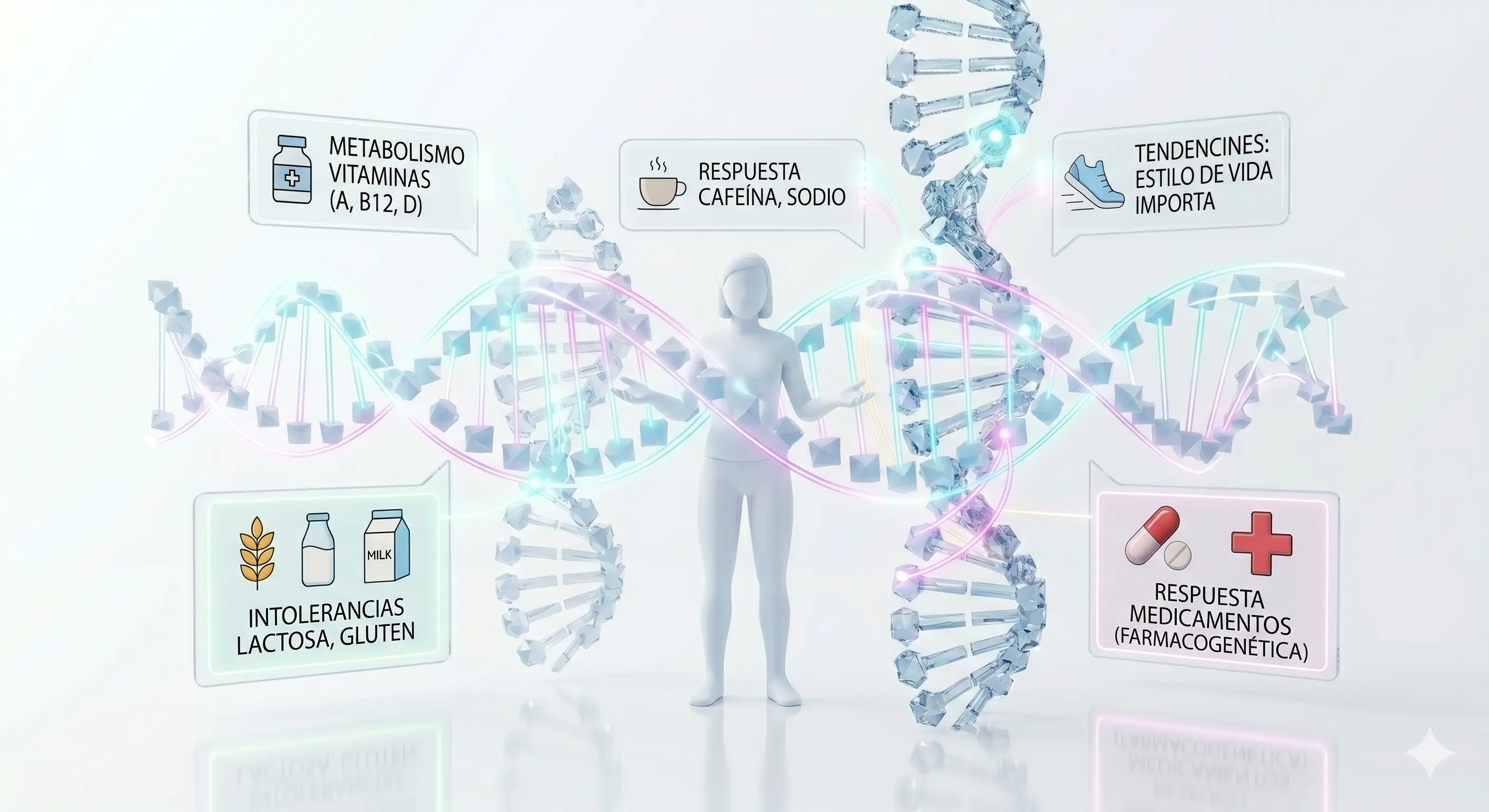
A genetic test identifies variants in your genes that influence specific areas of your life. It doesn't talk about "destinies," but about tendencies you can act on. For example:
- Weight and body composition: genes like FTO and UCP1 indicate your predisposition to feel hungry, store fat or respond better to certain types of exercise. It doesn't tell you "you'll gain weight," but how your body tends to behave and how to work in your favor.
- Response to everyday stimuli: genes like CYP1A2 (caffeine) or ACE (sodium) explain why a single cup of coffee makes you nervous or why certain foods make you bloated.
What does it reveal about nutrition and metabolism?
This is one of the most useful areas in daily life. A genetic test can reveal:
| Area | Example gene | What it tells you | | ---------------------- | ---------------------------- | ------------------------------------------------------------ | | Vitamins and nutrients | BCMO1 | Whether you convert beta-carotene into active vitamin A well | | Intolerances | MCM6 (lactose), HLA (gluten) | Your real risk, without having to guess | | Exercise | ACTN3 | Whether you favor power or endurance |
This way you stop cutting out foods "just in case" and start eating with criteria. For example, with the GG variant in BCMO1, the report recommends prioritizing preformed sources of vitamin A (liver, eggs, dairy).
Want to optimize your nutrition? Explore Ajolote Azul's nutrigenetics test.
What does a genetic test reveal about your response to medications?
This is where a genetic test can add tremendous value. The pharmacogenetics section tells you which medications might work best for you, which could cause side effects and for which it would be wise to adjust the dose.
Some real examples that appear in the report are: codeine, tamoxifen, irinotecan, clopidogrel, warfarin and more than 190 additional drugs. Knowing this in advance lets you make better decisions together with your doctor and avoid the classic "trial and error."
Worried about medications? Explore Ajolote Azul's pharmacogenetics test.
What are the limitations of a genetic test?
To use this tool well, it's key to understand what it doesn't do. A wellness genetic test:
- Doesn't predict diseases with certainty: genetics is only one part; your lifestyle matters a great deal.
- Doesn't tell you when you'll get sick.
- Doesn't replace your doctor or traditional clinical tests.
What it does give you is powerful information to make better decisions today. It's a complement, not a substitute, for medical care.
How do you interpret the results of a genetic test?
The good news is you don't need to be a scientist. Reports are designed so anyone can understand them and act:
- Read the actionable recommendations, not just the gene names.
- Prioritize small, sustainable changes (adjusting a vitamin, shifting your coffee timing, choosing a type of exercise).
- Share the report with your doctor or nutritionist, especially the pharmacogenetics section.
- Remember the context: a variant indicates a tendency, not a sentence.
When someone receives their report and discovers, for example, that they need more protein than they thought or why a certain medication failed them, they usually feel the same: relief and empowerment.
In short: what can a genetic test reveal about you?
A genetic test doesn't label you or guess your future: it takes the blindfold off and hands you a personalized map of your own body. It shows you how you metabolize nutrients, how you respond to exercise and medications, and which small changes can make a big difference.
Would you rather keep guessing, or do you want to truly know how your body works?
Take your genetic test now with Ajolote Azul —nutrigenetics, pharmacogenetics or both— or book a consultation. Within a few weeks you'll have a clear, easy-to-understand report full of practical recommendations. Your body has its own manual: it's time to read it.
Want to dig deeper? Continue with these guides:
- What is a genetic test and what can it reveal?
- What is nutrigenetics used for?
- What is pharmacogenetics and how does it work?
Sources
A
Ajolote Azul Team
Specialist in wellness, nutrition and holistic health. Passionate about sharing science-based knowledge to improve quality of life.
Did you like this article?
Discover how you can optimize your health with a personalized nutrigenetic test