Back to blog
Wellness
How a Virus Infects a Cell and How the Body Defends
5 min read
Ajolote Azul Team
viral infection
immune system
interferons
innate immunity
adaptive immunity
public health
Every day your cells fight microscopic battles. A virus cannot reproduce on its own: it has no metabolism of its own and no ribosomes to build proteins. To multiply it must enter a cell and use its machinery. In return, the cell has a sophisticated alarm system to detect the intruder and slow it down. Here is a plain-language look at that “war” and the role of the immune system.
What is a virus?
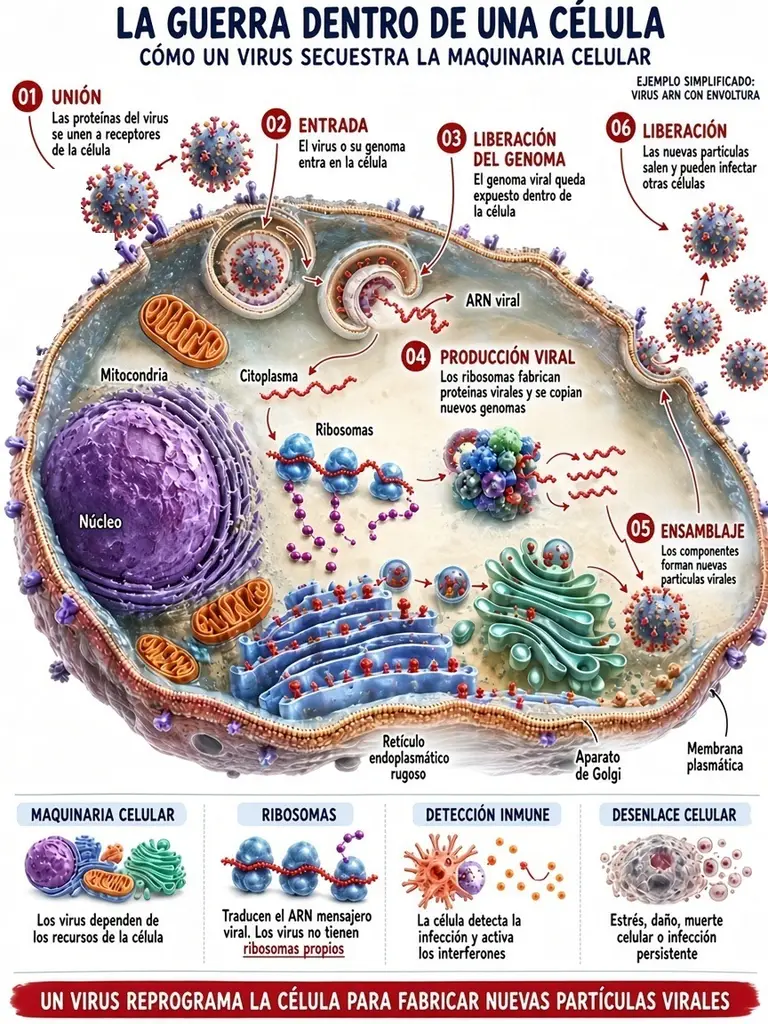
A virus is a particle made of genetic material (DNA or RNA) protected by a protein coat called a capsid. Some viruses, such as influenza or SARS-CoV-2, also have a lipid envelope taken from the cell they last infected. The illustration in the source article shows an enveloped RNA virus, but each virus family has its own features.
The six stages of viral infection
1. Binding
Proteins on the virus surface (for example the spike protein) attach to specific receptors on the cell. This “lock and key” fit explains why each virus infects certain tissues and species and not others.
2. Entry
The virus enters either by direct fusion of its envelope with the cell membrane, or it is swallowed inside an endosome. The route depends on the virus type.
3. Genome release
Once inside, the virus uncoats and its genetic material is exposed in the cytoplasm (or, for many DNA viruses, travels to the nucleus).
4. Viral production
The cell’s ribosomes read viral messenger RNA and make viral proteins. At the same time, viral enzymes copy the genome again and again. Many RNA viruses rearrange internal membranes to build replication “factories.”
5. Assembly
Newly made proteins and genomes come together to form new viral particles. In enveloped viruses, surface proteins are processed in the endoplasmic reticulum and Golgi apparatus.
6. Release
New particles leave the cell, either by budding through the membrane or by bursting the cell, and can infect neighboring cells.
The cell fights back: innate immunity
The cell is not passive. Within the first minutes it activates innate immunity, the first line of defense.
Sensors that detect the invader
Cells have pattern recognition receptors (PRRs) that recognize typical microbial molecules:
- Toll-like receptors (TLRs): some, such as TLR3, TLR7, and TLR8, detect viral RNA inside endosomes; TLR9 detects certain DNA.
- RIG-I and MDA5: cytoplasmic sensors that recognize viral RNA with features unlike the cell’s own RNA.
- cGAS-STING: detects DNA in the cytoplasm, where it normally should not be, and triggers an alarm cascade.
Interferons: the distress signal
When these sensors activate, the cell produces type I and type III interferons. They act as an alert for the infected cell and its neighbors, which turn on hundreds of interferon-stimulated genes (ISGs). Those genes make proteins that block different steps of the viral cycle, for example by slowing protein production or degrading viral RNA.
Apoptosis: sacrifice for the rest
If infection advances, the cell can trigger apoptosis, a controlled form of programmed cell death. By dying in an orderly way, it stops the virus from using its resources to multiply. Other forms of cell death, such as pyroptosis, also exist and can drive inflammation.
How viruses push back
Many viruses have evolved ways to evade these defenses: blocking sensors, interfering with interferon signaling, or delaying apoptosis. That “arms race” partly explains why some infections are mild and others more severe or persistent.
Adaptive immunity: specialized reinforcements
Days later, adaptive immunity kicks in:
- Cytotoxic T lymphocytes (CD8+): recognize viral fragments on infected cells and eliminate them.
- B lymphocytes: make antibodies that bind viruses and can neutralize them before they enter other cells.
- Immunological memory: after infection or vaccination, memory cells enable a faster response next time.
Natural killer (NK) cells from innate immunity also help remove infected cells that try to “hide.”
How does the battle end?
Outcomes vary: the cell may clear the virus, suffer stress or damage, die, or harbor a persistent infection. The result depends on virus type, viral load, immune status, and genetic factors that influence how each person’s defenses respond. This information is educational and does not replace evaluation by a health professional.
Sources
- Takeuchi O, Akira S. Pattern recognition receptors and inflammation. Cell. 2010;140(6):805-820. https://pubmed.ncbi.nlm.nih.gov/20303872/
- Schneider WM, Chevillotte MD, Rice CM. Interferon-stimulated genes: a complex web of host defenses. Annu Rev Immunol. 2014;32:513-545. https://pubmed.ncbi.nlm.nih.gov/24555472/
- Ablasser A, Chen ZJ. cGAS in action: Expanding roles in immunity and inflammation. Science. 2019;363(6431):eaat8657. https://pubmed.ncbi.nlm.nih.gov/30846571/
- Rehwinkel J, Gack MU. RIG-I-like receptors: their regulation and roles in RNA sensing. Nat Rev Immunol. 2020;20(9):537-551. https://pubmed.ncbi.nlm.nih.gov/32203325/
This content is for information only and does not replace medical care.
At Ajolote Azul Genomics we share clear science about biology, health, and genetics. If you have questions about our genetic tests, contact us—we are happy to guide you. Exclusive Nutrigenomix distributor in Mexico · https://testgenetico-ajoloteazul.com
A
Ajolote Azul Team
Specialist in wellness, nutrition and holistic health. Passionate about sharing science-based knowledge to improve quality of life.
Keep Reading
Related Articles
Discover more content on this topic that might interest you
Wellness
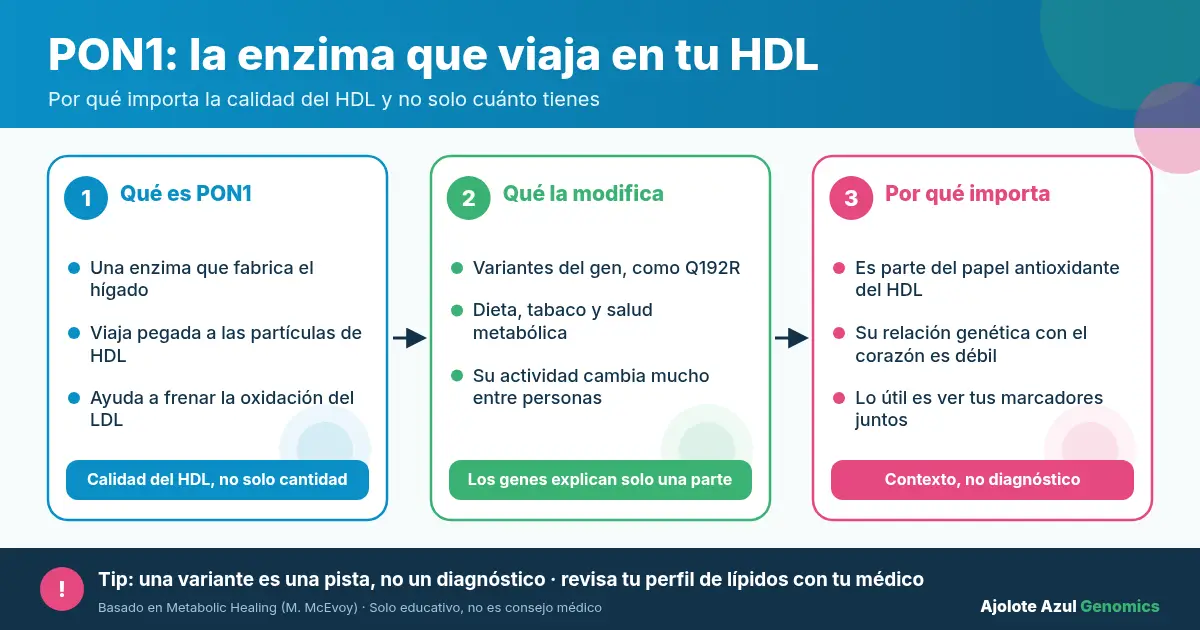
PON1 Gene: Function, HDL, and the Q192R Variant
What does the PON1 gene do? How it relates to paraoxonase, HDL cholesterol, and the Q192R variant—what the evidence shows and its limits.
7 min readRead more
Wellness
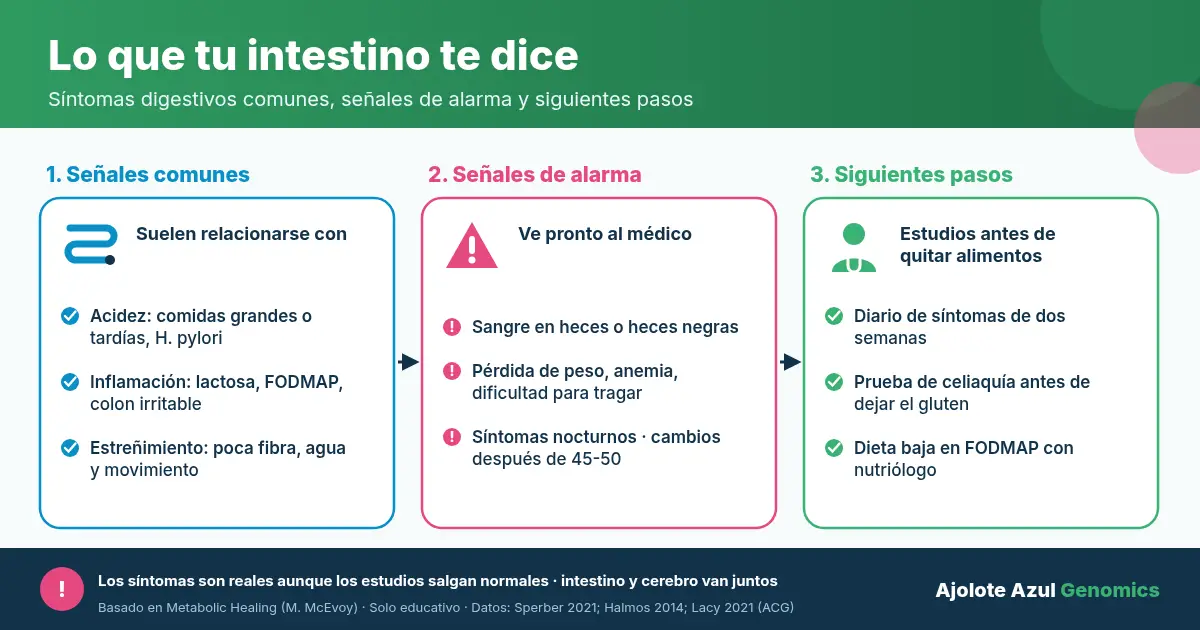
Digestive Symptoms: What Your Gut Is Telling You
Bloating, heartburn, or constipation can have several causes. Learn the warning signs and how a genetic test looks at lactose, gluten, and B12.
8 min readRead more
Wellness
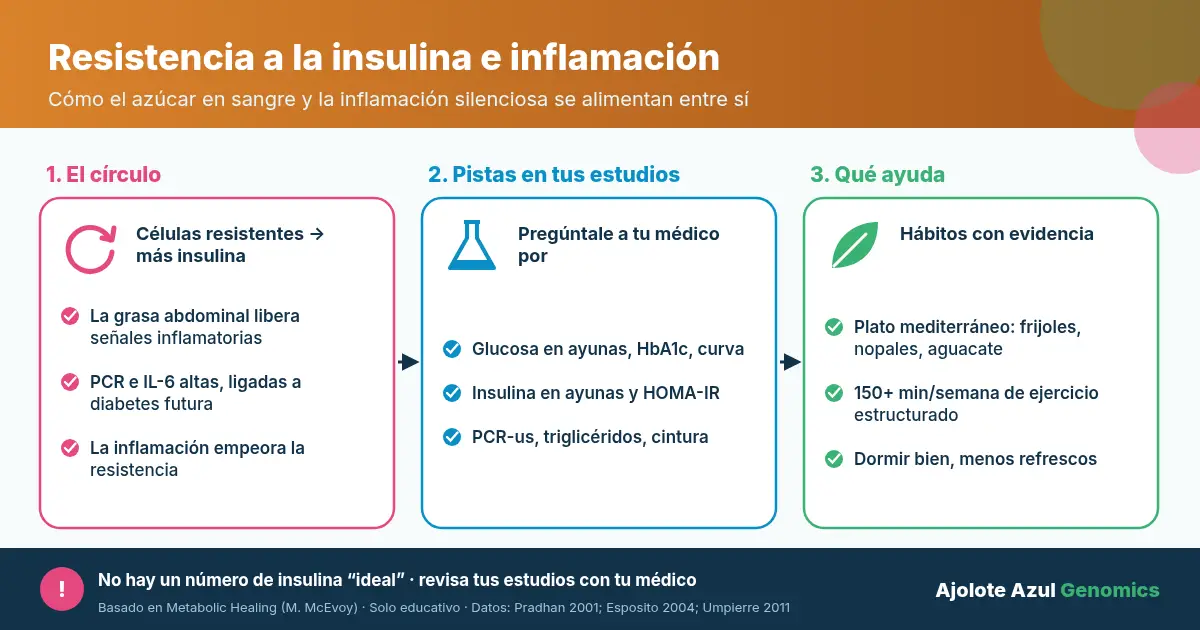
Insulin Resistance and Inflammation: How They Connect
Insulin resistance and inflammation feed each other. Learn how food and movement help, and what your genes can show in a test.
8 min readRead more
Did you like this article?
Discover how you can optimize your health with a personalized nutrigenetic test