Back to blog
Wellness
Insulin Resistance and Inflammation: How They Connect
8 min read
Ajolote Azul Team
insulin resistance
low-grade inflammation
blood sugar
metabolic syndrome
exercise and HbA1c
nutrigenetics
Based on the work of our partners at Metabolic Healing (Michael McEvoy). Read the original article: Normalizing Glucose & Insulin Powerfully Decreases Inflammation
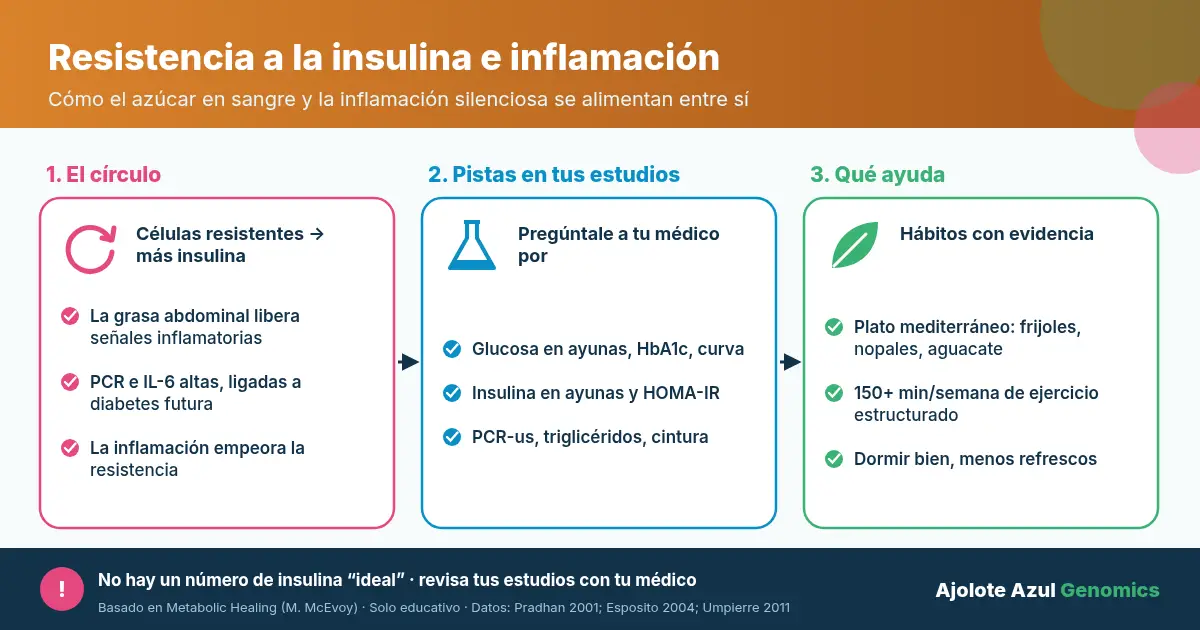
Insulin resistance and low-grade inflammation can influence each other. Abdominal fat is associated with inflammatory signals that can affect the response to insulin. Food, movement, sleep, and genes add context, but a diagnosis requires a medical evaluation. Talk with a professional before you make major changes.
Inflammation is your body's alarm system. A short, intense response helps you heal a wound or fight an infection. The problem is silent, low-grade inflammation that never fully switches off, and one of the things that keeps it switched on is trouble regulating blood sugar.
This matters a great deal in Mexico, where prediabetes and type 2 diabetes are very common. Here is how glucose, insulin, and inflammation interact, how they are measured, and which habits have evidence behind them.
How insulin resistance develops
After you eat, glucose enters the blood and the pancreas releases insulin, the hormone that lets muscle, liver, and fat take up that glucose. With insulin resistance, those cells respond less, so the pancreas compensates by making more. For years blood sugar can look normal while insulin rises quietly. Over time the pancreas can no longer keep up, glucose rises, and prediabetes or type 2 diabetes appears.
Excess abdominal fat, inactivity, poor sleep, some medications, and genetics all contribute.
Where inflammation comes in
Metabolism and the immune system are not separate systems. Scientists describe them as deeply intertwined: many of the pathways that sense nutrients also sense threats, and when that shared network falls out of balance it can drive obesity, type 2 diabetes, and cardiovascular disease 1. Enlarged fat tissue, especially in the abdomen, releases inflammatory signals that make cells even less sensitive to insulin, and a cycle forms.
Inflammation can also show up years before diabetes. In a study within a large cohort of healthy middle-aged women in the United States, those who developed type 2 diabetes within four years had higher levels at the start of two inflammatory markers, C-reactive protein (CRP) and interleukin 6 (IL-6). Women with the highest CRP had about 16 times the risk of those with the lowest. After weight, family history, smoking, exercise, and other factors were taken into account, the difference for CRP was still about four times 2. This is an association. It is not proof that inflammation causes diabetes, but it supports the link.
Glucose that stays high also damages proteins through a process called glycation, and the resulting compounds are thought to add oxidative stress and inflammation over time.
Which tests help?
Your doctor usually diagnoses prediabetes and diabetes with fasting glucose, HbA1c, and sometimes a glucose tolerance test (see our guide to the glucose tolerance test). Other tests can add context:
- Fasting insulin. Insulin that rises while glucose is still normal can be an early sign of insulin resistance.
- HOMA-IR. A calculation that combines fasting glucose and fasting insulin. In the original study it correlated very well with the reference test (the clamp), but the authors also noted that its accuracy is limited for any particular person 3.
- High-sensitivity CRP (hs-CRP), a general marker of low-grade inflammation.
- Triglycerides, HDL cholesterol, waist circumference, and blood pressure, which together help define metabolic syndrome.
There is no "perfect" insulin number that fits everyone. Methods and reference ranges differ between laboratories, and results should be read alongside your glucose, your weight, your family history, and other markers. Ask your doctor to interpret them together rather than chasing a single figure.
What helps: food
You do not need an extreme diet. In a two-year randomized trial of 180 adults with metabolic syndrome in Italy, people taught to eat in a Mediterranean style (more whole grains, fruit, vegetables, nuts, and olive oil) had lower CRP and IL-6, less insulin resistance, and better blood-vessel function than people who followed a standard "prudent" diet. They also lost more weight, and at the end only 40 of them still met the criteria for metabolic syndrome, compared with 78 in the control group 4.
You can apply the same principles with Mexican food:
- Fiber at every meal: beans, lentils, nopales (cactus pads), vegetables, corn tortillas, and oats.
- Healthier fats: avocado, olive oil, peanuts, pumpkin seeds, and fish.
- Protein to round out the plate: eggs, fish, chicken, beans, and cheese in moderation.
- Fewer sugary drinks (soft drinks, juices, sweetened coffee) and ultra-processed snacks, which deliver a lot of sugar and rapidly absorbed fructose.
- Whole fruit instead of juice.
People respond differently to the same foods, so the best pattern is the one you can keep up and that suits your body.
What helps: movement
Exercise lets muscles take up glucose while needing less insulin, and the benefit adds up. A meta-analysis of 47 randomized trials in more than 8,500 people with type 2 diabetes found that structured exercise (aerobic, strength, or both) lowered HbA1c by about 0.67 percentage points. Programs of more than 150 minutes a week were associated with larger reductions (0.89 points) than shorter ones (0.36 points). Simple advice to "move more" helped only when it was combined with guidance about food 5.
A practical target: about 30 minutes of brisk walking on most days, plus two or three short strength sessions a week. Even a 10-minute walk after a meal can soften the glucose peak.
Other pieces of the puzzle
- Sleep: too little sleep, or poor sleep, makes insulin sensitivity worse.
- Stress: the hormones of chronic stress raise glucose.
- Abdominal fat: if you carry extra weight, even losing a little can improve insulin sensitivity.
- Medications: if your doctor prescribes treatment for glucose, blood pressure, or cholesterol, lifestyle changes work alongside that treatment. They do not replace it.
Genes also influence diabetes risk. Read more in our article on how genes influence type 2 diabetes.
Do your genes influence how you process carbohydrates and fats?
They can. The NGx nutrigenetic test analyzes 70 markers in 59 genes and includes carbohydrate and fat metabolism, FTO, and inflammation markers. It does not diagnose any disease. It is information to discuss with your doctor or dietitian. The PGx pharmacogenetic test shows that the way people process some medications varies. Talk with your doctor about any treatment. Learn about the Ajolote Azul genetic test and read about genetics and type 2 diabetes.
Frequently asked questions
Does insulin resistance cause inflammation?
They feed each other. Enlarged fat tissue releases inflammatory signals that make insulin resistance worse, and high glucose and high insulin are associated with higher inflammatory markers, such as CRP.
What is a normal fasting insulin level?
There is no universal cutoff. Reference ranges differ from one laboratory to another. Your doctor can combine fasting insulin and fasting glucose into HOMA-IR and read it together with HbA1c, weight, and other risk factors.
Can eating in a certain way support a lower level of inflammation?
In a two-year trial of people with metabolic syndrome, a Mediterranean-style diet lowered CRP, IL-6, and insulin resistance compared with a standard diet.
How much exercise helps blood sugar?
In a large meta-analysis, structured exercise of more than 150 minutes a week was associated with greater reductions in HbA1c than shorter programs.
Turn your genes into a practical plan
- Nutrigenetic test NGx: 70 markers in 59 genes, with a 60-minute 1-on-1 consult included. $9,880 MXN.
- Pharmacogenetic test PGx: how you process more than 200 medications (51 genes). $9,800 MXN.
- NGx + PGx combo: $15,750 MXN. See the tests
References
- Hotamisligil GS. Inflammation and metabolic disorders. Nature. 2006;444(7121):860-867. doi:10.1038/nature05485. PubMed 17167474 · doi:10.1038/nature05485
- Pradhan AD, Manson JE, Rifai N, Buring JE, Ridker PM. C-reactive protein, interleukin 6, and risk of developing type 2 diabetes mellitus. JAMA. 2001;286(3):327-334. doi:10.1001/jama.286.3.327. PubMed 11466099 · doi:10.1001/jama.286.3.327
- Matthews DR, Hosker JP, Rudenski AS, Naylor BA, Treacher DF, Turner RC. Homeostasis model assessment: insulin resistance and beta-cell function from fasting plasma glucose and insulin concentrations in man. Diabetologia. 1985;28(7):412-419. doi:10.1007/BF00280883. PubMed 3899825 · doi:10.1007/BF00280883
- Esposito K, Marfella R, Ciotola M, et al. Effect of a mediterranean-style diet on endothelial dysfunction and markers of vascular inflammation in the metabolic syndrome: a randomized trial. JAMA. 2004;292(12):1440-1446. doi:10.1001/jama.292.12.1440. PubMed 15383514 · doi:10.1001/jama.292.12.1440
- Umpierre D, Ribeiro PA, Kramer CK, et al. Physical activity advice only or structured exercise training and association with HbA1c levels in type 2 diabetes: a systematic review and meta-analysis. JAMA. 2011;305(17):1790-1799. doi:10.1001/jama.2011.576. PubMed 21540423 · doi:10.1001/jama.2011.576
This article is for information and education only; it does not replace consultation, diagnosis, or treatment by a health professional. Talk with your doctor before changing your diet, medications, or supplements.
Based on the work of our partners at Metabolic Healing (Michael McEvoy). Read the original article: Metabolic Healing
A
Ajolote Azul Team
Specialist in wellness, nutrition and holistic health. Passionate about sharing science-based knowledge to improve quality of life.
Keep Reading
Related Articles
Discover more content on this topic that might interest you
Wellness
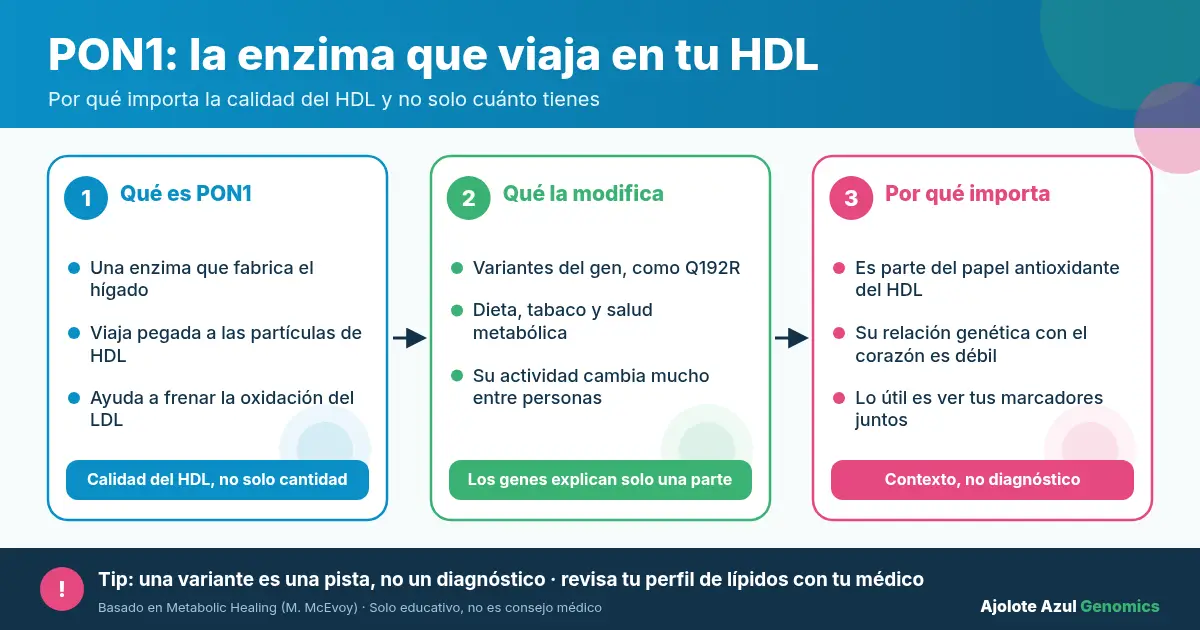
PON1 Gene: Function, HDL, and the Q192R Variant
What does the PON1 gene do? How it relates to paraoxonase, HDL cholesterol, and the Q192R variant—what the evidence shows and its limits.
7 min readRead more
Wellness
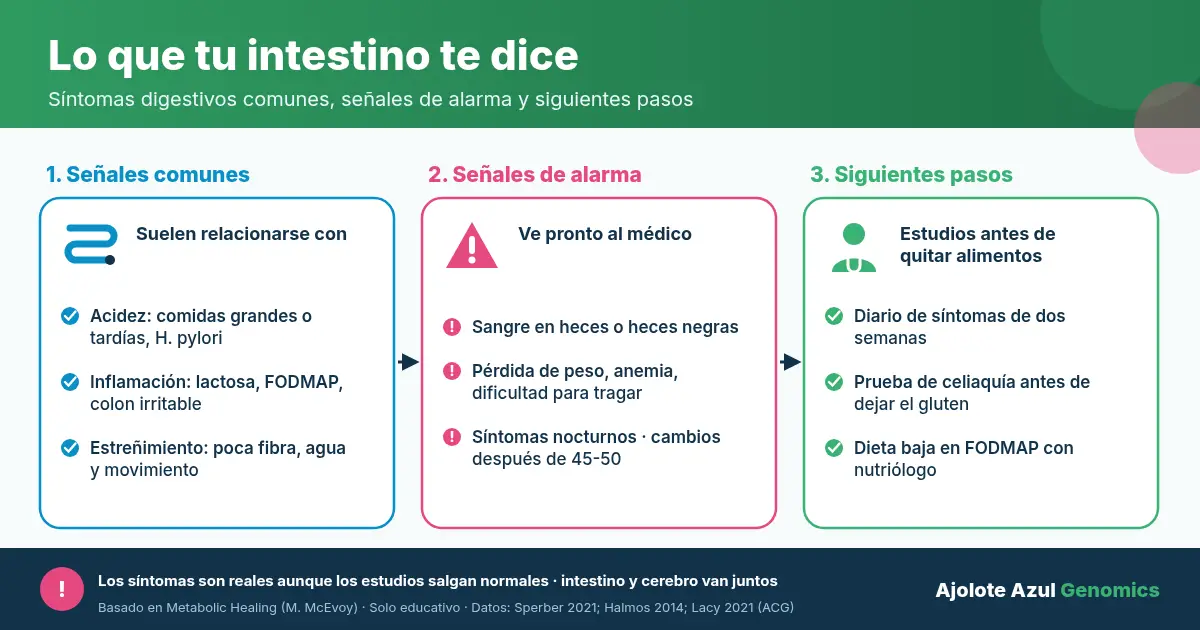
Digestive Symptoms: What Your Gut Is Telling You
Bloating, heartburn, or constipation can have several causes. Learn the warning signs and how a genetic test looks at lactose, gluten, and B12.
8 min readRead more
Wellness
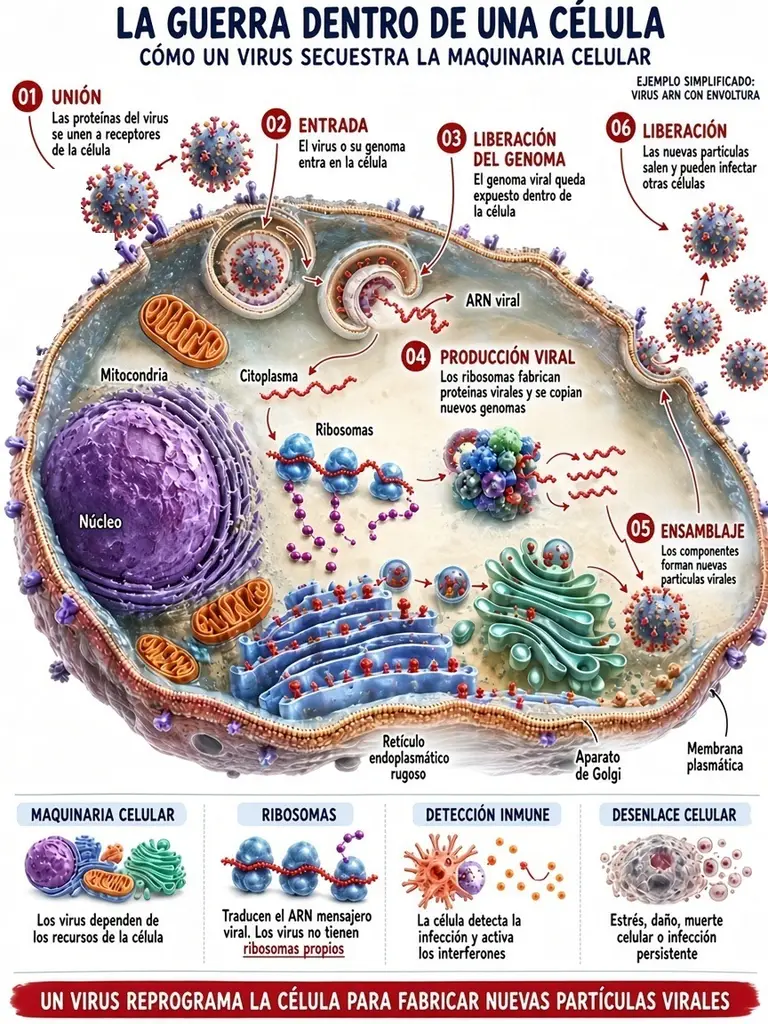
How a Virus Infects a Cell and How the Body Defends
Step by step: how a virus hijacks a cell to multiply, and the defenses your body uses—interferons, sensors, and apoptosis.
5 min readRead more
Did you like this article?
Discover how you can optimize your health with a personalized nutrigenetic test