Back to blog
Wellness
PON1 Gene: Function, HDL, and the Q192R Variant
7 min read
Ajolote Azul Team
PON1 gene
paraoxonase
HDL
Q192R
cardiovascular health
pharmacogenetics
Based on the work of our Metabolic Healing partners (Michael McEvoy). Read the original article: Breakthrough In Cardiovascular Health: Paraoxonase, Antioxidants & Genetics
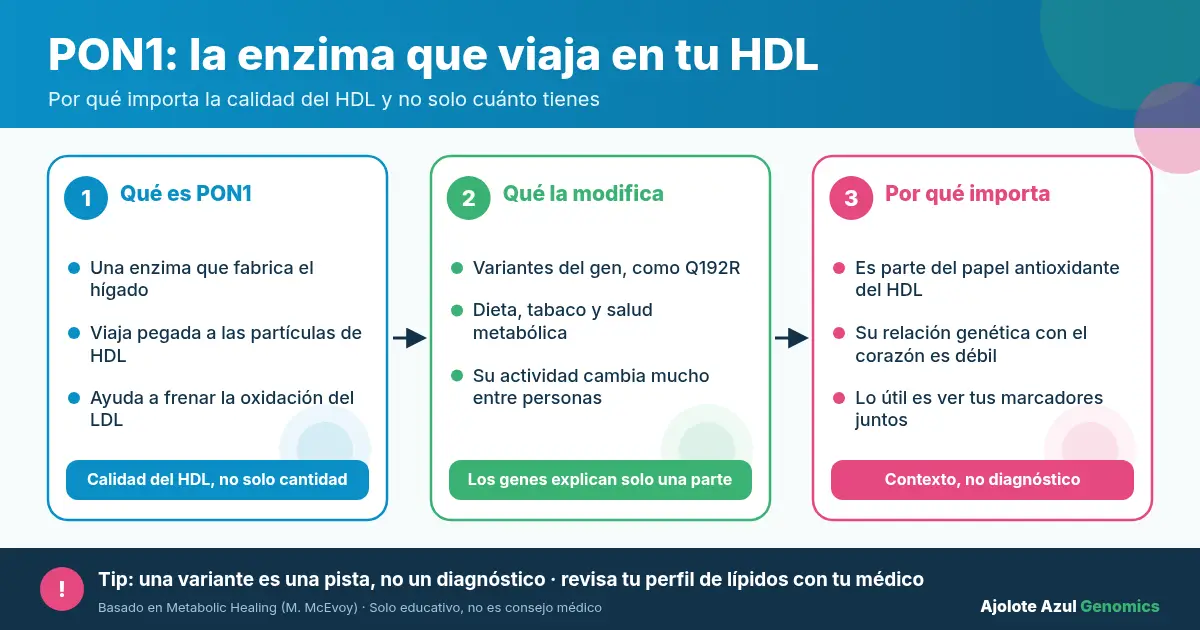
The PON1 gene contains the instructions to make paraoxonase 1, an enzyme associated with HDL particles and studied for its activity against certain compounds. Variants such as Q192R can influence enzyme activity, but they do not diagnose disease or estimate a person’s cardiovascular risk on their own.
Here we explain what PON1 is, what its genetic variants can (and cannot) tell you, and where pharmacogenetics fits in.
What is PON1?
PON1 is an enzyme made mainly in the liver. In the bloodstream it travels almost entirely on HDL particles. Its unusual name comes from breaking down paraoxon, a toxic derivative of some organophosphate pesticides—but in the body its role goes much further.
Lab and animal studies suggest that much of HDL’s antioxidant power comes from PON1. HDL carrying PON1 helps prevent fats inside LDL from oxidizing, and mice bred without the PON1 gene are more prone to arterial plaque 1. That is why researchers stress HDL quality, not just how much HDL shows up on your labs.
Why oxidized LDL matters
LDL particles carry cholesterol and fat-soluble nutrients to tissues. When the fats they carry oxidize, the particle changes chemically and is more likely to lodge in the artery wall, where it can fuel inflammation. Glucose, smoking, inflammation, overall diet, and genetics all play a part. PON1 is one of the body’s natural brakes.
The PON1 gene and its variants
PON1 has several common variants. The best known are:
- Q192R (rs662). Changes one amino acid and mainly affects how fast the enzyme breaks down certain substances, such as paraoxon.
- L55M (rs854560). Related to how much enzyme circulates.
- Promoter variants (−108C/T and others). Act as the gene’s “volume knob” and influence how much PON1 the liver makes.
A study in Mexico measured PON1 in 214 unrelated adults. Enzyme activity varied enormously from person to person. Variants −108, 55, and 192 each associated with one type of PON1 activity, while paraoxon activity depended only on variant 192 2. Your genotype matters, but two people with the same variant can have very different enzyme levels. A review on PON1 biology also notes that variants explain only part of that variation 1.
Does a PON1 variant raise heart risk?
Keep expectations realistic. Early, smaller studies suggested some PON1 genotypes were more common in coronary disease. Later, a large meta-analysis pooled 43 studies with more than 11,000 cases and nearly 13,000 controls. The R192 allele showed only a weak association with heart disease, and in the five largest studies that association faded to statistical insignificance. Other variants showed no overall association 3.
In practice: a PON1 result does not predict a heart attack. It is context alongside your lipid profile, glucose, blood pressure, family history, and habits.
Want to see heart genes and medication genes together? The NGx + PGx Combo from Ajolote Azul combines more than 70 nutrition markers (including genetic lipid profile and omega-3/omega-6 response) with a pharmacogenetic panel that assesses more than 100 medications, including cardiovascular drugs. Not sure which fits you? Book a free 15-minute orientation call.
Does lifestyle affect PON1 activity?
Because activity varies so much among people with the same genes, researchers have looked at what else moves it. Much of this evidence is preliminary, but some themes repeat:
- Polyphenol-rich foods. In a small study, 50 adults with type 2 diabetes drank 200 ml of pomegranate juice daily for six weeks. PON1 activity rose and a fat-oxidation marker fell 4. There was no control group, so it shows a possible effect, not proof. Mexican staples rich in polyphenols include guava, black beans, cocoa, hibiscus (jamaica), and green tea.
- Not smoking. Tobacco is among the factors most linked to lower PON1 activity in research.
- Glucose control. PON1 activity tends to be lower in people with diabetes—another reason metabolic and heart health go together.
- Overall eating pattern. A diet built on vegetables, legumes, fruit, seeds, and minimally processed foods supports healthier lipids regardless of PON1 genotype.
Note: pomegranate juice also adds sugar. If you have diabetes, whole fruit or small portions may fit better; your doctor or dietitian can guide you.
What about pharmacogenetics?
PON1 made headlines in 2011 when a lab study proposed that the Q192R variant controlled how well the antiplatelet clopidogrel is activated. Many groups tried to confirm it. A later meta-analysis of 17 studies found that people with QQ genotype responded to clopidogrel like R carriers on platelet function tests, and the largest prospective studies did not support a link with cardiovascular events 5.
It is a good lesson in genetics: a striking finding has to replicate before it guides medical decisions. For clopidogrel, the gene with the strongest replicated evidence is CYP2C19, which is why pharmacogenetic panels focus on it. If you take heart medications, a PGx test can show how your genes affect major drug-metabolizing enzymes, and your cardiologist can use that information. Never change or stop a prescription on your own.
For broader cardiometabolic context, read about insulin resistance and inflammation and genetics and type 2 diabetes.
Frequently asked questions
What does the PON1 gene do?
It encodes paraoxonase 1, a liver enzyme that travels on HDL. Research links it to HDL antioxidant activity and breakdown of some pesticide derivatives.
Is it bad to have the PON1 Q192R variant?
Not on its own. Larger analyses found a weak or unclear link between Q192R and heart disease. Read it together with your blood work, habits, and family history.
Can I raise PON1 activity with food?
Small studies suggest polyphenol-rich foods might increase it, but evidence is limited. A generally healthy diet, not smoking, and keeping glucose in range are the safer bets.
Does PON1 affect how clopidogrel works?
It was proposed in 2011, but later meta-analyses did not confirm a meaningful effect. The best-supported gene for clopidogrel response is CYP2C19.
Turn your genes into a practical plan
- NGx nutrigenetic test: more than 70 nutrition, vitamin, intolerance, and antioxidant markers, with a 1:1 consult included. $9,880 MXN.
- PGx pharmacogenetic test: how you process more than 100 medications. $9,800 MXN.
- NGx + PGx Combo: $15,750 MXN. Compare tests · Book your free 15-min call · WhatsApp us
References
- Durrington PN, Mackness B, Mackness MI. Paraoxonase and atherosclerosis. Arterioscler Thromb Vasc Biol. 2001;21(4):473-480. doi:10.1161/01.atv.21.4.473. PubMed 11304460 · doi:10.1161/01.atv.21.4.473
- Rojas-García AE, Solís-Heredia MJ, Piña-Guzmán B, Vega L, López-Carrillo L, Quintanilla-Vega B. Genetic polymorphisms and activity of PON1 in a Mexican population. Toxicol Appl Pharmacol. 2005;205(3):282-289. doi:10.1016/j.taap.2004.10.015. PubMed 15922013 · doi:10.1016/j.taap.2004.10.015
- Wheeler JG, Keavney BD, Watkins H, Collins R, Danesh J. Four paraoxonase gene polymorphisms in 11212 cases of coronary heart disease and 12786 controls: meta-analysis of 43 studies. Lancet. 2004;363(9410):689-695. doi:10.1016/S0140-6736(04)15642-0. PubMed 15001326 · doi:10.1016/S0140-6736(04)15642-0
- Parsaeyan N, Mozaffari-Khosravi H, Mozayan MR. Effect of pomegranate juice on paraoxonase enzyme activity in patients with type 2 diabetes. J Diabetes Metab Disord. 2012;11(1):11. doi:10.1186/2251-6581-11-11. PubMed 23497651 · Free full text (PMC) · doi:10.1186/2251-6581-11-11
- Reny JL, Combescure C, Daali Y, Fontana P. Influence of the paraoxonase-1 Q192R genetic variant on clopidogrel responsiveness and recurrent cardiovascular events: a systematic review and meta-analysis. J Thromb Haemost. 2012;10(7):1242-1251. doi:10.1111/j.1538-7836.2012.04756.x. PubMed 22520065 · Free full text (PMC) · doi:10.1111/j.1538-7836.2012.04756.x
This article is for education and information only; it does not replace medical advice, diagnosis, or treatment. Talk to your doctor before changing your diet, medications, or supplements.
Based on the work of our Metabolic Healing partners (Michael McEvoy). Read the original article: https://metabolichealing.com/breakthrough-cardiovascular-health-pon1-genetics
A
Ajolote Azul Team
Specialist in wellness, nutrition and holistic health. Passionate about sharing science-based knowledge to improve quality of life.
Keep Reading
Related Articles
Discover more content on this topic that might interest you
Wellness
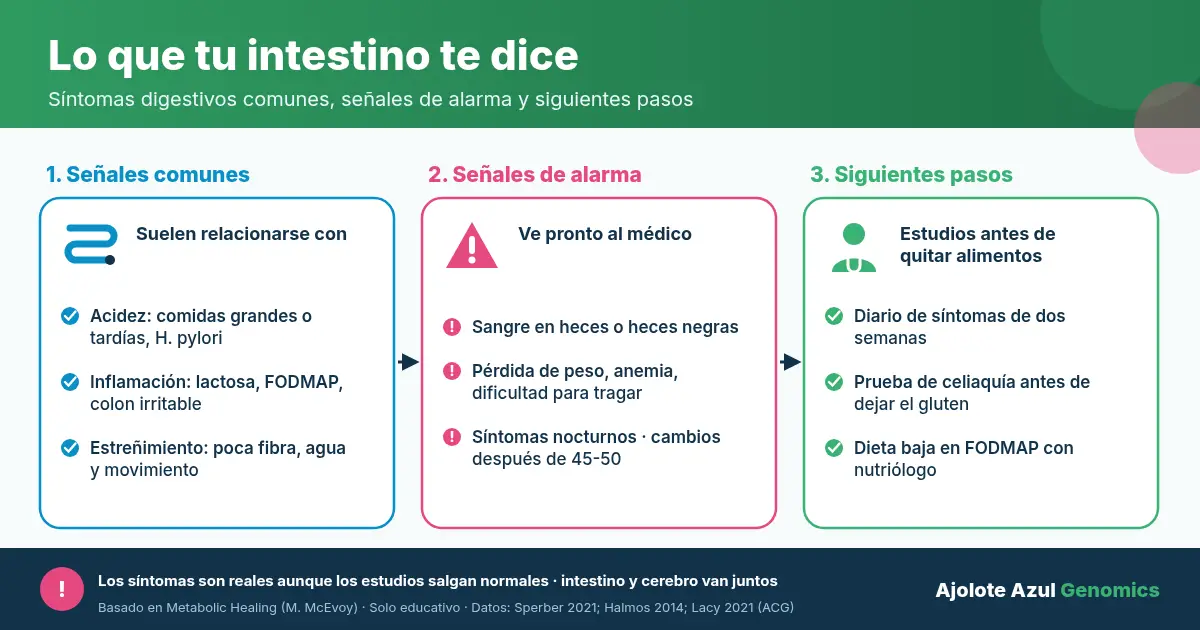
Digestive Symptoms: What Your Gut Is Telling You
Bloating, heartburn, or constipation can have several causes. Learn the warning signs and how a genetic test looks at lactose, gluten, and B12.
8 min readRead more
Wellness
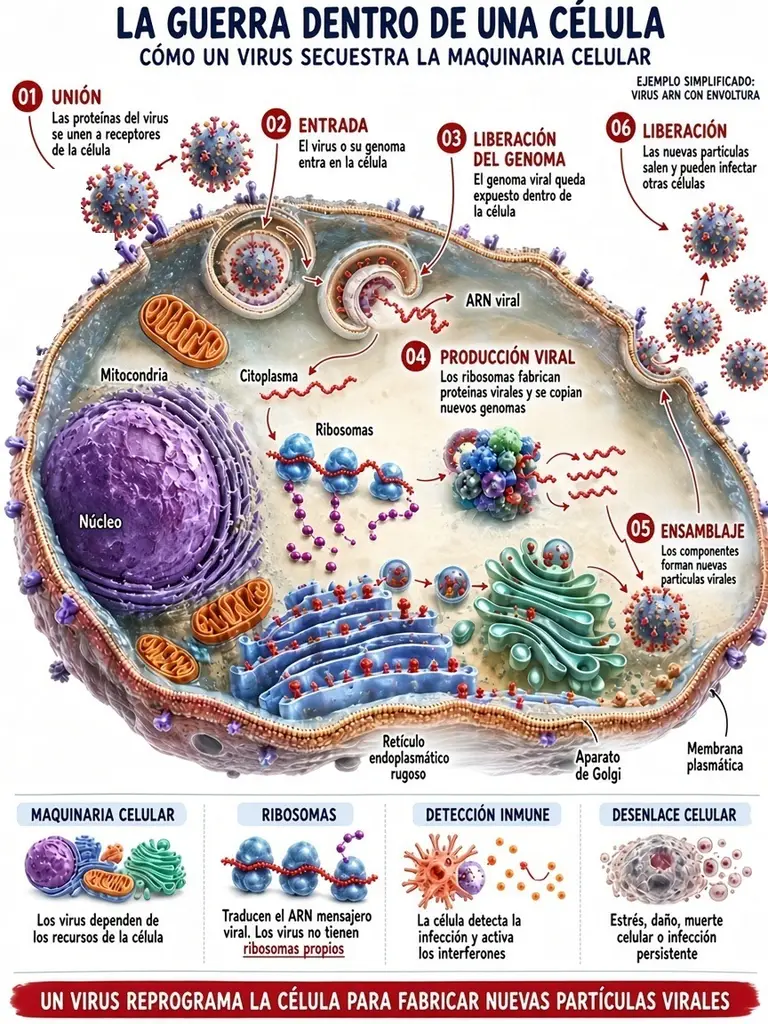
How a Virus Infects a Cell and How the Body Defends
Step by step: how a virus hijacks a cell to multiply, and the defenses your body uses—interferons, sensors, and apoptosis.
5 min readRead more
Wellness
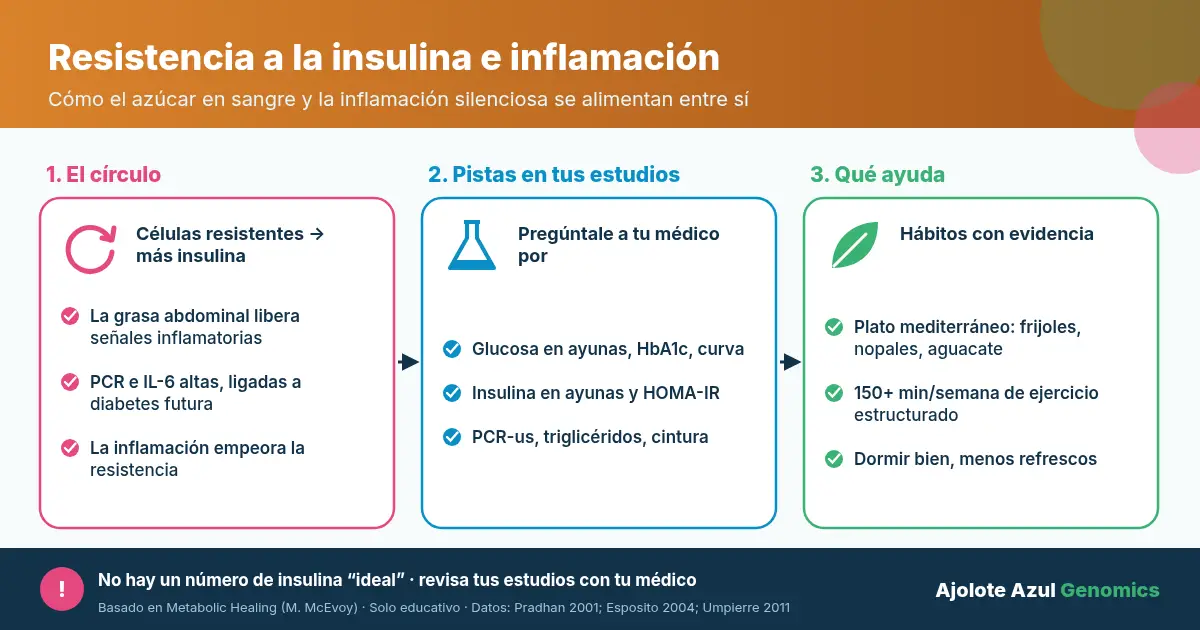
Insulin Resistance and Inflammation: How They Connect
Insulin resistance and inflammation feed each other. Learn how food and movement help, and what your genes can show in a test.
8 min readRead more
Did you like this article?
Discover how you can optimize your health with a personalized nutrigenetic test