Back to blog
Wellness
Glucose Tolerance Test: How It Works and How to Read Your Results
8 min read
Ajolote Azul Team
glucose tolerance test
OGTT
prediabetes
HbA1c
blood glucose
Based on the work of our partners at Metabolic Healing (Michael McEvoy). Read the original article: Glucose Tolerance Test: Here’s What This Simple & Powerful Test Can Show You
Your doctor orders a "glucose curve," or you see the word CTOG on a lab order, and suddenly you wonder what it involves and how the numbers are read. This guide explains the standard test used around the world, how to prepare so the result is reliable, and how it differs from fasting glucose and glycated hemoglobin (HbA1c).
In México this matters a great deal: according to the 2022 National Health and Nutrition Survey (ENSANUT), more than 1 in 5 adults has prediabetes, and many people with diabetes do not know it 1.
What is a glucose tolerance test?
The oral glucose tolerance test (OGTT; CTOG in Spanish) measures how well your body clears sugar from the blood.
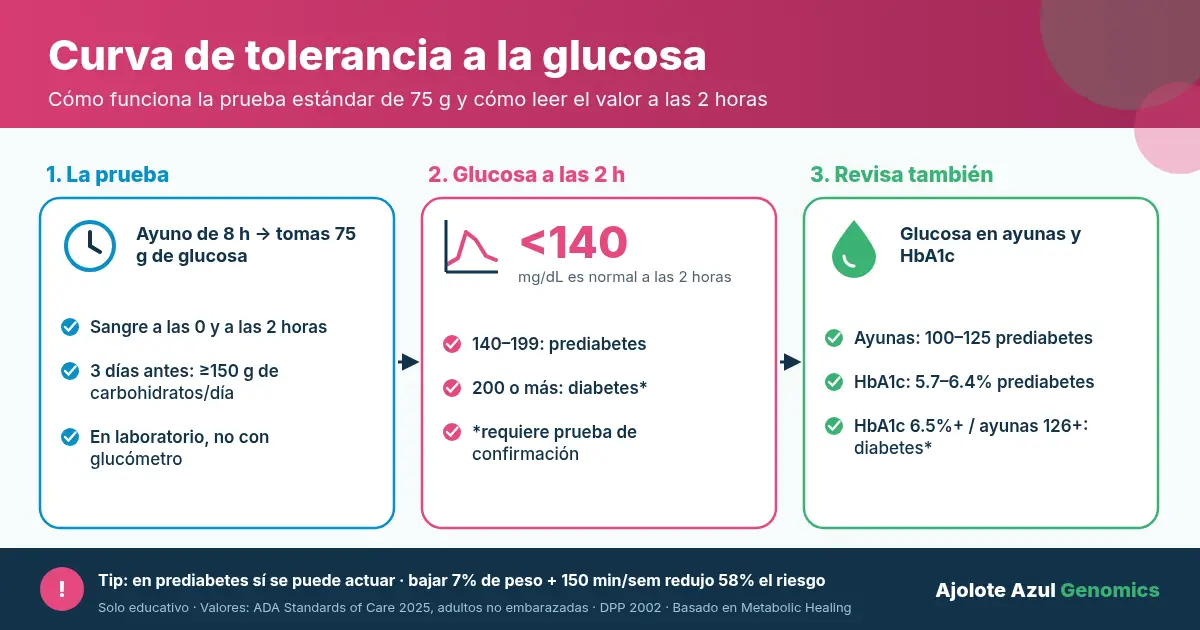
The standard version recommended by the American Diabetes Association (ADA) and the World Health Organization works like this 2:
- You arrive after at least 8 hours of fasting (you may drink water).
- They draw a blood sample to measure fasting glucose.
- You drink a solution with 75 grams of glucose dissolved in water, usually in less than 5 minutes.
- Two hours later they draw blood again. Some laboratories also take samples at 30, 60, and 90 minutes.
During the test you stay seated, and you do not eat, smoke, or exercise.
How to prepare
A few details make a large difference:
- Eat normally in the days before. The ADA advises consuming at least 150 g of carbohydrate per day for the 3 days beforehand. If you cut carbohydrates right before the test, the 2-hour value can come out falsely high 2.
- Tell your doctor which medications you take and whether you were ill recently. Steroids, some diuretics, and acute infections can raise glucose.
- Schedule it in the morning and bring something to eat when you finish.
- Do not do it at home with a glucose meter. Home glucose meters are not designed to diagnose; the test should be done in a laboratory, with proper sample handling.
How to read your glucose tolerance test results
These are the ADA cutoffs for adults who are not pregnant 2:
| Test | Normal | Prediabetes | Diabetes |
|---|---|---|---|
| Fasting glucose | less than 100 mg/dL | 100–125 mg/dL | 126 mg/dL or more |
| 2 hours after 75 g of glucose | less than 140 mg/dL | 140–199 mg/dL | 200 mg/dL or more |
| HbA1c | less than 5.7% | 5.7–6.4% | 6.5% or more |
A 2-hour value between 140 and 199 mg/dL is called impaired glucose tolerance. A fasting glucose of 100–125 mg/dL is impaired fasting glucose. Both fall in the prediabetes category.
A single abnormal result is usually not enough. Unless glucose is clearly very high and there are symptoms, a diabetes diagnosis requires confirmation, either by repeating the test or with two different tests that are both abnormal 2.
In pregnancy, other protocols and other values are used for gestational diabetes, so follow your obstetrician-gynecologist's instructions.
Glucose curve vs. HbA1c: which is better?
HbA1c reflects your average glucose over roughly the past 2 to 3 months. An international expert committee chose 6.5% as the diagnostic threshold because, from that level on, the eye damage typical of diabetes (moderate retinopathy) starts to be common 3.
Each test has its advantages 2:
- HbA1c does not require fasting and varies less from day to day. It can give misleading results with anemia, iron deficiency, recent blood loss, some hemoglobin variants, kidney disease, or pregnancy.
- Fasting glucose is inexpensive and available at any laboratory, but it does not detect people whose glucose rises mainly after eating.
- The tolerance curve is the most sensitive for detecting early problems after a sugar load, especially impaired glucose tolerance. It requires more time and preparation.
Your doctor may order more than one. They complement each other; one does not stand in for the other.
Your labs say where you are. Your genes help explain why. Ajolote Azul's NGx nutrigenetic test reviews 70 markers, including overweight risk, appetite and satiety, FTO, and lipid metabolism, with a one-to-one consultation to build an eating plan fitted to you. Questions about your glucose results? Book a free 15-minute call.
Who should get the test?
The ADA recommends screening all adults starting at age 35, and earlier for people with overweight or obesity plus at least one risk factor: a father, mother, or sibling with diabetes, high blood pressure, abnormal cholesterol, a history of gestational diabetes, polycystic ovary syndrome, or a sedentary lifestyle. If results are normal, it is worth repeating at least every 3 years; with prediabetes, every year 2.
Hispanic or Latino ancestry itself appears as a factor for higher risk, and part of that is genetic. A large study of more than 8,000 Mexicans and other Latin Americans found a variant in the SLC16A11 gene that increases the risk of type 2 diabetes by about 29% per copy. It is present in approximately half of the Native American–origin chromosomes analyzed, but it is rare in European and African samples 4.
What if my result shows prediabetes?
It is good news in disguise: prediabetes is exactly the stage when acting pays off most. In the well-known Diabetes Prevention Program (DPP), adults with elevated glucose who lost about 7% of their weight and did 150 minutes of activity per week reduced their risk of developing diabetes by 58% over about three years. Metformin reduced it by 31% 5.
Practical steps to discuss with your doctor:
- Move on most days. Walking after meals helps your muscles take up glucose.
- Build your plate with fiber and protein. Beans, vegetables, nopales, and whole grains; fewer sodas, juices, and heavily sweetened aguas frescas.
- If you have overweight, lose weight gradually. Even 5–7% helps.
- Sleep and stress count. Sleeping too little and living with high stress raise glucose.
- Repeat the test when you are told to so you can see your progress.
Frequently asked questions
What are the normal values on a glucose tolerance test?
In adults who are not pregnant, a glucose below 140 mg/dL two hours after drinking 75 g of glucose is considered normal. Fasting, normal is less than 100 mg/dL.
What glucose tolerance result indicates prediabetes?
A 2-hour value of 140 to 199 mg/dL indicates impaired glucose tolerance, a form of prediabetes. A value of 200 mg/dL or more suggests diabetes, which should be confirmed.
Is HbA1c better than the glucose tolerance test?
Neither is better in every case. HbA1c is practical and does not require fasting, but some conditions alter it. The curve is more sensitive for detecting early problems after eating. Doctors often use both.
Do I have to arrive fasting for the glucose curve?
Yes, at least 8 hours without food or calorie-containing drinks. For the three days beforehand, eat normally, with at least 150 g of carbohydrate per day, so the result does not come out falsely high.
Turn your genes into a practical plan
- NGx nutrigenetic test: 70 markers for nutrition, vitamins, intolerances, metabolism, and more, with a one-to-one consultation included. $9,880 MXN.
- PGx pharmacogenetic test: how you process more than 200 medications. $9,800 MXN.
- NGx + PGx combo: $15,750 MXN. See the tests · Book your free 15-min call · Message us on WhatsApp
References
- Basto-Abreu A, López-Olmedo N, Rojas-Martínez R, et al. Prevalencia de prediabetes y diabetes en México: Ensanut 2022. Salud Publica Mex. 2023;65:s163-s168. doi:10.21149/14832. PubMed 38060942 · doi:10.21149/14832
- American Diabetes Association Professional Practice Committee. 2. Diagnosis and Classification of Diabetes: Standards of Care in Diabetes-2025. Diabetes Care. 2025;48(1 Suppl 1):S27-S49. doi:10.2337/dc25-S002. PubMed 39651986 · Free full text (PMC) · doi:10.2337/dc25-S002
- International Expert Committee. International Expert Committee report on the role of the A1C assay in the diagnosis of diabetes. Diabetes Care. 2009;32(7):1327-1334. doi:10.2337/dc09-9033. PubMed 19502545 · Free full text (PMC) · doi:10.2337/dc09-9033
- Williams AL, Jacobs SB, Moreno-Macías H, et al. Sequence variants in SLC16A11 are a common risk factor for type 2 diabetes in Mexico. Nature. 2014;506(7486):97-101. doi:10.1038/nature12828. PubMed 24390345 · Free full text (PMC) · doi:10.1038/nature12828
- Knowler WC, Barrett-Connor E, Fowler SE, et al. Reduction in the incidence of type 2 diabetes with lifestyle intervention or metformin. N Engl J Med. 2002;346(6):393-403. doi:10.1056/NEJMoa012512. PubMed 11832527 · Free full text (PMC) · doi:10.1056/NEJMoa012512
This article is for information and education only; it does not replace consultation, diagnosis, or treatment by a health professional. Talk with your doctor before changing your diet, your medications, or your supplements.
Based on the work of our partners at Metabolic Healing (Michael McEvoy). Read the original article: Metabolic Healing
A
Ajolote Azul Team
Specialist in wellness, nutrition and holistic health. Passionate about sharing science-based knowledge to improve quality of life.
Keep Reading
Related Articles
Discover more content on this topic that might interest you
Wellness
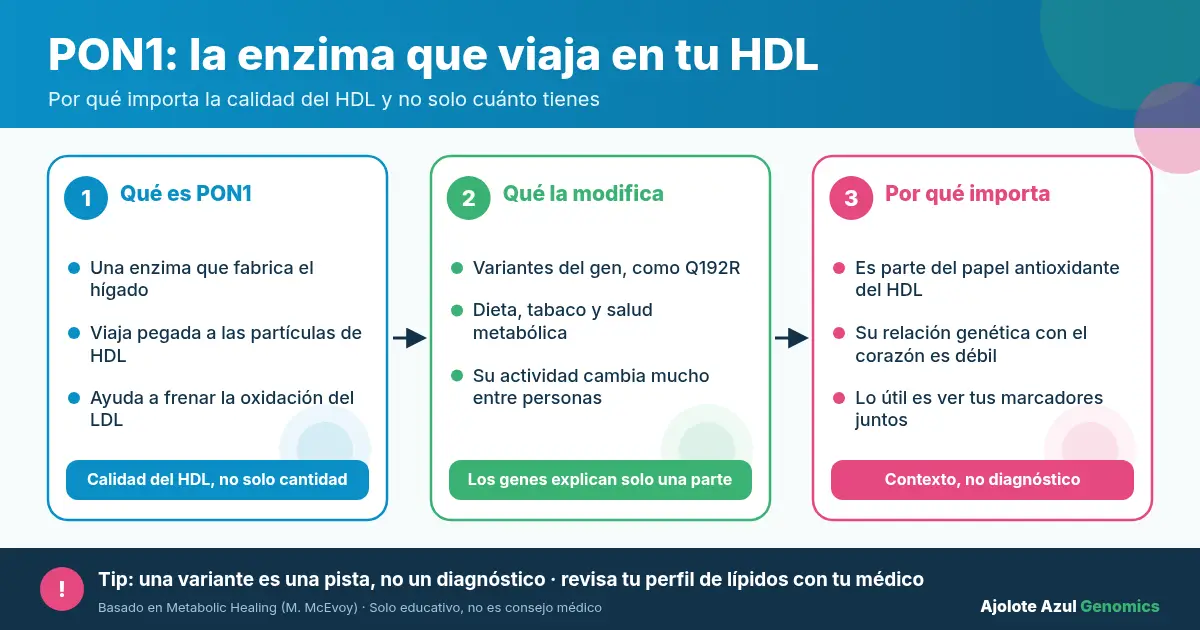
PON1 Gene: Function, HDL, and the Q192R Variant
What does the PON1 gene do? How it relates to paraoxonase, HDL cholesterol, and the Q192R variant—what the evidence shows and its limits.
7 min readRead more
Wellness
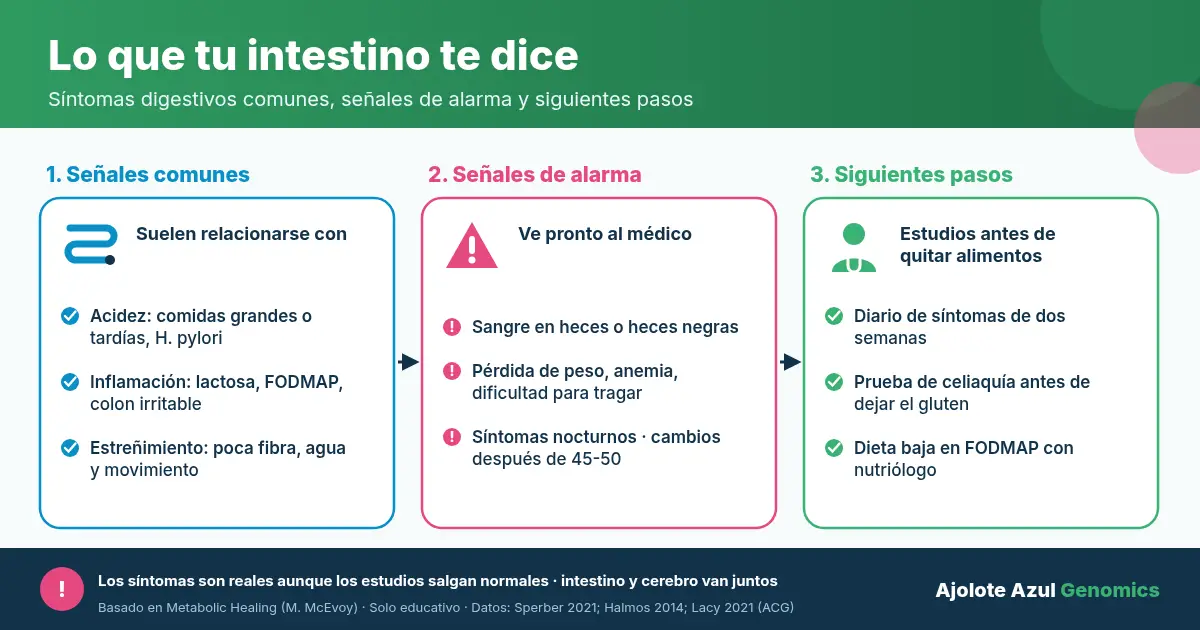
Digestive Symptoms: What Your Gut Is Telling You
Bloating, heartburn, or constipation can have several causes. Learn the warning signs and how a genetic test looks at lactose, gluten, and B12.
8 min readRead more

Wellness
How a Virus Infects a Cell and How the Body Defends
Step by step: how a virus hijacks a cell to multiply, and the defenses your body uses—interferons, sensors, and apoptosis.
5 min readRead more
Did you like this article?
Discover how you can optimize your health with a personalized nutrigenetic test