
Back to blog
Wellness
Reliable Genetic Laboratory Evaluation
8 min read
Ajolote Azul Team
what a reliable genetic laboratory checks
CLIA and CAP laboratory standards
genetic data privacy and consent
from a buccal swab to a practical plan
nutrigenetic and pharmacogenetic testing
how long genetic results take
A reliable genetic laboratory is recognized by four things: quality certifications such as CLIA and CAP, a clear methodology for which markers it analyzes, explicit privacy protocols for your data, and professional interpretation of the results. If any of these is missing, it is worth asking for more information before you buy.
A genetic laboratory evaluation does not start with a machine or end with a PDF. It starts with a concrete question: what information can help you make more informed decisions about your diet, your wellness, or the conversation you will have with your doctor? The quality of the answer depends as much on the technical analysis as on the interpretation each person receives.
If you want to personalize your nutrition, understand your potential response to certain nutrients, or learn genetic information related to medications, receiving a list of variants is not enough. You need context, a clear methodology, privacy, and a realistic next step. Genetics adds a layer of information that stays stable throughout life, but it is always interpreted together with habits, history, goals, and professional support.
What a genetic laboratory evaluates
A genetic laboratory analyzes specific regions of DNA to identify genetic variants. These variants are natural differences in the genetic sequence between people. Some have been studied for their relationship with processes such as nutrient metabolism, sensitivity to certain components of the diet, physical recovery, or the way the body processes certain medications.
The key point is to understand what type of test is being performed. A targeted test does not review the whole genome: it analyzes markers selected because evidence links them to a defined goal. For personalized nutrition, this makes it possible to focus on variants related to practical areas of diet and lifestyle. For pharmacogenetics, the focus is on genes that can provide relevant information for talking with a health professional about the response to different drugs.
No genetic result works as a verdict or replaces a medical evaluation. A variant does not by itself determine a health outcome. It expresses a predisposition, a tendency, or a trait that makes sense when diet, physical activity, rest, age, medical history, and other factors are considered. Its usefulness is in turning that information into better questions and proportionate actions.
How to recognize a serious genetic laboratory evaluation
The convenience of receiving a kit at home can be excellent, as long as it does not mean giving up rigor. Before you choose a test, it is worth reviewing how the sample is processed, what technology the laboratory uses, and who interprets the findings.
A method aligned with the goal
Not every technology answers the same questions. Targeted genotyping, for example, identifies specific variants selected in advance. It is a suitable method when the purpose is to analyze a defined panel of markers with specific applications in nutrition or pharmacogenetics.
In a well-explained evaluation, the company should state the scope of the panel: how many genes or markers it analyzes, which areas it covers, and what it cannot answer. This transparency prevents wrong expectations. A nutrigenetic test does not replace conventional clinical studies, and a pharmacogenetic report must not be used to start, change, or stop a medication without direction from the treating physician.
Verifiable quality standards
The sample can be collected with a buccal swab, but the analysis requires rigorous controls. Look for clear information about the laboratory that processes the DNA, its quality-control processes, and its certifications. CLIA and CAP certifications are relevant references for knowing a laboratory’s commitment to operational and analytical standards.
It also matters that the platform used fits the type of study. Targeted genotyping with Agena/Sequenom MassARRAY makes it possible to analyze panels of selected variants with high precision. More technology does not always mean a better answer: what fits depends on the question you want to answer and on the quality with which the data are interpreted.
Genetic privacy without the fine print
Your DNA is personal information. A responsible evaluation should explain what happens to the sample, who can access the data, how they are stored, and what options exist for keeping or deleting them. Privacy is not an administrative detail: it is part of service quality.
Before you buy, check whether there is understandable informed consent and whether the data policy distinguishes between processing your test, storing information, and using data for other purposes. When the communication is ambiguous, it is worth asking questions. Trust should be built with explicit protocols, not with general promises.
From the sample to a practical decision
A useful experience should be clear from day one. The process usually begins when the kit is shipped to your home. Collection with a buccal swab is simple and noninvasive: cells are collected from the inside of the cheek by following the kit instructions. After that, the sample is sent back to the laboratory with a prepaid label.
At Ajolote Azul, the kit usually arrives in 3 to 5 business days and includes a prepaid FedEx label for the return. Results are delivered in about 2 to 3 weeks from purchase. That operational clarity lets you plan the process without uncertainty and know when to schedule the interpretation conversation.
The follow-up consult is one of the components that adds the most value. A report may include terms such as genotype, allele, or enzyme activity, but you need to understand how they relate to your goals. A good interpretation session turns the information into priorities: what to adjust first in your diet, which habits are worth watching, which questions to take to a medical visit, and which conclusions it would be unwise to draw.
Personalized nutrition: information for setting priorities
A nutrigenetic test does not prescribe an identical diet for every person with a given variant. Its value is in helping you set priorities. If two people have similar goals, such as steady energy, body composition, sports recovery, or metabolic wellness, their genetic information can guide different conversations about macronutrient distribution, fat quality, intake of certain micronutrients, caffeine, or response to exercise.
The NGx test analyzes 70 markers in 59 genes across six areas of nutrition and wellness. It includes an individual 60-minute consult to review the results and turn them into recommendations you can apply. This avoids one of the most common mistakes in direct-to-consumer genetics: assuming that an isolated data point should dictate your whole routine.
Eating remains personal, and not only genetic. Preferences, budget, food culture, schedules, tolerances, activity, and adherence matter. If a recommendation is scientifically interesting but impossible to sustain, it will have little impact on daily life. That is why genetics works better as a compass than as a rigid rule.
Pharmacogenetics: a better-informed conversation
Pharmacogenetics studies how certain variants may be associated with the way the body metabolizes or responds to medications. It is especially valuable for people with complex treatments, several medications at once, or an interest in preparing a better-grounded conversation with their doctor or specialist.
The PGx test analyzes 51 genes linked with more than 200 medications. Its report is delivered in English, with a Spanish translation available, and it includes a 60-minute consult. The goal is not for you to make decisions on your own, but to arrive at the medical visit with organized information and relevant questions.
Results may call for more caution than a wellness report, because the clinical decision belongs to the professional who knows the diagnosis, the dose, other treatments, and the full history. A responsible interpretation should say so directly. Genetic information adds context, but it does not replace medical judgment.
When taking a test makes sense
The answer depends on your goal. If you want a more personalized diet and you are willing to apply sustainable changes, a nutrigenetic panel can be a useful tool. If you take several medications or want to understand pharmacogenetic information better before talking with your doctor, a PGx panel can add concrete questions. If both topics are part of your wellness plan, a combo lets you review the two areas with professional guidance.
It is also worth recognizing when to wait. If you need urgent medical care, a wellness genetic test is not the right route. If you do not plan to review or apply the information, the timing is probably not ideal. Genetics is more valuable when it is built into a process of decisions, follow-up, and consistent habits.
A well-chosen genetic laboratory evaluation does not hand you a fixed identity or an inflexible manual. It offers a more personal lens for looking at your everyday decisions, talking through better questions, and acting with intention on what is in your hands.
If you want to compare options, review what each genetic test and its price includes. You may also want how to interpret a genetic report.
Frequently asked questions
What certifications should a genetic laboratory have?
Look for recognized analytical-quality certifications such as CLIA and CAP. Analysis of our tests is performed in a laboratory with both certifications.
How long do the results take?
The kit arrives at home in 3 to 5 business days, and the results are available in about 2 to 3 weeks from purchase.
What happens to my genetic data?
A reliable laboratory explains in writing how it stores, protects, and uses your genetic information. Always ask about its privacy policy before you send your sample.
A
Ajolote Azul Team
Specialist in wellness, nutrition and holistic health. Passionate about sharing science-based knowledge to improve quality of life.
Keep Reading
Related Articles
Discover more content on this topic that might interest you
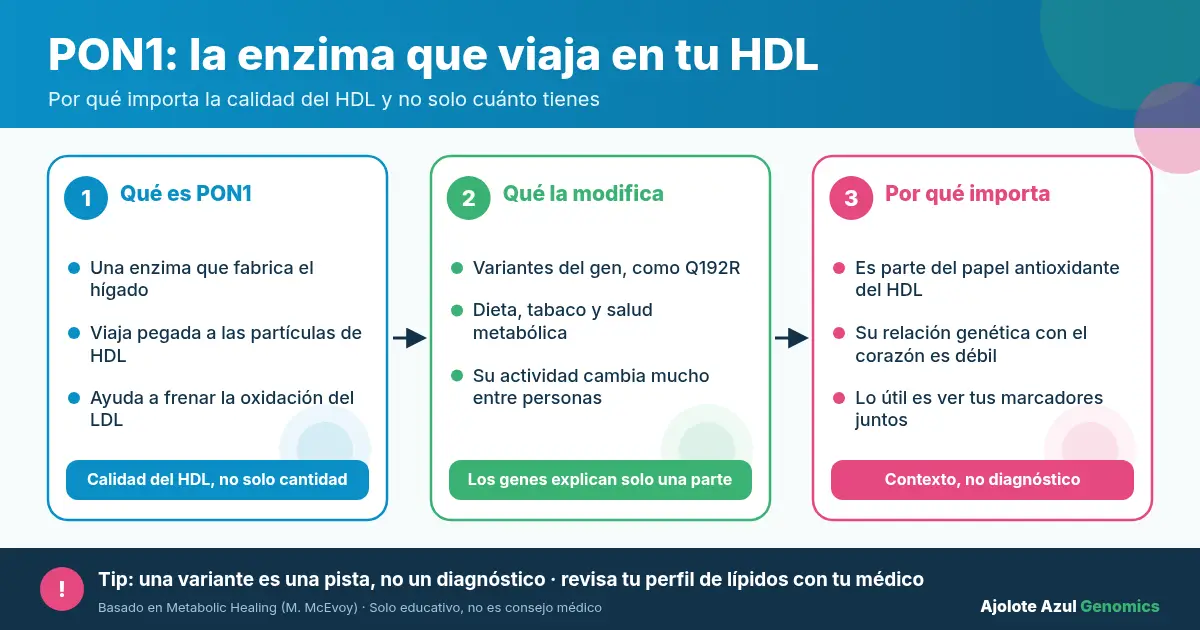
Wellness
PON1 Gene: Function, HDL, and the Q192R Variant
What does the PON1 gene do? How it relates to paraoxonase, HDL cholesterol, and the Q192R variant—what the evidence shows and its limits.
7 min readRead more
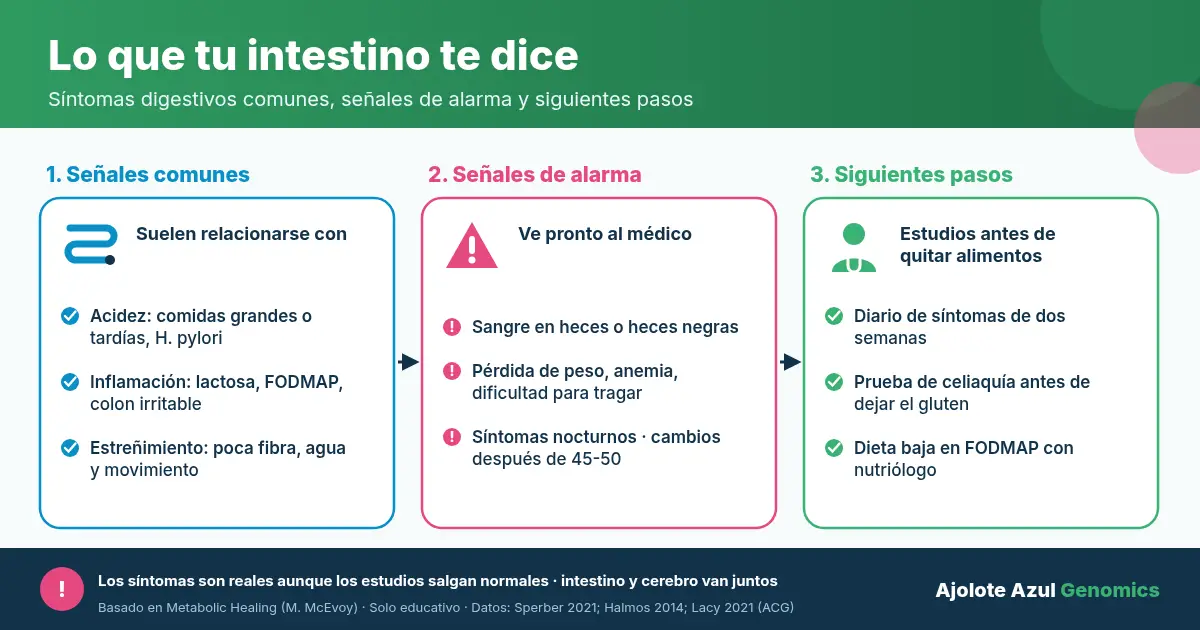
Wellness
Digestive Symptoms: What Your Gut Is Telling You
Bloating, heartburn, or constipation can have several causes. Learn the warning signs and how a genetic test looks at lactose, gluten, and B12.
8 min readRead more

Wellness
How a Virus Infects a Cell and How the Body Defends
Step by step: how a virus hijacks a cell to multiply, and the defenses your body uses—interferons, sensors, and apoptosis.
5 min readRead more
Did you like this article?
Discover how you can optimize your health with a personalized nutrigenetic test