
Back to blog
Wellness
Genetics-Based Supplements: Are They Right for You?
7 min read
Ajolote Azul Team
genetics-based supplements
nutrigenetics
personalized nutrition
vitamin metabolism
supplement decisions
Taking magnesium because someone on social media says it improves sleep, or vitamin D because "almost everyone needs it," can look like a wellbeing strategy. It does not answer the question underneath: does your body need it, at what dose, and for what goal? Genetics-based supplements aim to change that logic. Instead of choosing by trend, they start from genetic variants that can influence nutrient metabolism, the response to certain compounds, and some nutritional predispositions.
The promise is not that a DNA test can design a perfect capsule, or that it can replace a medical evaluation. Its value is adding a personal layer of information to decisions that should already consider diet, symptoms, physical activity, family history, medications, and clinical studies. Read well, genetics lets you move from general recommendations to much more specific conversations.
What genetics-based supplements are
They are supplements chosen or adjusted with the support of nutrigenetic information. A DNA analysis can identify variants associated with processes such as absorption, transport, or metabolism of vitamins and other nutrients. It can also show tendencies related to how you handle fats, carbohydrates, and caffeine, and to inflammation, muscle recovery, or oxidative stress.
This does not mean a variant determines a deficiency. Having a variant linked to lower efficiency in a given metabolic pathway does not confirm that a current problem exists. Context is required and, in many cases, biomarkers measured in blood or other studies. Genetics speaks of predisposition. Clinical tests show what is happening now.
For example, a person may have variants that justify watching folate or vitamin D metabolism more closely. If they also have low laboratory values, a diet that falls short, or a period of higher physiological demand, the professional can consider a more precise supplementation strategy. If levels are adequate, the better decision may be to improve habits and follow up, not to add another bottle to the cabinet.
Genetics helps you ask better questions
Nutrigenetics does not work like a simple traffic light of "take this" or "do not take this." It works better as a guide for priorities. It helps you ask which nutrients deserve attention, which habits may have a greater impact, and which results are worth monitoring.
In practice, a genetic report can offer information on areas such as these:
- Metabolism of folate, vitamin B12, and other B-complex vitamins.
- Tendencies in the metabolism of vitamin D, fats, and carbohydrates.
- Sensitivity to caffeine and individual response to exercise.
- Recovery needs, inflammation, and oxidative stress, according to personal context.
The benefit is avoiding two common extremes: supplementing without discrimination, or setting aside a useful step because a generic recommendation did not seem relevant. Genes do not replace clinical judgment, but they can point to where it is worth looking first.
When personalizing supplementation can help
A genetics-based strategy can make sense for someone who wants to prevent with data, not with guesses. It can also help people who already look after their diet but still cannot resolve persistent fatigue, poor recovery, trouble reaching body-composition goals, or questions about specific nutrients.
In athletes, for example, the conversation can focus on recovery, tolerance of stimulants, response to training, and quality of rest. This is not a promise of better performance because of one specific variant. It is a way to join genetic information with training load, diet, sleep, and competitive goals.
For people on restrictive diets, with relevant family history, or in stages of high demand — such as intense training, aging, hormonal changes, or physical recovery — knowing certain predispositions can help decide which biomarkers to watch. In these cases the supplement is a possible tool, not the automatic starting point.
There is also a group that needs special care: people living with chronic illness, cancer, kidney or liver disorders, pregnancy, or breastfeeding, and people who take several medications. Here personalization has to be clinical. A supplement can interfere with a treatment, change how a drug is absorbed, or be a poor fit for a given condition. Pharmacogenetics and a medical review are especially relevant when medications, herbal products, and supplements are combined.
What a genetic test can say, and what it cannot
A nutrigenetic test analyzes selected variants through targeted genotyping. Its usefulness depends on those variants having a known link to relevant biological pathways, and on the report turning the findings into actions you can understand. Receiving a list of genes without interpretation rarely changes a health decision.
A test can point to an inherited tendency. It cannot diagnose a deficiency or an illness, and it cannot predict with certainty how you will respond to each supplement. On its own it also does not detect the quality of your diet, your stress level, your microbiota, your sleep, or whether you actually follow a plan. All of those factors matter and, at times, they weigh more than an isolated genetic variant.
That is why it is wise to doubt recommendations that promise to fix energy, weight, longevity, or performance with a single formula. Biological response depends on many factors. The best personalization combines genomics, clinical data, and follow-up.
How to decide without unnecessary supplementation
Before you buy a supplement because of a genetic result, it helps to follow a clear sequence. First, define the goal: do you want to correct a documented deficiency, improve recovery, support a specific diet, or understand symptoms that need evaluation? A concrete goal lets you measure whether the step is working.
Next, review habits and history. Total protein, variety of foods, sun exposure, alcohol intake, rest, and medications can explain much more than a capsule. If symptoms persist or risk factors are present, the next step is to consult a professional and consider laboratory studies.
Finally, if a supplement is indicated, set the dose, the duration, and how you will follow up. Not every product is equivalent, and a larger amount does not always mean more benefit. Some fat-soluble vitamins and minerals can build up or cause adverse effects in excess. The right question is not "which supplement do my genes assign me?" It is "which step makes sense in my case, and how will we know if it is working?"
From a genetic result to an action plan
The experience changes when the analysis does not end in a digital report. At Ajolote Azul, the nutrigenetic test uses a buccal swab sample sent from home and includes a specialized consultation to interpret the results. That conversation connects the variants analyzed with your diet, goals, history, and lifestyle.
The method matters too. Targeted genotyping looks at specific variants with defined relevance, while laboratory quality, how genetic data are handled, and a clear account of limits decide whether the result can be used responsibly. Genetic privacy is not an administrative detail. It is part of an informed decision.
A useful plan can include changes to how you eat, training priorities, rest habits, extra studies, and supplementation only when it is justified. Some people will need simple steps they can keep. Others will need to coordinate with their physician, dietitian, or treating specialist. Personalization is not about doing everything differently. It is about doing what fits, with greater precision.
The best supplementation starts before the supplement
Genetics can show pathways that deserve attention years before an obvious problem appears. That is a valuable opportunity when it is used with judgment: to prevent, to monitor, and to make better-informed decisions, not to turn every variant into a prescription.
Knowing your DNA does not replace the fundamentals, but it can make them more personal. When a supplement answers a clear goal, clinical data, and a professional interpretation, it stops being a gamble and becomes a health decision with a direction.
A
Ajolote Azul Team
Specialist in wellness, nutrition and holistic health. Passionate about sharing science-based knowledge to improve quality of life.
Keep Reading
Related Articles
Discover more content on this topic that might interest you
Wellness
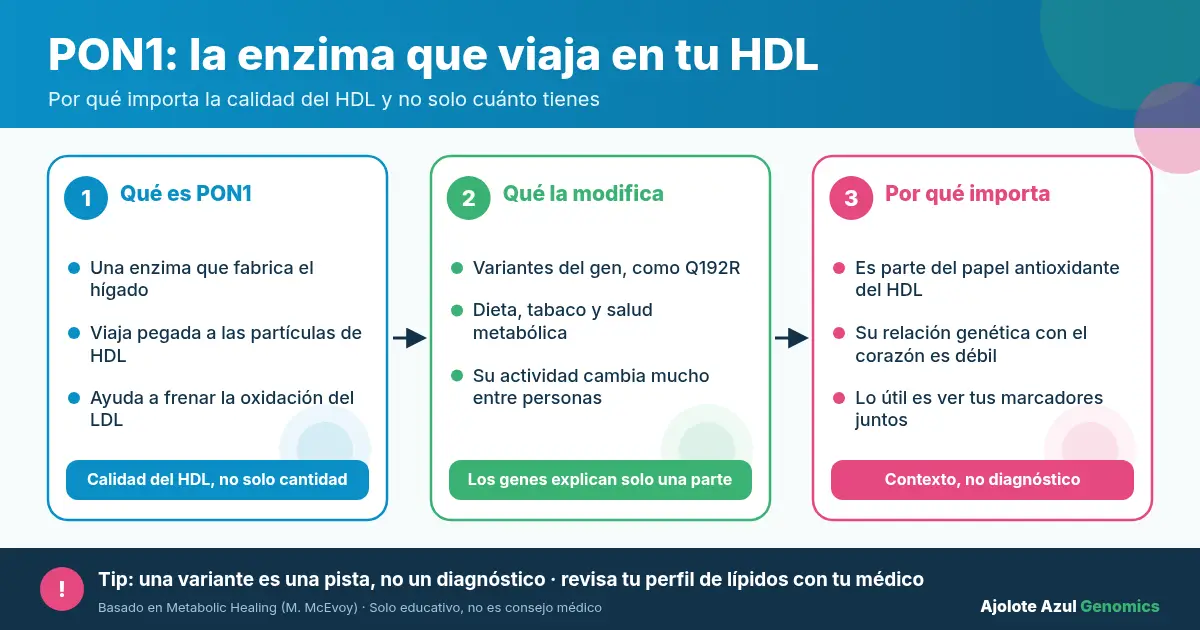
PON1 Gene: Function, HDL, and the Q192R Variant
What does the PON1 gene do? How it relates to paraoxonase, HDL cholesterol, and the Q192R variant—what the evidence shows and its limits.
7 min readRead more
Wellness
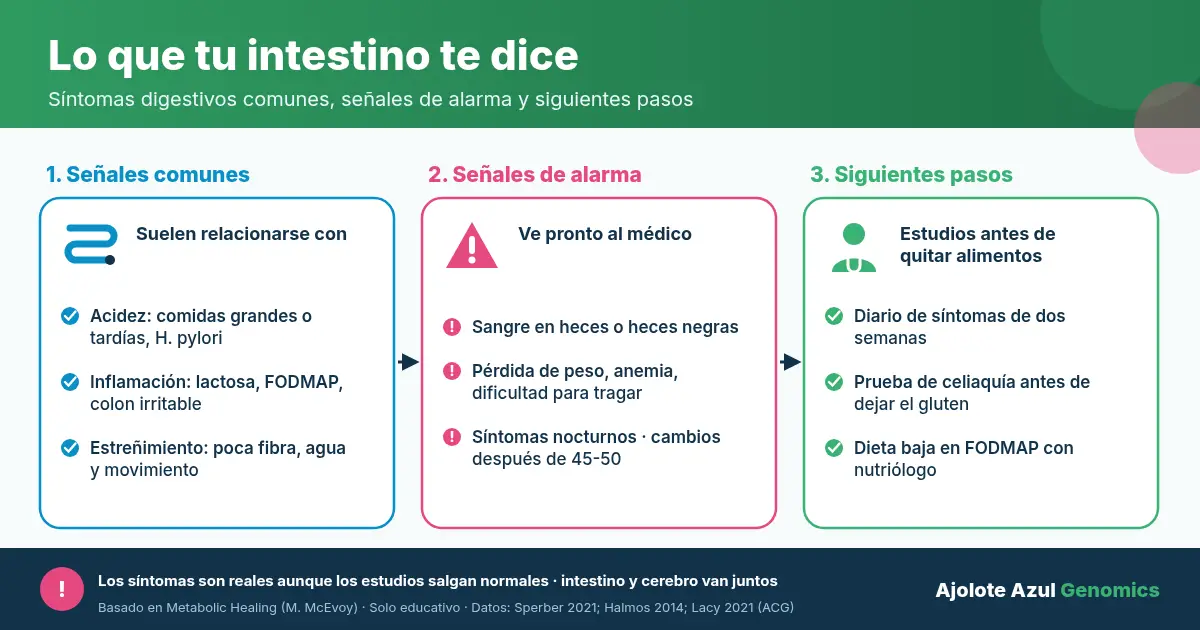
Digestive Symptoms: What Your Gut Is Telling You
Bloating, heartburn, or constipation can have several causes. Learn the warning signs and how a genetic test looks at lactose, gluten, and B12.
8 min readRead more

Wellness
How a Virus Infects a Cell and How the Body Defends
Step by step: how a virus hijacks a cell to multiply, and the defenses your body uses—interferons, sensors, and apoptosis.
5 min readRead more
Did you like this article?
Discover how you can optimize your health with a personalized nutrigenetic test