Back to blog
Nutrigenetics
Genetics and Personalized Nutrition: How Are They Connected?
5 min read
Ajolote Azul Team
genetics and nutrition
personalized nutrition
nutrigenetics
DNA and diet
metabolism
genetic test
Did you know two people can eat exactly the same, do the same exercise and get completely different results? That happened to Laura and her sister: same diet, same gym… and her sister lost weight easily while Laura stalled. For years she thought it was "lack of willpower," until she discovered the truth: their genetics were different.
Genetics and personalized nutrition are far more connected than most people imagine. Your DNA directly influences how you process food, how hungry you feel, how you store fat and even which type of exercise works best for you. In this guide we explain how they relate and how to use that information to your advantage.
Want to eat according to your DNA instead of the average? Discover Ajolote Azul's nutrigenetics test.
How does genetics influence nutrition?
Nutrigenetics is the science that studies how your genes affect the way your body uses food. Instead of generic advice ("eat fewer carbs" or "do cardio every day"), it gives you specific answers based on your DNA.
Some examples that appear clearly in a Nutrigenomix report:
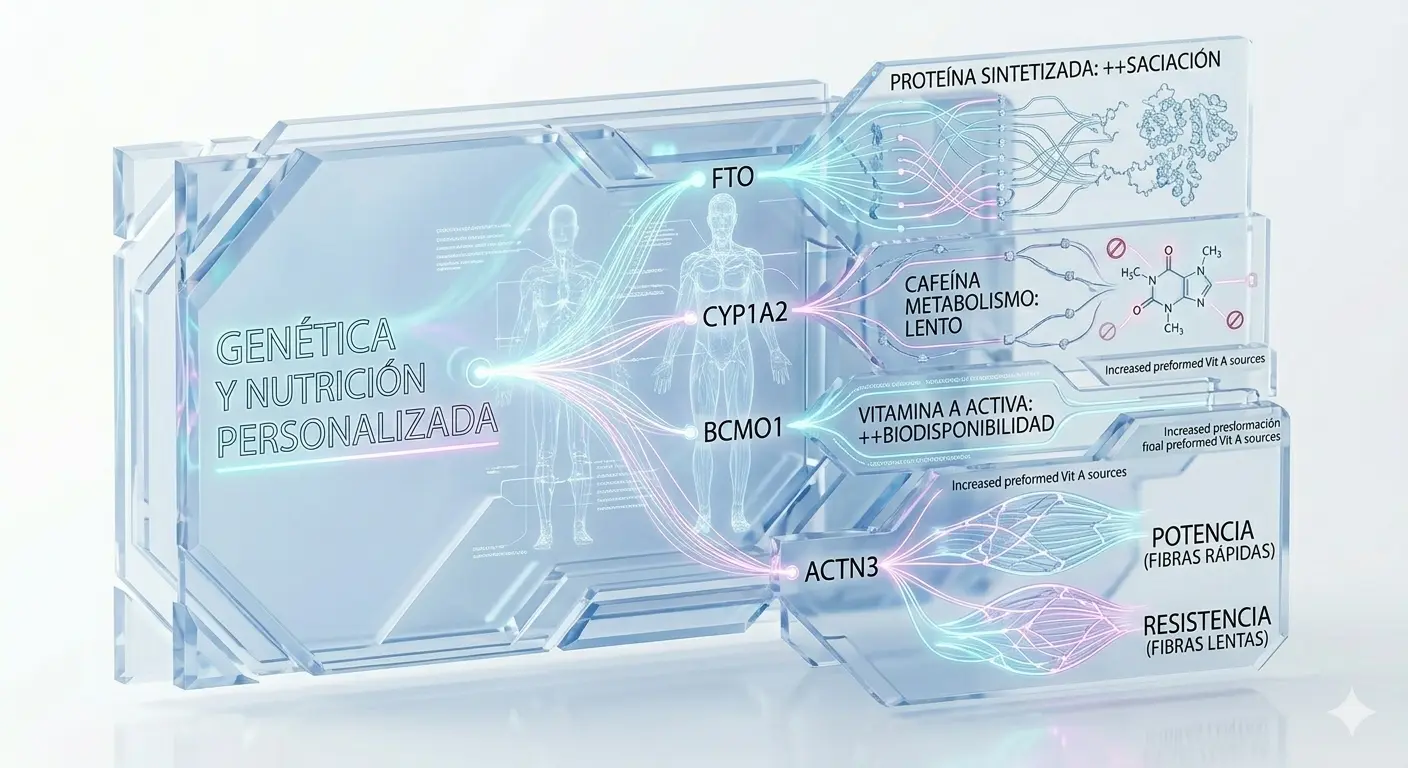
- FTO gene: indicates whether you tend to feel hungrier and prefer calorie-dense foods. With the risk variant, the report usually recommends increasing protein (up to 25-35% of your calories) to feel more satisfied.
- CYP1A2 gene: tells you how you metabolize caffeine. If you're a slow metabolizer, afternoon coffee can affect your sleep and recovery.
- BCMO1 and FUT2 genes: reveal whether you convert certain food vitamins well or need more bioavailable sources (for example, animal-based B12 or supplements).
- ACTN3 gene: indicates whether you respond better to strength or endurance training.
Genetics-based personalized nutrition doesn't tell you what you "can't" eat: it tells you what suits you best. It's like having a GPS instead of a generic map.
What is the relationship between nutrients and your metabolism?
Your metabolism doesn't work like everyone else's, and that changes how you use each nutrient. A nutrigenetic test translates those differences into concrete recommendations:
| Nutrient / factor | Related gene | What it guides | | ----------------- | ------------ | ---------------------------------------------------------------- | | Vitamin A | BCMO1 | Whether you convert beta-carotene well or need preformed sources | | Vitamin B12 | FUT2 | Your absorption and supplementation needs | | Caffeine | CYP1A2 | How much you tolerate and the best time to drink it | | Appetite and fat | FTO | Your tendency toward hunger and how much protein suits you | | Performance | ACTN3 | Whether strength or endurance suits you better |
What are the benefits of personalizing your diet based on your DNA?
When you understand your genetics, you stop fighting your body and start working with it. The most common benefits:
- Real results at last, instead of trying diets that work "for others."
- Better satiety and appetite control by adjusting protein and carbs.
- Targeted supplementation: only what your body actually needs.
- More efficient training based on your profile (strength vs endurance).
- Less frustration and guilt: decisions based on data, not guesses.
After receiving her report, Laura discovered she needed more protein than she was eating. She increased protein at every meal, cut refined carbs and adjusted her training. Within three months she saw real changes for the first time in years. It wasn't magic: it was personalized information.
Ready to stop guessing? Take your nutrigenetics test with Ajolote Azul or book a consultation.
What can a genetic test add to your nutrition?
A nutrigenetic test gives you a report with specific recommendations for your profile:
- What to eat and how much, with vitamin and mineral amounts based on your genes.
- Which supplements to consider (and which you probably don't need).
- Which type of exercise suits you and your risk of fatigue or injury.
- Your real intolerances and sensitivities (lactose, gluten, caffeine).
All in clear, actionable language: you don't need to be a scientist to apply it.
Common myths about genetics and nutrition
Let's clear up the most common ones:
- "My genetics is my destiny." False. Genetics marks tendencies, not sentences; your lifestyle is still decisive.
- "A test will tell me which diseases I'll get." No. A nutrition test focuses on how you use food, not on diagnosing diseases.
- "Personalized nutrition is only for athletes or the wealthy." Not anymore: it's an accessible tool for anyone who wants to decide with data.
- "If I eat healthy, I don't need to know my genetics." Generic "healthy" eating doesn't guarantee it's optimal for you.
In short: why let your genetics guide your nutrition?
Genetics doesn't determine your destiny, but it gives you a huge advantage when you use it in your favor. Personalized nutrition is no longer a luxury or something from the future: it's an accessible tool to stop guessing and start deciding with real data about your own body.
Are you still eating "what you're supposed to eat" even though it isn't working, or would you rather discover what your body actually needs?
Take your nutrigenetics test now with Ajolote Azul and within a few weeks you'll have a complete report with recommendations specific to your genetics. Your body has its own instruction manual; it's time to read it.
Want to dig deeper? We recommend:
- What is nutrigenetics used for?
- What is a genetic test and what can it reveal?
- Genetics and personalized medicine: what you should know
Sources
A
Ajolote Azul Team
Specialist in wellness, nutrition and holistic health. Passionate about sharing science-based knowledge to improve quality of life.
Keep Reading
Related Articles
Discover more content on this topic that might interest you
Nutrigenetics
What Is Nutrigenetics Used For?
Learn what nutrigenetics is used for, how it relates to your DNA and how it can guide truly personalized nutrition decisions.
5 min readRead more
Nutrigenetics
Nutrition Genetic Test in Mexico
Discover what a nutrition genetic test in Mexico analyzes and how it can help you understand your metabolism, your nutrients and your eating habits.
4 min readRead more
Nutrigenetics
Genetic Test to Know Which Diet Suits Me
Discover how a genetic test can guide your diet and help you better understand your metabolism and your real nutritional needs.
4 min readRead more
Did you like this article?
Discover how you can optimize your health with a personalized nutrigenetic test