
Back to blog
Wellness
When to Request a Clinical Genetic Test
8 min read
Ajolote Azul Team
when a clinical genetic test is the right step
clinical testing compared with wellness genetics
family history that deserves medical review
choosing nutrigenetics or pharmacogenetics
questions to ask before any genetic study
how the sample is collected and when results arrive
It makes sense to request a clinical genetic test when there is a concrete medical question: family history that keeps repeating, symptoms your doctor wants to investigate, or a finding that needs confirmation. If what you want is to personalize your diet or prepare a conversation about medications, a nutrigenetic or pharmacogenetic test with an interpretation consult is usually the best place to start.
A genetics result can add valuable context, but its usefulness depends on asking the right question at the right time. Knowing when to request a clinical genetic test is not about looking for quick answers in a report. It is about recognizing whether there is a personal, family, or treatment situation that deserves a deeper evaluation with a health professional.
For many people, the starting point is a concrete doubt: a family history that repeats, symptoms that need a medical evaluation, several medications at the same time, or the wish to understand better how their body responds. Genetics can enrich that conversation, but it does not replace the clinical history, the physical exam, or your doctor’s judgment.
What sets a clinical test apart from a wellness test
A clinical test is usually requested within medical care when there is a specific question the specialist needs to investigate. It may require a prior evaluation, more detailed informed consent, sample collection under particular conditions, and an interpretation centered on the person’s clinical and family context.
Wellness genetic tests and direct-to-consumer pharmacogenetic tests, by contrast, analyze selected variants that can guide everyday decisions. A nutrigenetic test can provide information on areas such as metabolism, response to certain nutrients, eating habits, and performance. A pharmacogenetic test reviews variants related to the way some people metabolize or respond to medications.
The difference is not that one is “better” than the other. It is the question you want to answer. If you want to personalize nutrition habits, training, or conversations about medications, a targeted test with an interpretation consult can be a good place to start. If there is a concrete medical suspicion, a complex family history, or a finding that needs confirmation, the path should be a clinical evaluation with the right specialist.
When to request a clinical genetic test
There are situations in which it is worth pausing and asking for medical guidance before you choose a test. The first is a family pattern that stands out: several relatives with the same condition, diagnoses at unusual ages, or prior genetic information in the family. Bringing those details to a visit lets the professional decide whether a clinical test is relevant, which one would make sense, and how broad the analysis should be.
It also makes sense to request an evaluation when a doctor raises a genetic possibility within their clinical reasoning. In that case, the test should not be chosen for its popularity or for how many genes it includes. It should answer a clear hypothesis and come with an explanation of what the result could mean, its limits, and the possible next steps.
Another relevant moment is when you receive a prior genetic result that worries you or that seems hard to interpret. Consumer reports do not always cover every variant, and an isolated result rarely explains a health state on its own. A professional can review the quality of the report, your personal history, and whether the information needs to be confirmed or expanded through a clinical route.
Pharmacogenetics deserves a special mention. If you take several medications, you have had unexpected responses to treatments, or your doctor is considering treatment options, knowing pharmacogenetic variants can open a better-informed conversation. Even so, a report does not by itself say which drug you should start, change, or stop. It is information to review with the doctor who knows your diagnosis, dose, interactions, and history.
Signs that should not wait for a wellness test
If you have symptoms that are new, intense, persistent, or getting worse, the priority is timely medical care. A genetic test is not a tool for handling an emergency or for replacing clinical studies a professional has indicated.
This also applies if you are trying to explain an important change in your health, if you are already in follow-up for a medical condition, or if a treatment decision is coming up. In those cases, the doctor can decide whether genetics adds useful information or whether other studies are needed first. Choosing the right test saves time, reduces mistaken interpretations, and protects the quality of decisions.
Before you request it, frame a useful question
A good genetic evaluation starts before the swab or the blood draw. Ask yourself what you want to understand and what you would use the information for. “I want to eat better” opens a different conversation from “my specialist needs to assess whether there is a hereditary cause in my family.”
Gather family history in as much detail as you can: relationship, approximate ages, known diagnoses, and prior genetic results if they exist. You do not need to build a perfect tree. Even partial details help the professional decide whether the pattern calls for genetic counseling or a specific clinical test.
Also prepare an up-to-date list of medications, supplements, and personal goals. For a pharmacogenetic visit, this focuses the conversation on the relevant treatments. For personalized nutrition, it helps turn findings into realistic strategies based on your schedule, diet, physical activity, and priorities.
How to choose among clinical guidance, nutrigenetics, and pharmacogenetics
Not everything calls for the same level of analysis. Clinical guidance is the right route when the goal is to assess a concrete medical or family situation. The specialist can order the appropriate type of test and explain the implications for you and, in some cases, for your relatives.
Nutrigenetics is a useful option if your goal is to learn about variants associated with the interaction between genetics and diet and lifestyle. It can be especially interesting for people who already look after their health, train, want to understand their metabolism, or want to move past generic recommendations. Its value grows when the report is turned into specific, sustainable actions, and shrinks when it is read as a rigid list of allowed and forbidden foods.
Pharmacogenetics can be relevant for people who use medications continuously or who want to prepare a more precise conversation with their doctor. Analyzing genes linked to the metabolism of more than 200 medications offers context, but it must always be integrated with dose, kidney and liver function, other treatments, and professional follow-up.
At Ajolote Azul, the NGx test analyzes 70 markers in 59 genes and the PGx test reviews 51 genes. Both include a specialized 60-minute consult to ground the results in real life. The kit uses a buccal swab, arrives at home in 3 to 5 business days, and results are available in about 2 to 3 weeks from purchase. The analysis is done in a high-precision laboratory with CLIA and CAP certifications, and it comes with explicit genetic-privacy protocols.
Questions worth asking at the visit
Before you move ahead with any study, it is worth understanding which question it is meant to answer, what type of sample it requires, and what the limits of the analysis are. Also ask who will interpret the result, whether a follow-up test might be needed, and how your genetic data will be protected.
If it is pharmacogenetics, ask how your doctor will integrate that information with your current treatment. If it is nutrition, look for recommendations that take into account your preferences, budget, routine, and goals. Genetics adds a layer of personalization, but your daily decisions and your professional follow-up are what turn that information into a useful strategy.
The result is the start of a conversation
A genetic report can bring relief, curiosity, or more questions. All three reactions are normal. What is most valuable is not receiving a label, but having an interpretation that puts the findings in perspective and avoids absolute conclusions.
Request a clinical test when there is a medical or family question that requires professional evaluation. Choose nutrigenetics or pharmacogenetics when you want to add practical information to your wellness decisions and to your conversations with specialists. With a clear question, a reliable laboratory, and expert guidance, knowing your genetics can become a more conscious way to take part in your own health.
You can compare the available genetic tests and their prices or review our clinical tests, which require a medical order. If you are unsure which one fits you, write to us.
Frequently asked questions
Do I need a medical order for a genetic test?
Clinical tests (for example, exome or genome sequencing) are requested within a medical evaluation. The nutrigenetic (NGx) and pharmacogenetic (PGx) tests do not require a medical order and include a 60-minute interpretation consult.
What is the difference between a clinical test and a wellness test?
The clinical test answers a specific medical question raised by your specialist. The wellness test analyzes selected variants to guide decisions about nutrition, lifestyle, or the conversation with your doctor about medications.
How is the sample collected?
For NGx and PGx, a buccal swab is used that arrives at your home; the results are ready in about 2 to 3 weeks from purchase.
A
Ajolote Azul Team
Specialist in wellness, nutrition and holistic health. Passionate about sharing science-based knowledge to improve quality of life.
Keep Reading
Related Articles
Discover more content on this topic that might interest you
Wellness
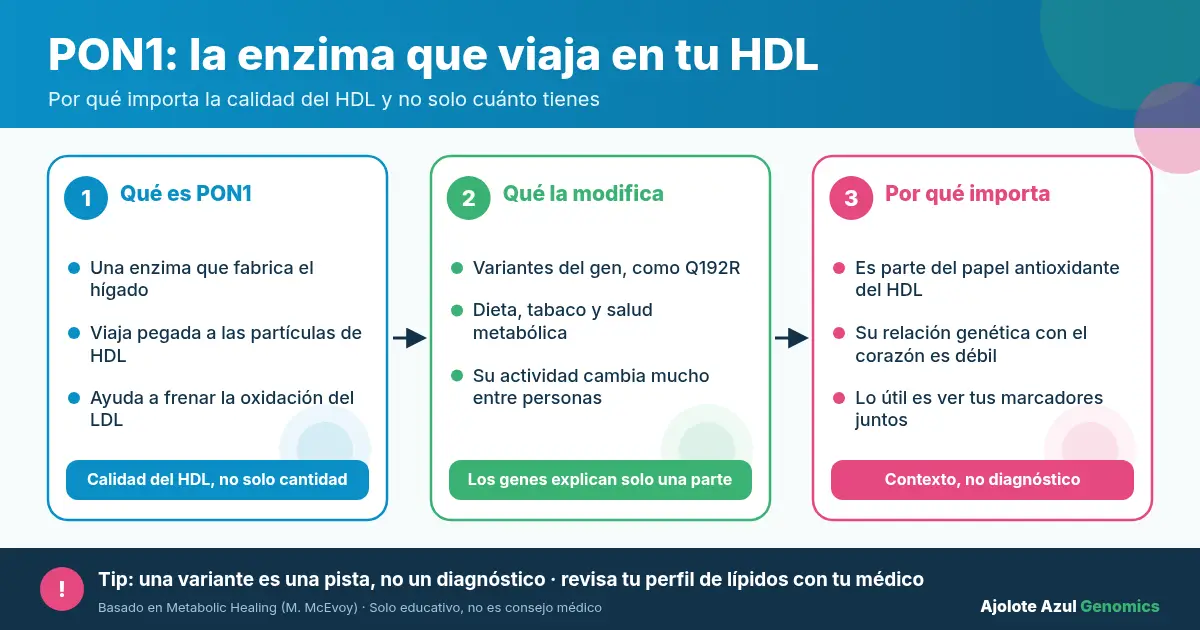
PON1 Gene: Function, HDL, and the Q192R Variant
What does the PON1 gene do? How it relates to paraoxonase, HDL cholesterol, and the Q192R variant—what the evidence shows and its limits.
7 min readRead more
Wellness
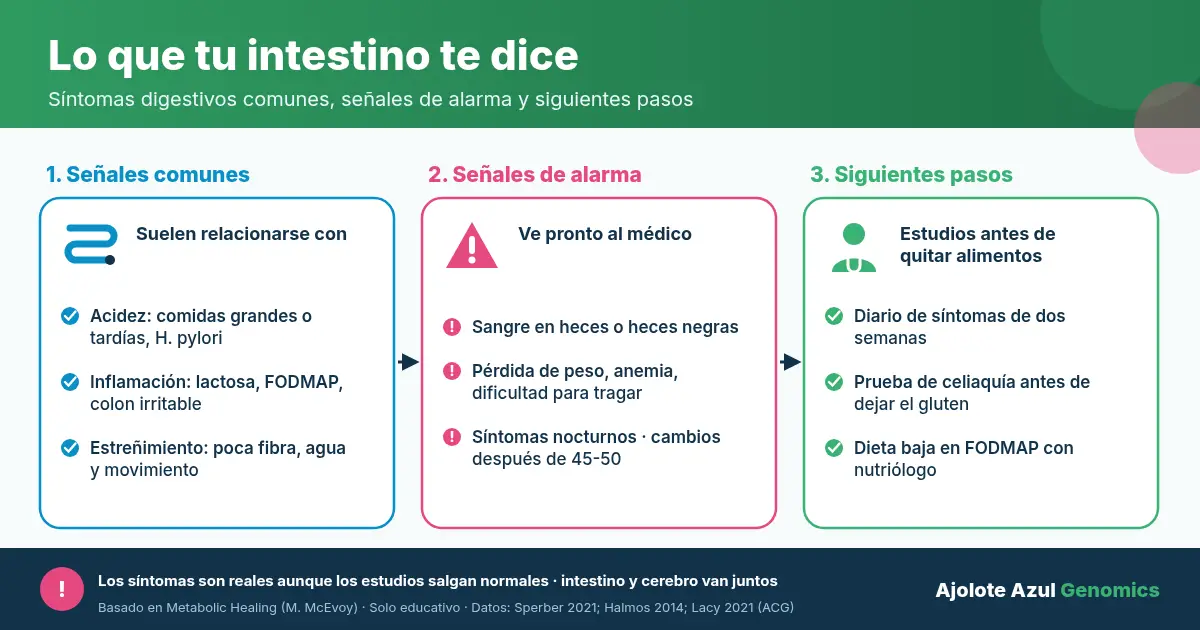
Digestive Symptoms: What Your Gut Is Telling You
Bloating, heartburn, or constipation can have several causes. Learn the warning signs and how a genetic test looks at lactose, gluten, and B12.
8 min readRead more

Wellness
How a Virus Infects a Cell and How the Body Defends
Step by step: how a virus hijacks a cell to multiply, and the defenses your body uses—interferons, sensors, and apoptosis.
5 min readRead more
Did you like this article?
Discover how you can optimize your health with a personalized nutrigenetic test