Back to blog
Wellness
VDR Gene and Vitamin D: 5 Key Factors
9 min read
Ajolote Azul Team
VDR gene
vitamin D
CYP2R1
nutrigenetics
vitamin D receptor
The VDR gene builds the vitamin D receptor, the protein that active vitamin D binds to in order to switch genes related to calcium, bone, and the immune system on or off. It matters because, together with sunlight, other genes, and your gut, it influences how your body uses vitamin D. Vitamin D is often reduced to a number on a lab report and a supplement. But two people with the same blood level can use it very differently. Between the sun that reaches your skin and the genes that vitamin D ends up activating, there are several steps, and your environment, your DNA, your gut, and your medications influence each one.
Based on the work of our partners at Metabolic Healing (Michael McEvoy). Read the original article: 5 Factors That Inhibit Your Vitamin D Receptor (VDR)
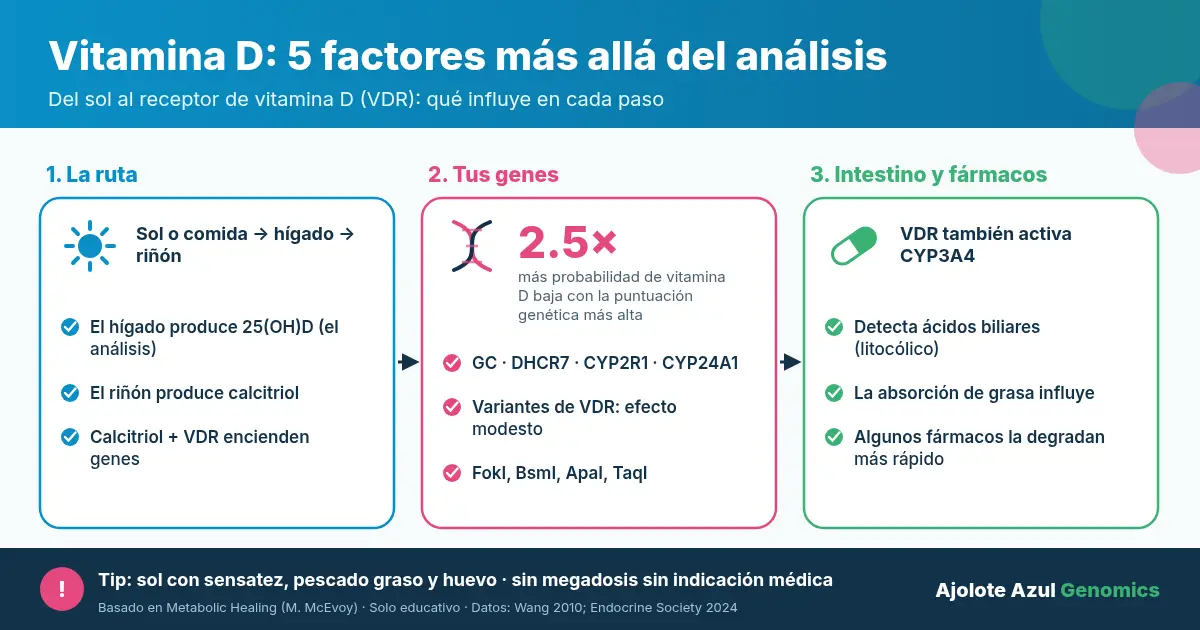
These are five factors that determine how your body handles vitamin D and what they mean in practice.
First: how vitamin D works
- Production or intake. UVB light produces vitamin D3 in your skin; smaller amounts come from food or supplements.
- Liver. Vitamin D is converted into 25-hydroxyvitamin D [25(OH)D], the form measured in blood tests.
- Kidney and other tissues. 25(OH)D is transformed into calcitriol, the active hormone.
- The receptor. Calcitriol binds to the vitamin D receptor (VDR) inside cells. Together with a partner receptor (RXR, which responds to a vitamin A derivative), it switches genes on or off.
Those genes help absorb calcium, maintain bone and muscle, and regulate part of the immune system.
Factor 1: sun, skin, and season
Skin is the main source. How much vitamin D you produce depends on the time of day, the season, latitude, skin tone, age, sunscreen, and how much skin you expose. Even in a sunny country like México, office work, urban smog, and staying covered mean many people produce less than they think. Body fat also plays a role: vitamin D is fat-soluble, and people with obesity often have lower blood levels.
Factor 2: genes that shape your vitamin D level
Blood levels are partly inherited. A genome-wide study of nearly 34,000 people identified variants near three genes that clearly influence 25(OH)D (1):
- GC, which makes the vitamin D binding protein in the blood.
- DHCR7, which takes part in producing the vitamin D precursor in the skin.
- CYP2R1, the main liver enzyme that produces 25(OH)D.
A fourth gene, CYP24A1, which breaks down vitamin D, also appeared. People with the highest combined genetic score had about 2.5 times the likelihood of insufficient levels (below 75 nmol/L, or 30 ng/mL) compared with those with the lowest score (1).
So if your levels stay low even though you get sun and eat reasonably well, genetics may be part of the explanation.
Factor 3: variants in the VDR gene itself
The receptor gene, VDR, has many common variants. The best known are called FokI, BsmI, ApaI, and TaqI, and they have been studied in relation to bone density, immunity, thyroid autoimmunity, and more.
To be straightforward: the most studied ones (BsmI, ApaI, and TaqI) probably are not functional on their own, and how VDR variants change the receptor's signal is largely unknown. Their effect on disease risk appears modest (2). They can add context in a nutrigenetic report, but no isolated VDR result tells you how much vitamin D to take.
If you want to understand this approach better, read what nutrigenetics is used for.
Vitamin D and medications: two sides of your DNA Ajolote Azul's NGx nutrigenetic test includes vitamin D (with genes such as CYP2R1 and GC) among its 70 genetic markers, and the PGx pharmacogenetic test shows how you might respond to more than 200 medications through genes such as CYP2D6 and CYP2C19. Both come together in the NGx + PGx combo. Want to confirm which vitamin D genes are analyzed? Book a free 15-minute call.
Factor 4: bile acids and your gut
The VDR does not respond only to vitamin D. Laboratory research showed that it also works as a sensor for lithocholic acid, a bile acid produced by gut bacteria that can be toxic in excess. When lithocholic acid or vitamin D activates the VDR, cells make more CYP3A, an enzyme that helps clear that bile acid from the liver and the intestine (3).
This connects vitamin D with digestion and the microbiota. It also explains why digesting fats well matters: vitamin D is absorbed along with them, so problems that affect fat absorption (such as celiac disease, some pancreatic disorders, or certain bariatric surgeries) can lower your levels. If you are interested in how your genes shape your microbiota, read what it means to be a "non-secretor" (FUT2 gene).
Factor 5: medications and the CYP3A4 connection
CYP3A4 is one of the most important enzymes for processing medications. In human intestinal cells, active vitamin D increased CYP3A4 production because the VDR binds directly to that enzyme's gene (4). How much this weighs in daily life is still being studied, but it shows that vitamin D and drug metabolism share machinery.
The relationship also runs the other way. Some medications, such as certain anticonvulsants, long-term corticosteroids, and some antiretrovirals, can speed the breakdown of vitamin D or reduce its absorption. If you take any medication regularly, ask your doctor whether it affects your vitamin D. Pharmacogenetics, which studies how your genes change your response to medications, is the natural next step.
Should you measure vitamin D or simply supplement?
Guidelines have become more cautious. The Endocrine Society's 2024 guideline suggests against routine measurement of 25(OH)D in the general population, because studies have not shown that screening and chasing a specific level improves outcomes, and there is no clearly defined optimal level for health in general (5).
What it does suggest is vitamin D supplementation for girls, boys, and adolescents, adults older than 75, pregnant people, and adults with high-risk prediabetes. For healthy adults under 75, it advises against taking more than the recommended daily intake as a general health measure (5).
Measuring it still makes sense when a doctor suspects deficiency or there is a clinical reason, such as osteoporosis, absorption problems, kidney or liver disease, or medications that interfere with vitamin D.
Practical steps:
- Get sun sensibly on your arms and legs, without burning.
- Eat foods that contain vitamin D: fatty fish such as sardines, salmon, and tuna, egg yolk, and fortified milk.
- Do not take megadoses. Very high doses can raise calcium to dangerous levels. Follow the dose a professional indicates (more context in genetics-based supplements).
- Bring context to the visit: your medications, your digestive health, and, if you have it, your genetic report.
Frequently asked questions
What does the VDR gene do?
It builds the vitamin D receptor, the protein inside cells that binds active vitamin D (calcitriol) and switches on genes related to calcium absorption, bone health, and immune regulation.
Can genes cause low vitamin D?
They influence it. Variants near GC, DHCR7, CYP2R1, and CYP24A1 affect blood levels, and people who carry several of them are more likely to have insufficiency. Even so, sun, body weight, and diet carry a lot of weight.
Does having VDR polymorphisms mean I need more vitamin D?
Not necessarily. Common VDR variants, such as FokI, BsmI, ApaI, and TaqI, have modest effects that are still unclear. The dose should be based on your full situation and on a professional's recommendation, not on a single variant.
Does vitamin D interact with medications?
It can. In laboratory studies, active vitamin D increases CYP3A4, an enzyme that processes many drugs, and some medications lower vitamin D levels. Ask your doctor or pharmacist about your particular medications.
Turn your genes into a practical plan
- NGx nutrigenetic test: 70 genetic markers for nutrition, vitamins, intolerances, metabolism, and more, with a one-to-one consultation included. $9,880 MXN.
- PGx pharmacogenetic test: 51 genes and more than 200 medications. $9,800 MXN.
- NGx + PGx combo: $15,750 MXN. See the tests · Book your free 15-min call · Message us on WhatsApp
Want to know how your body processes vitamin D? The NGx nutrigenetic test ($9,880 MXN) includes your report, our specialized report, and a call to interpret it. See pricing
References
- Wang TJ, Zhang F, Richards JB, et al. Common genetic determinants of vitamin D insufficiency: a genome-wide association study. Lancet. 2010;376(9736):180-188. doi:10.1016/S0140-6736(10)60588-0. PubMed 20541252 · Free full text (PMC) · doi:10.1016/S0140-6736(10)60588-0
- Uitterlinden AG, Fang Y, Van Meurs JB, Pols HA, Van Leeuwen JP. Genetics and biology of vitamin D receptor polymorphisms. Gene. 2004;338(2):143-156. doi:10.1016/j.gene.2004.05.014. PubMed 15315818 · doi:10.1016/j.gene.2004.05.014
- Makishima M, Lu TT, Xie W, et al. Vitamin D receptor as an intestinal bile acid sensor. Science. 2002;296(5571):1313-1316. doi:10.1126/science.1070477. PubMed 12016314 · doi:10.1126/science.1070477
- Thummel KE, Brimer C, Yasuda K, et al. Transcriptional control of intestinal cytochrome P-4503A by 1alpha,25-dihydroxy vitamin D3. Mol Pharmacol. 2001;60(6):1399-1406. doi:10.1124/mol.60.6.1399. PubMed 11723248 · doi:10.1124/mol.60.6.1399
- Demay MB, Pittas AG, Bikle DD, et al. Vitamin D for the Prevention of Disease: An Endocrine Society Clinical Practice Guideline. J Clin Endocrinol Metab. 2024;109(8):1907-1947. doi:10.1210/clinem/dgae290. PubMed 38828931 · doi:10.1210/clinem/dgae290 · Published errata: J Clin Endocrinol Metab. 2025 Feb 18;110(3):e916.; J Clin Endocrinol Metab. 2025 Jul 15;110(8):e2810.
This article is for information and education only; it does not replace consultation, diagnosis, or treatment by a health professional. Talk with your doctor before changing your diet, your medications, or your supplements.
Based on the work of our partners at Metabolic Healing (Michael McEvoy). Read the original article: Metabolic Healing
A
Ajolote Azul Team
Specialist in wellness, nutrition and holistic health. Passionate about sharing science-based knowledge to improve quality of life.
Keep Reading
Related Articles
Discover more content on this topic that might interest you
Wellness
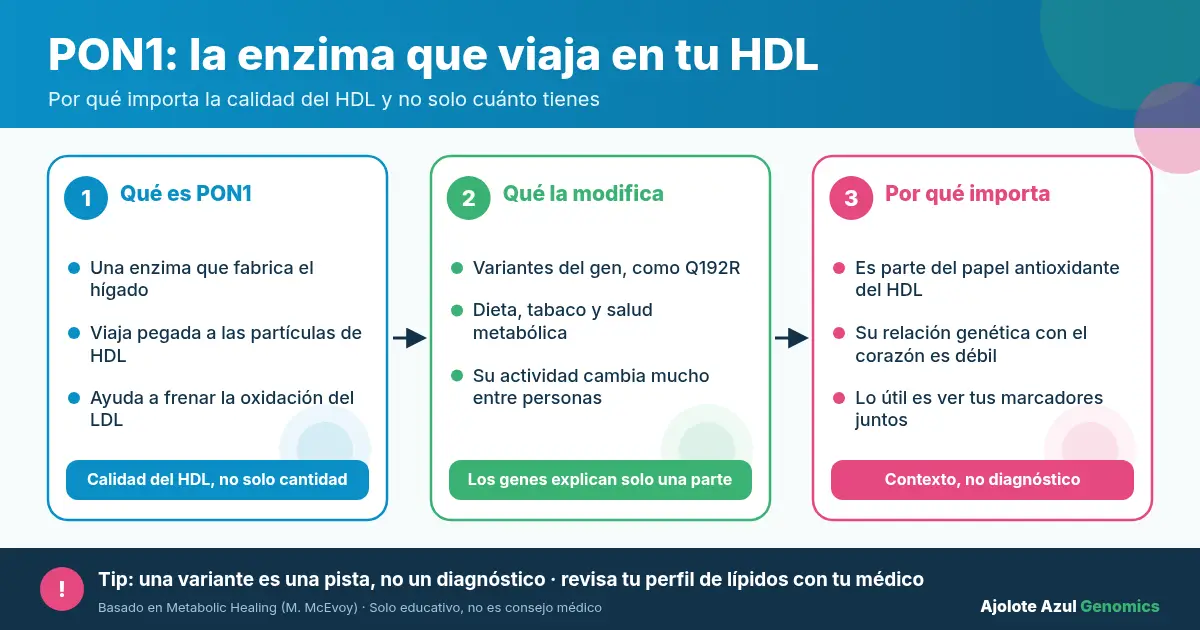
PON1 Gene: Function, HDL, and the Q192R Variant
What does the PON1 gene do? How it relates to paraoxonase, HDL cholesterol, and the Q192R variant—what the evidence shows and its limits.
7 min readRead more
Wellness
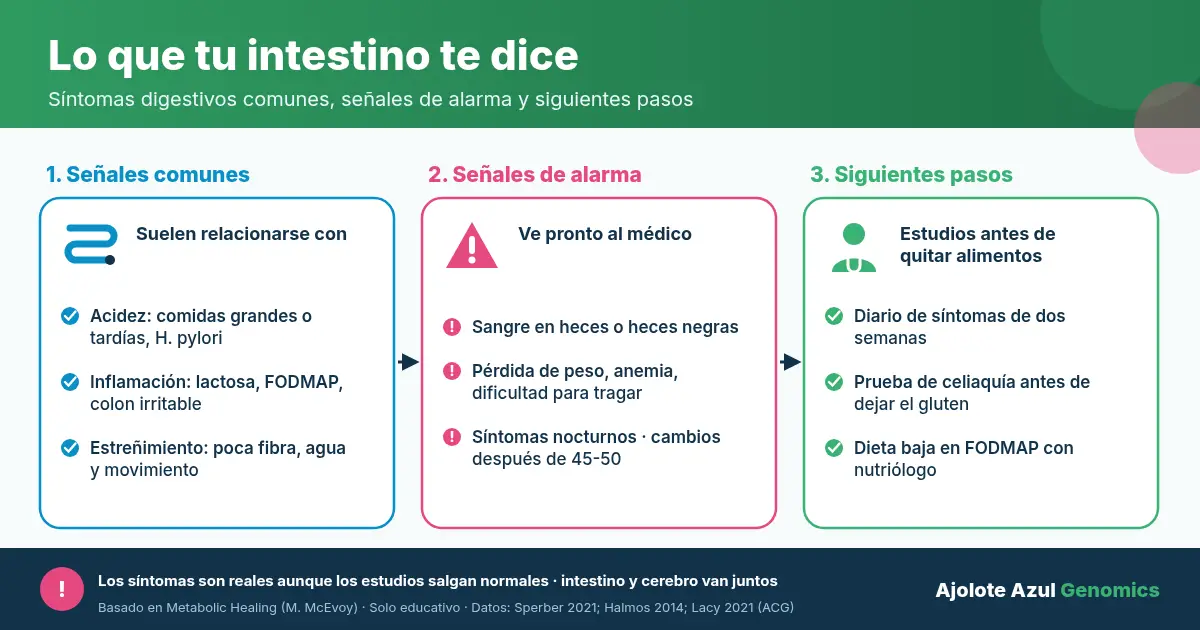
Digestive Symptoms: What Your Gut Is Telling You
Bloating, heartburn, or constipation can have several causes. Learn the warning signs and how a genetic test looks at lactose, gluten, and B12.
8 min readRead more
Wellness
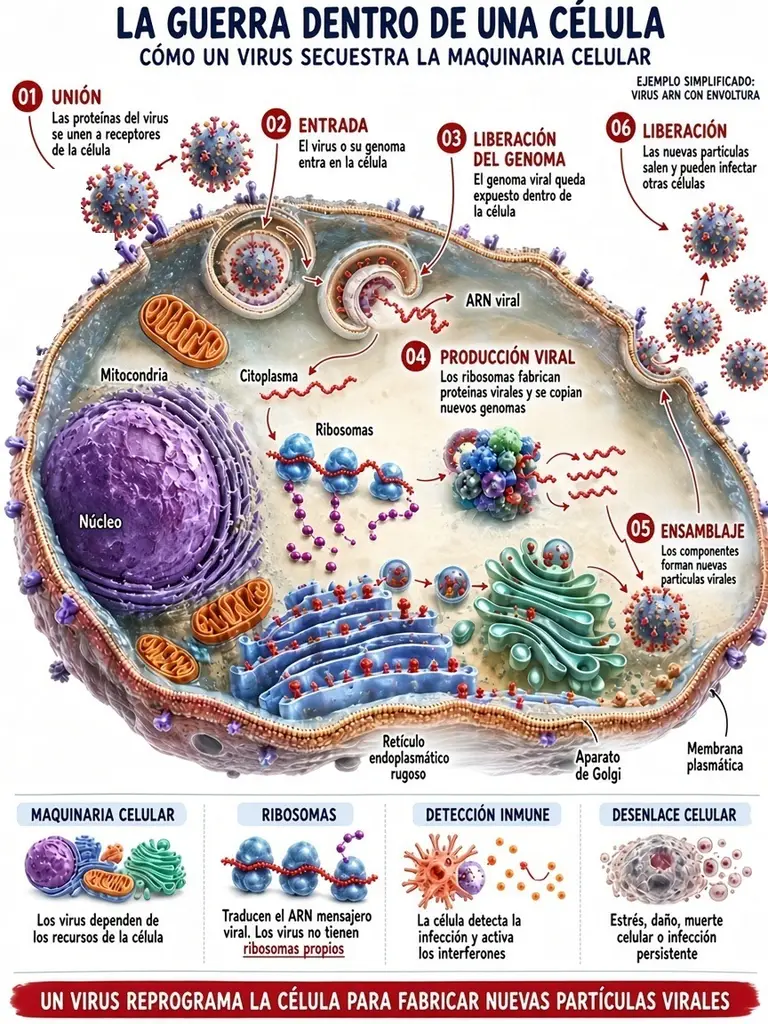
How a Virus Infects a Cell and How the Body Defends
Step by step: how a virus hijacks a cell to multiply, and the defenses your body uses—interferons, sensors, and apoptosis.
5 min readRead more
Did you like this article?
Discover how you can optimize your health with a personalized nutrigenetic test