
Back to blog
Wellness
Preventive Health: Information to Care for Your Wellbeing in Time
7 min read
Ajolote Azul Team
preventive health
genetic prevention
wellbeing
family history
personalized prevention
Waiting until you feel unwell to check your health is often an expensive, imprecise, and exhausting strategy. Preventive health offers a different starting point: know your risks, measure what is happening in your body, and act early enough for small changes to produce meaningful results.
This is not about living on alert or ordering tests without a clear reason. It is about moving from generic decisions to a personal strategy that combines habits, family history, clinical evaluations, and, when it is useful, genetic information. For one person that can mean catching a metabolic change in time. For another, it can mean adjusting a medication with their physician or understanding why a certain diet is not working.
What preventive health means in practice
Prevention is not a single annual visit or a list of supplements. It is an ongoing process to reduce risk, spot early changes, and make decisions before a problem becomes more complex.
Preventive medicine usually works at three moments. Primary prevention seeks to lower the chance of becoming ill through food, physical activity, sleep, vaccination, and cutting back risky habits. Secondary prevention detects changes in early stages with evaluations such as blood pressure, glucose, a lipid profile, imaging studies, or screening tests indicated by age, history, and sex. Tertiary prevention supports people who already have a diagnosis, to avoid complications, progression, or adverse effects.
The difference is personalization. Two people of the same age may need very different preventive conversations if one has a family history of diabetes, cancer, or cardiovascular disease, and the other uses several medications or has persistent changes in energy, weight, or physical recovery.
Why genetics changes the preventive conversation
Your DNA is not a fixed forecast. It is information about biological tendencies that interact with your environment, diet, rest, physical activity, stress, and medical care. Knowing certain variants can help you ask more precise questions and prioritize actions with a health professional.
A nutrigenetic test, for example, can add context about pathways related to nutrient metabolism, sensitivity to certain parts of the diet, or individual response to exercise. This does not replace a nutritional evaluation, and it does not decide on its own what you should eat. Its value shows up when it is read together with goals, lab results, body composition, symptoms, and lifestyle.
Pharmacogenetics looks at variants that can influence how some people metabolize or respond to certain medications. This information can be especially relevant for patients on several medications, long-term treatments, or with a history of adverse reactions. The decision to start, change, or adjust a drug always belongs to the treating physician, but arriving at the visit with better-interpreted data can make that visit richer.
There are also more complex clinical tests that need a specific indication, professional counseling, and a careful reading of what they can and cannot show. Not every genetic test is appropriate for every person, and a risk result is not a diagnosis. Genetics points to possibilities; clinical follow-up defines what to do with them.
Signals worth checking before they grow
Prevention works better when it does not depend only on obvious symptoms. Some changes deserve a clinical conversation even when they seem ordinary: persistent fatigue, unintentional weight gain or weight loss, sleep that does not restore you, high blood pressure, altered digestion, slow recovery after exercise, or family history that has never been reviewed in detail.
It is useful to review your strategy if you keep making an effort and do not see the result you expected. That can happen in people who train with discipline but recover poorly, who try restrictive diets without improving metabolic markers, or who take several supplements without knowing whether they meet a real need.
An orderly preventive evaluation usually considers four layers:
- Personal and family history, including diagnoses, ages at onset, and current medications.
- Relevant clinical measurements, such as blood pressure, glucose, lipids, body composition, and other studies a professional indicates.
- Habits you can keep: food, movement, sleep, alcohol, tobacco, stress, and mental health.
- Extra biological data, such as genetic tests, when they answer a concrete question and come with specialized interpretation.
The goal is not to pile up data. It is to choose the data that can change a decision.
How to build a preventive health plan you can keep
A useful plan starts with a clear question. You might want to lower your cardiometabolic risk, improve energy, prepare for pregnancy, understand your response to a treatment, or reach the next decade with more strength and independence. A priority keeps prevention from turning into a pile of unfinished tasks.
Then set a baseline. That includes family history, symptoms, habits, and earlier studies. Bringing old laboratory results to a visit can reveal trends that a single value does not show. A glucose reading inside the reference range, for example, does not always tell the whole story if it has climbed steadily for several years.
The next step is to choose high-impact steps. For many people, sleeping better, walking more, raising protein or fiber as their case calls for, strength training, and eating ultra-processed foods less often brings more benefit than chasing complex solutions. Personalization does not throw out the basics of health. It lets you apply them with better judgment.
Finally, measure and adjust. A preventive change needs markers: adherence, energy, digestion, waist circumference, strength, blood pressure, or lab tests your health team defines. If a strategy cannot be kept for months, it may not be the right strategy, even if it looks perfect on paper.
When a genetic test can add value
The right question is not whether genetics is interesting. It is. The question is which concrete decision it can improve. A test can be a good tool if you want to personalize a nutrition and wellbeing plan, if you have relevant family history, if you want a better-informed conversation about response to certain medications, or if you want to understand factors that influence performance and recovery.
The experience matters too. A report full of variants and no context can create anxiety or the wrong decisions. A process that includes simple sample collection, analysis in laboratories with recognized standards, explicit genetic privacy, and professional interpretation turns that information into a path you can act on.
At Ajolote Azul, nutrigenetic and pharmacogenetic tests are designed to carry that conversation from a buccal swab kit to a specialized consultation. The value is not only in knowing a variant. It is in understanding what is worth changing, what should be watched, and what needs a conversation with your physician.
Limits that belong in good prevention too
A serious strategy does not promise to prevent every illness, and it does not blame every symptom on genes. Genetic results can differ in relevance depending on the scientific evidence available, the population studied, and each person's clinical context. A result should be read as one piece of the puzzle, not as a verdict.
Prevention should not be used to put off medical care. Chest pain, trouble breathing, sudden neurological symptoms, unusual bleeding, or major changes in mood need timely assessment, not a wellbeing plan at home.
It is worth asking how your biological data are protected, who can access them, and what happens to your sample. Genetic confidentiality is not an administrative detail. It is an essential part of an informed decision.
Your best moment to prevent does not arrive when you have a perfect routine, or when a warning sign appears. It arrives when you decide to ask a concrete question about your health, measure on purpose, and turn the answer into an action you can repeat tomorrow.
A
Ajolote Azul Team
Specialist in wellness, nutrition and holistic health. Passionate about sharing science-based knowledge to improve quality of life.
Keep Reading
Related Articles
Discover more content on this topic that might interest you
Wellness
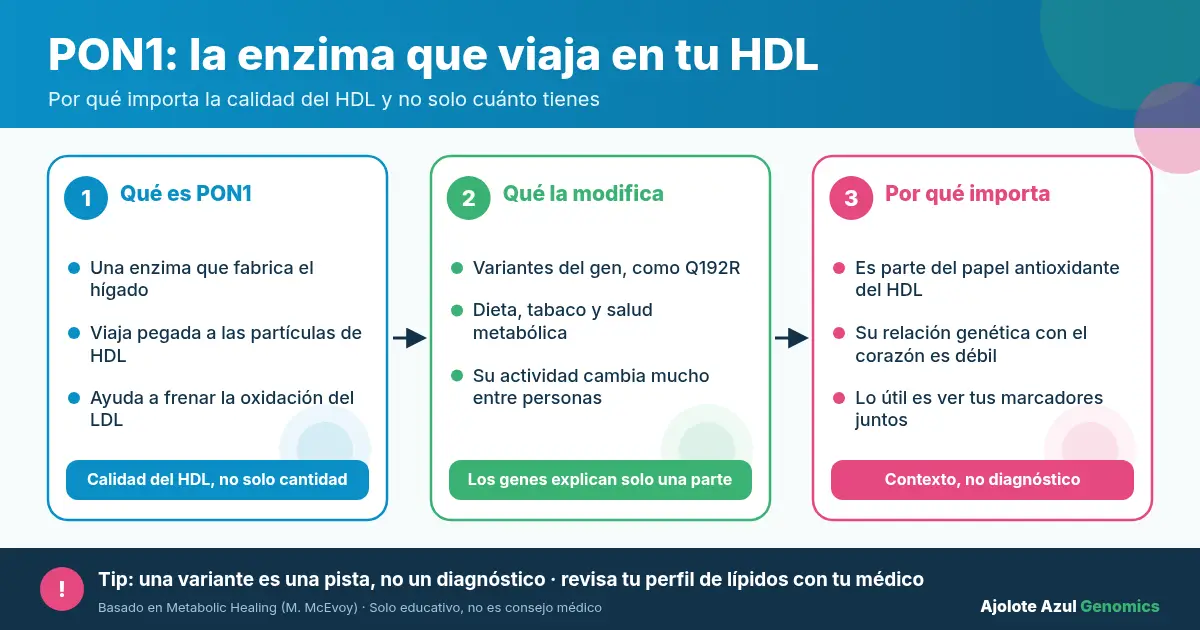
PON1 Gene: Function, HDL, and the Q192R Variant
What does the PON1 gene do? How it relates to paraoxonase, HDL cholesterol, and the Q192R variant—what the evidence shows and its limits.
7 min readRead more
Wellness
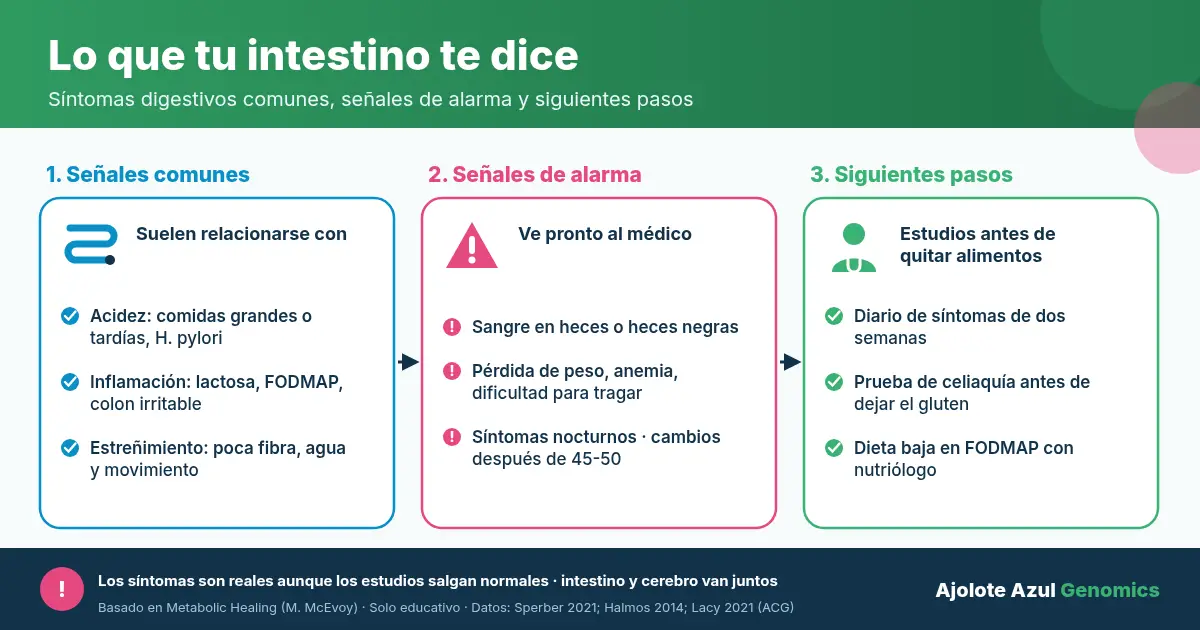
Digestive Symptoms: What Your Gut Is Telling You
Bloating, heartburn, or constipation can have several causes. Learn the warning signs and how a genetic test looks at lactose, gluten, and B12.
8 min readRead more
Wellness
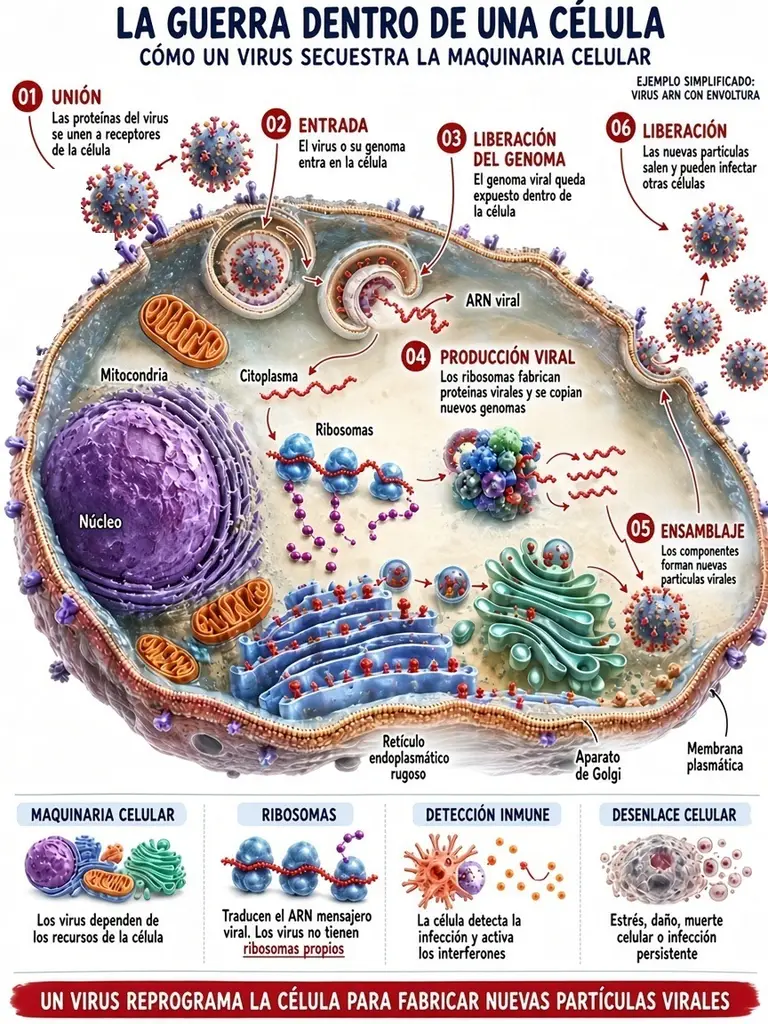
How a Virus Infects a Cell and How the Body Defends
Step by step: how a virus hijacks a cell to multiply, and the defenses your body uses—interferons, sensors, and apoptosis.
5 min readRead more
Did you like this article?
Discover how you can optimize your health with a personalized nutrigenetic test