Back to blog
Wellness
Hashimoto's Thyroiditis Genetics: Genes and Predisposition
7 min read
Ajolote Azul Team
Hashimoto's thyroiditis
thyroid autoimmunity
VDR gene
NRF2
selenium
nutrigenetics
Based on the work of our Metabolic Healing partners (Michael McEvoy). Read the original article: Hashimoto's Thyroiditis Genetics & Their Potential Relevance
Hashimoto's thyroiditis is an autoimmune condition that can affect thyroid function; genetic and environmental factors both play a part. A genetic variant does not confirm or diagnose the disease—evaluation belongs to a health professional, using symptoms, labs, and clinical context.
If your mom, sister, or aunt has it, you have probably wondered whether you are next. Genetics cannot answer with a simple yes or no, but research does explain a lot about why it runs in families. Here is a clear map.
How much of Hashimoto is genetic?
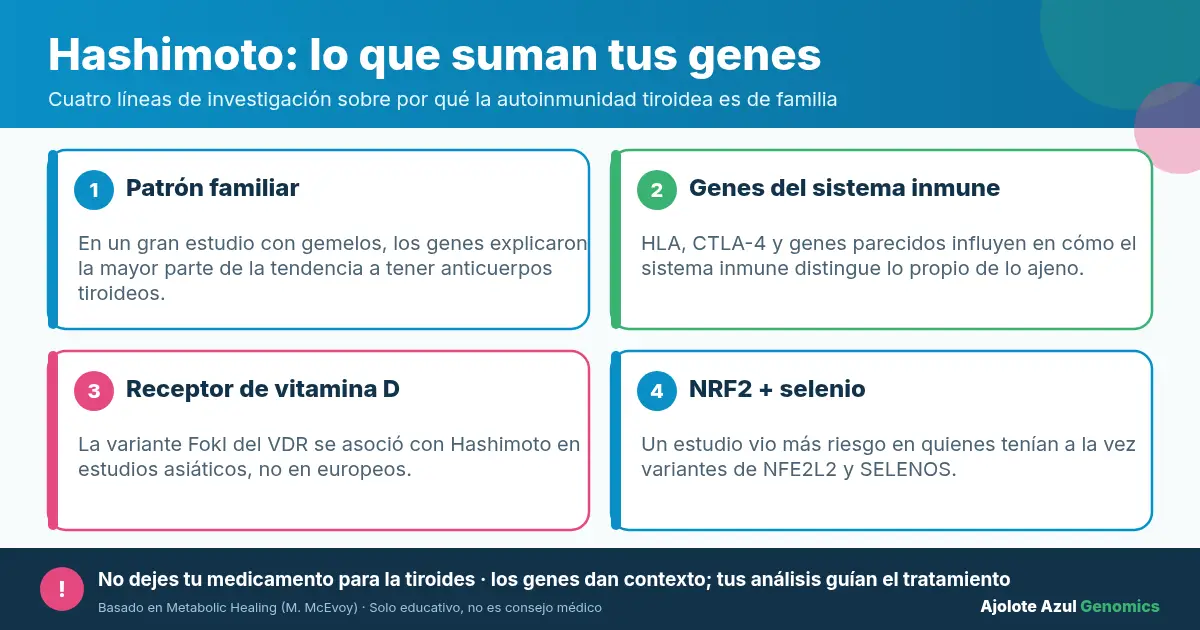
Twin studies are among the best tools to separate genetics from environment. In a study of 1,372 healthy Danish twins, identical twins matched on thyroid antibodies much more than non-identical twins. Researchers estimated that genetic factors explained about 73% of the tendency to test positive for thyroid antibodies 1. That percentage describes variation in antibodies in that sample; it is not the same as an individual’s chance of developing Hashimoto.
That is a high figure, but it describes a trend in a population, not your personal fate. Many people with a family history never develop Hashimoto, and many who have it know of no cases in their family. Iodine intake, infections, pregnancy, smoking, some medications, and other factors also matter.
The genes most often studied
Genes linked to autoimmune thyroid disease fall into two broad groups 2:
- Thyroid-specific genes, such as thyroglobulin (Tg) and the TSH receptor (TSHR). They make the proteins the immune system ends up attacking.
- Immune-regulatory genes, such as HLA, CTLA-4, FOXP3, CD25, and CD40. They help the immune system decide what to tolerate. Among these, HLA-DR3 carries the highest risk.
Each variant nudges odds only slightly. Risk comes from many small effects adding up, together with environmental triggers.
Vitamin D receptor (VDR)
Vitamin D acts through a receptor inside cells, VDR, which also helps regulate immune responses. A meta-analysis of 11 case-control studies found that one VDR variant, FokI, associated with Hashimoto, while three other well-known VDR variants did not. The link appeared only in Asian populations, not in people of European ancestry, and authors called for larger studies in other groups 3. There is almost no data in Mexican or Latin American populations, so a VDR result is a reason to review vitamin D with your doctor, not a forecast.
NRF2 and selenoprotein S
The thyroid uses hydrogen peroxide to make its hormones, so it needs strong antioxidant defenses. Two genes in that defense are NFE2L2, which makes NRF2, the master antioxidant “switch,” and SELENOS, which makes a selenium-containing protein.
In a Portuguese study of 481 people with Hashimoto and 516 controls, the SELENOS risk variant alone did not associate with disease. In people who also carried a lower-activity variant in the NFE2L2 promoter, there was an association with 2.8-fold higher odds of Hashimoto 4. It is one study in one population; it does not calculate individual risk and cannot be extrapolated blindly to Mexican populations.
Thyroid problems in the family? Look at the nutrition side of your genes. The NGx nutrigenetic test from Ajolote Azul analyzes more than 70 markers, including vitamin D, iron metabolism, and an endogenous antioxidant capacity section, with a 1:1 consult. It does not diagnose thyroid disease—it helps you and your doctor prioritize food choices. Want to know exactly which markers are included? Book a free 15-minute orientation call.
What about selenium?
Selenium is essential for enzymes that activate thyroid hormone and for thyroid antioxidant defenses, so it has been studied heavily in Hashimoto. One overview pooled six systematic reviews (75 randomized trials) and found selenium lowered anti-TPO antibodies at 3 and 6 months. Certainty of that evidence was rated very low, and in people not taking levothyroxine the effect was no longer seen at 12 months 5. Also, lower antibodies do not automatically mean feeling better or needing less medication.
So selenium is not a DIY fix. In excess it can harm, and foods such as Brazil nuts, fish, eggs, and legumes already provide it. If you are interested, ask your endocrinologist whether measuring or supplementing makes sense in your case.
Practical steps if Hashimoto runs in the family
- Know your numbers. Ask your doctor whether TSH and anti-TPO are worth checking, especially if you have symptoms, plan pregnancy, or have another autoimmune condition.
- Do not stop your medication. If you already take levothyroxine, keep taking it as prescribed. Genetics and nutrition support treatment; they do not replace it.
- Cover the basics. Iodine from iodized salt in normal amounts, enough selenium from food, iron and vitamin D in range, and a varied diet with plenty of vegetables.
- Do not overdo iodine. High-dose iodine supplements or seaweed can be a problem for some people with thyroid autoimmunity.
- See the whole picture. Sleep, stress, smoking, and glucose all influence how you feel with a thyroid condition.
To explore options, see Ajolote Azul genetic tests; they do not diagnose Hashimoto or replace medical evaluation. For more context, read about the VDR gene and vitamin D and when to request a clinical genetic test.
Frequently asked questions
Is Hashimoto hereditary?
It has an important genetic component. A large twin study estimated genes explain about 73% of the tendency to have thyroid antibodies. Still, many relatives of people with Hashimoto never develop it.
Can a genetic test diagnose Hashimoto?
No. Hashimoto is diagnosed with blood tests (TSH, thyroid hormones, and antibodies) and sometimes ultrasound. Genetic results add context about nutrition-related pathways.
Does selenium cure Hashimoto?
No. Studies suggest selenium may lower antibodies for some months, but evidence certainty is very low and it does not replace thyroid medication.
Which genes link to Hashimoto?
Mainly immune genes such as HLA and CTLA-4, and thyroid genes such as Tg and TSHR. Variants in VDR, NFE2L2, and SELENOS have also been studied, with mixed or population-dependent results.
Turn your genes into a practical plan
- NGx nutrigenetic test: more than 70 nutrition, vitamin, intolerance, and antioxidant markers, with a 1:1 consult included. $9,880 MXN.
- PGx pharmacogenetic test: how you process more than 100 medications. $9,800 MXN.
- NGx + PGx Combo: $15,750 MXN. Learn about the NGx test · Book your free 15-min call · WhatsApp us
References
- Hansen PS, Brix TH, Iachine I, Kyvik KO, Hegedüs L. The relative importance of genetic and environmental effects for the early stages of thyroid autoimmunity: a study of healthy Danish twins. Eur J Endocrinol. 2006;154(1):29-38. doi:10.1530/eje.1.02060. PubMed 16381988 · doi:10.1530/eje.1.02060
- Lee HJ, Li CW, Hammerstad SS, Stefan M, Tomer Y. Immunogenetics of autoimmune thyroid diseases: A comprehensive review. J Autoimmun. 2015;64:82-90. doi:10.1016/j.jaut.2015.07.009. PubMed 26235382 · Free full text (PMC) · doi:10.1016/j.jaut.2015.07.009
- Wang X, Cheng W, Ma Y, Zhu J. Vitamin D receptor gene FokI but not TaqI, ApaI, BsmI polymorphism is associated with Hashimoto's thyroiditis: a meta-analysis. Sci Rep. 2017;7:41540. doi:10.1038/srep41540. PubMed 28134349 · Free full text (PMC) · doi:10.1038/srep41540
- Santos LR, Durães C, Ziros PG, et al. Interaction of Genetic Variations in NFE2L2 and SELENOS Modulates the Risk of Hashimoto's Thyroiditis. Thyroid. 2019;29(9):1302-1315. doi:10.1089/thy.2018.0480. PubMed 31426718 · Free full text (PMC) · doi:10.1089/thy.2018.0480
- Wang YS, Liang SS, Ren JJ, et al. The Effects of Selenium Supplementation in the Treatment of Autoimmune Thyroiditis: An Overview of Systematic Reviews. Nutrients. 2023;15(14). doi:10.3390/nu15143194. PubMed 37513612 · Free full text (PMC) · doi:10.3390/nu15143194
This article is for education and information only; it does not replace medical advice, diagnosis, or treatment. Talk to your doctor before changing your diet, medications, or supplements.
Based on the work of our Metabolic Healing partners (Michael McEvoy). Read the original article: https://metabolichealing.com/hashimotos-thyroiditis-genetics-their-potential-relevance
A
Ajolote Azul Team
Specialist in wellness, nutrition and holistic health. Passionate about sharing science-based knowledge to improve quality of life.
Keep Reading
Related Articles
Discover more content on this topic that might interest you
Wellness
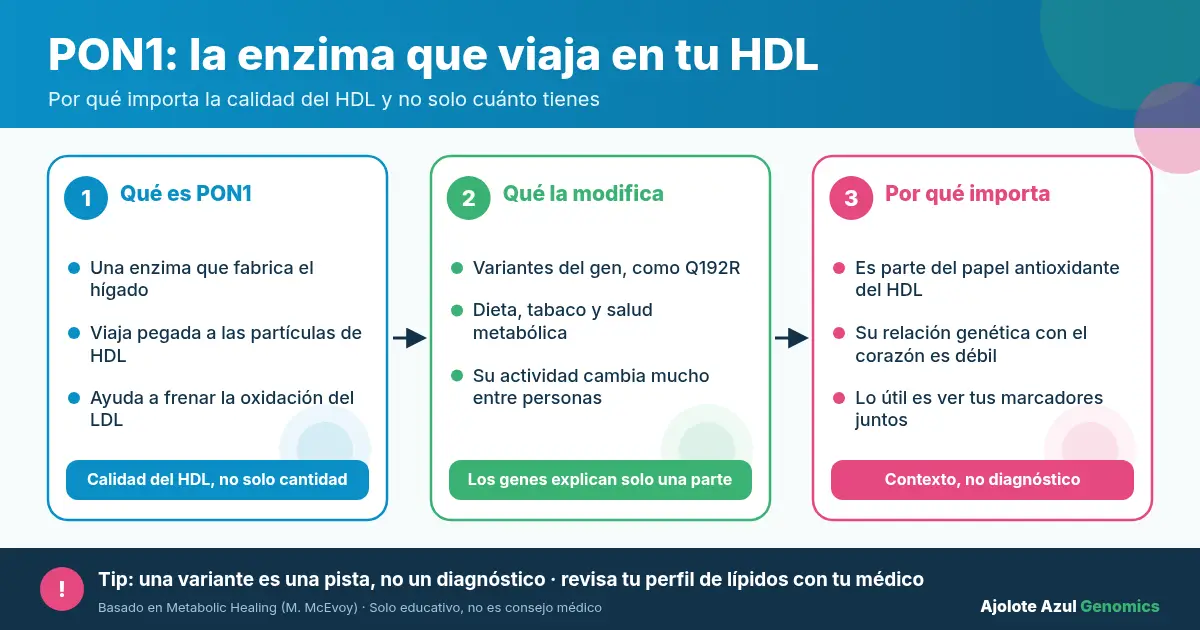
PON1 Gene: Function, HDL, and the Q192R Variant
What does the PON1 gene do? How it relates to paraoxonase, HDL cholesterol, and the Q192R variant—what the evidence shows and its limits.
7 min readRead more
Wellness
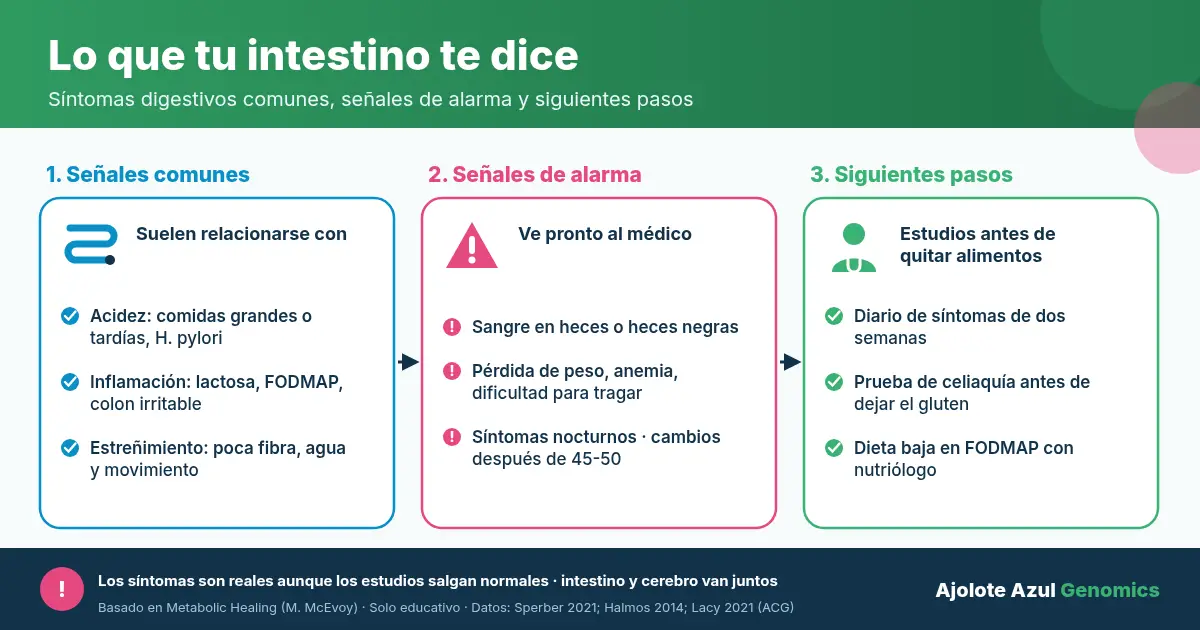
Digestive Symptoms: What Your Gut Is Telling You
Bloating, heartburn, or constipation can have several causes. Learn the warning signs and how a genetic test looks at lactose, gluten, and B12.
8 min readRead more
Wellness
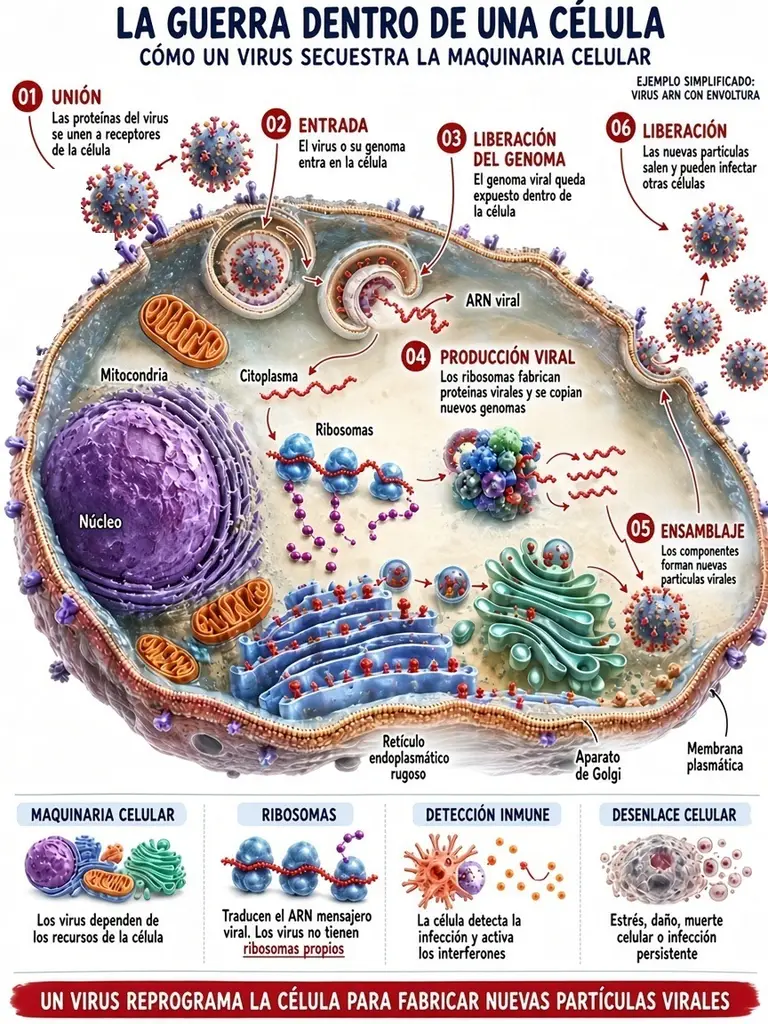
How a Virus Infects a Cell and How the Body Defends
Step by step: how a virus hijacks a cell to multiply, and the defenses your body uses—interferons, sensors, and apoptosis.
5 min readRead more
Did you like this article?
Discover how you can optimize your health with a personalized nutrigenetic test