
Back to blog
Wellness
Genomic Medicine for Better Decisions About Your Health
7 min read
Ajolote Azul Team
genomic medicine
genetic testing
pharmacogenetics
nutrigenetics
preventive health
DNA decisions
The same dose of a medication can help one person a great deal and cause adverse effects in another. A diet considered healthy may not solve fatigue, weight control, or sports recovery in the same way for everyone. Genomic medicine starts from a concrete idea: your DNA does not determine everything that will happen to you, but it does offer useful information for making more precise health decisions before a problem appears.
This is not about predicting the future with a saliva sample. It is about understanding how certain genetic variants can influence nutrient metabolism, drug response, predisposition to some conditions, and how a preventive strategy should be designed. The value is in turning complex data into realistic actions, guided by clinical judgment.
What genomic medicine is, and why it changes the conversation
Genomic medicine uses the information in DNA to guide decisions about prevention, diagnosis, and treatment. Conventional medicine usually acts once symptoms or abnormal clinical studies are already present. This approach can offer signals of risk and biological response years earlier.
Each person shares the great majority of their DNA with the rest of the population. Even so, small variations in specific genes can change the way we process caffeine, folate, fats, lactose, or certain medications. Some variants are also linked with greater or lesser susceptibility to complex diseases, though they should never be read as a diagnosis on their own.
Here is the key difference: a genetic variant is not destiny. Sleep, physical activity, diet, stress, age, family history, and environment influence outcomes as well. Genetics lets you ask smarter questions and put changes in an order that has a stronger basis.
From DNA to a decision you can actually use
A useful genetic result does not end in a list of genes or in percentages that are hard to interpret. It should answer concrete questions. Which habits are worth adjusting? What information should you take to your physician? Which medication might need closer monitoring? Which clinical studies are worth considering?
In personalized nutrition, for example, the analysis can identify variants related to caffeine sensitivity, lipid metabolism, response to sodium, or the need to watch certain micronutrients. This does not replace a nutritional evaluation, but it helps build recommendations that are less generic. Two people with the same body-composition goal may need different strategies according to their context, biomarkers, and genetic profile.
In pharmacogenetics, the benefit can be even more direct. Some genes influence how fast the body activates, metabolizes, or clears certain drugs. Knowing them can help the physician weigh dose, therapeutic alternatives, or closer follow-up, especially in people on several medications, mental health treatment, chronic pain, cardiovascular disease, or cancer.
The final decision always belongs to the treating professional. A pharmacogenetic test does not mean someone should stop, start, or change a medication on their own. Its role is to add a layer of information for a clinical conversation that is safer and more personal.
When a genetic test is worth considering
Genomic medicine is especially relevant when there is a specific decision to improve. A healthy person looking to prevent illness can benefit from a reading focused on nutrition, performance, energy, or longevity. Someone who has had unexpected reactions to medications may find information in pharmacogenetics that is worth discussing with their physician.
It can also be a useful tool if there is a family history of complex diseases, if clinical results have come back abnormal again and again, or if a person wants to stop trying recommendations at random. In athletes, genetic information can complement a training and recovery plan. It does not replace a performance assessment, enough food, or rest.
Some situations call for greater caution. If there is suspicion of a high-impact hereditary disease, familial cancer, or a rare genetic condition, a more complex clinical study and genetic counseling may be needed. A wellbeing panel does not replace a diagnostic test or a specialized medical visit.
Nutrition, medications, and prevention: three real uses
Personalized nutrition without magic promises
Nutrigenetics studies how certain variants can relate to the response to parts of the diet. It can guide a conversation about fats, carbohydrates, fiber, vitamins, caffeine sensitivity, or a tendency toward certain metabolic patterns. A recommendation should not rest on a single gene alone.
A responsible report joins the result with goals, habits, body composition, laboratory studies, and personal history. The question is not "which diet does my DNA say I should follow?" It is "which changes make the most sense for my biology and my real life?" The best strategy is the one you can keep, measure, and adjust.
Pharmacogenetics for better-informed clinical conversations
Pharmacogenetics analyzes genes related to medication response. Some people metabolize certain drugs more slowly. Others process them very quickly. Some have a higher chance of adverse effects with specific options.
This knowledge can matter before a treatment starts, when a medication has not produced the expected result, or when several drugs are involved. It does not remove every risk, because interactions, liver and kidney function, age, and other factors still count. Even so, it can reduce uncertainty and give clearer criteria when a therapy is individualized.
Prevention with a wider view
Genomic prevention is not about living on the lookout for risks. It is about using information to take better care of what you can change. If a result suggests that a particular area is worth watching, the response can be as practical as improving a habit, scheduling a checkup, measuring a biomarker, or talking with a specialist.
Acting earlier does not mean turning every part of life into a medical problem. It means choosing where to put your attention. For some people, the result will push nutritional changes. For others, it will open a conversation about treatment or family history. Context sets the next step.
How a responsible genomic study is done
In many genetics tests applied to wellbeing, the sample is collected with a buccal swab that can be done at home. The laboratory then extracts and analyzes the DNA to identify selected variants with methods such as targeted genotyping. This technique looks for specific changes that have been validated for a defined goal. It does not necessarily read the whole genome.
Sequencing, by contrast, can analyze wider regions of DNA and is usually reserved for clinical questions that need greater depth. Neither method is better in every case. It depends on the question. For decisions about nutrition or pharmacogenetics, a well-designed targeted panel can be enough. If there is a diagnostic suspicion, a broader clinical genetic evaluation may be needed.
Before you choose a service, check which genes it analyzes, which decisions it is designed for, which laboratory processes the sample, and how it protects your data. Look for a clear explanation of the scope and of the limits of the result. A serious report should distinguish scientific associations, relative risks, and findings that need confirmation.
Interpretation matters too. At Ajolote Azul, genetic nutrition kits and pharmacogenetic kits come with a specialized consultation that translates variants into practical decisions. That step keeps the report from sitting in your inbox as an interesting file you cannot use.
Genetic privacy is not a minor detail
Your DNA holds deeply personal information. A genomic medicine service should explain how it protects samples, who can access the results, whether the data are used for research and under what consent, and the options for asking that they be deleted.
Confidentiality should matter as much as analytical accuracy. Before you send a sample, it is worth reading the privacy notice and asking what happens to your information after the report is issued. Control over your data is part of an informed health decision.
Your genetics is a starting point, not a label
Knowing your DNA can help you leave one-size-fits-all recommendations behind and walk into medical conversations better prepared. Results gain value when they are combined with clinical tests, personal goals, and professional follow-up. Genomics does not replace your everyday decisions. It gives them a more precise base.
Choosing to know more about your biology is one way to take an active part in your health. Do it with curiosity, with scientific support, and with the willingness to turn each useful finding into an action you can keep.
A
Ajolote Azul Team
Specialist in wellness, nutrition and holistic health. Passionate about sharing science-based knowledge to improve quality of life.
Keep Reading
Related Articles
Discover more content on this topic that might interest you
Wellness
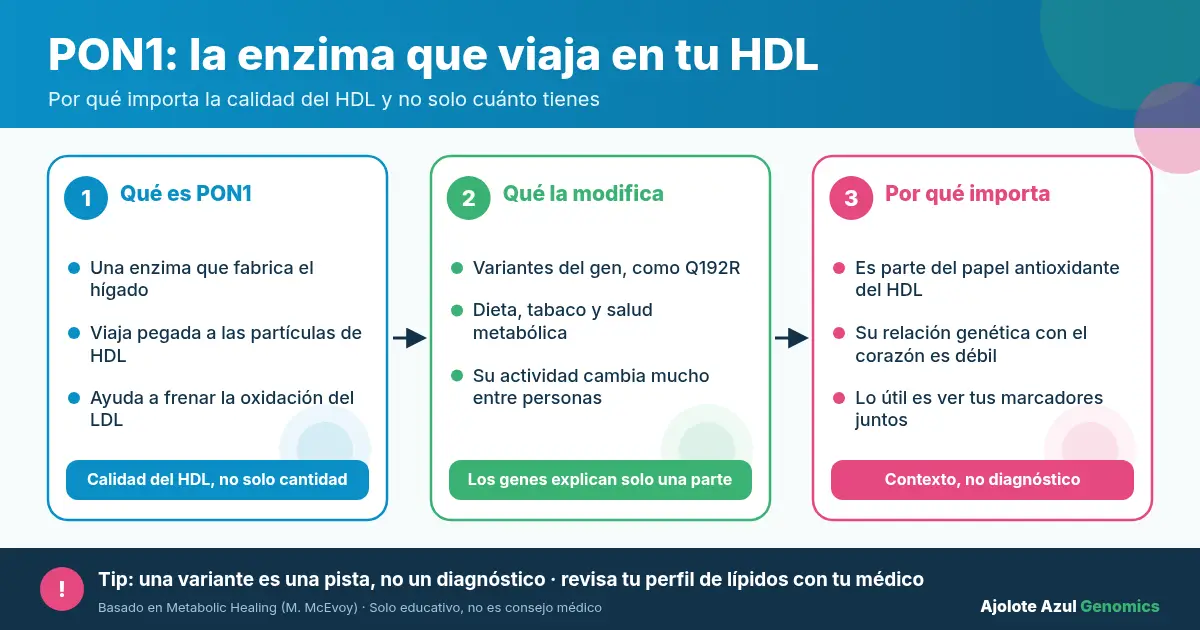
PON1 Gene: Function, HDL, and the Q192R Variant
What does the PON1 gene do? How it relates to paraoxonase, HDL cholesterol, and the Q192R variant—what the evidence shows and its limits.
7 min readRead more
Wellness
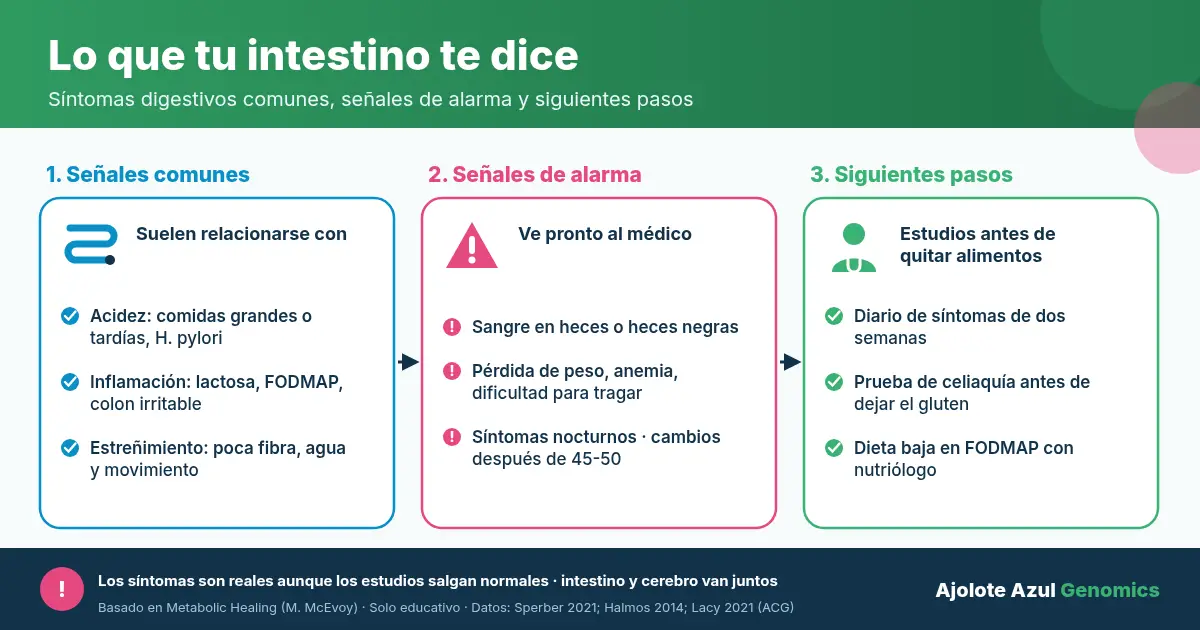
Digestive Symptoms: What Your Gut Is Telling You
Bloating, heartburn, or constipation can have several causes. Learn the warning signs and how a genetic test looks at lactose, gluten, and B12.
8 min readRead more
Wellness
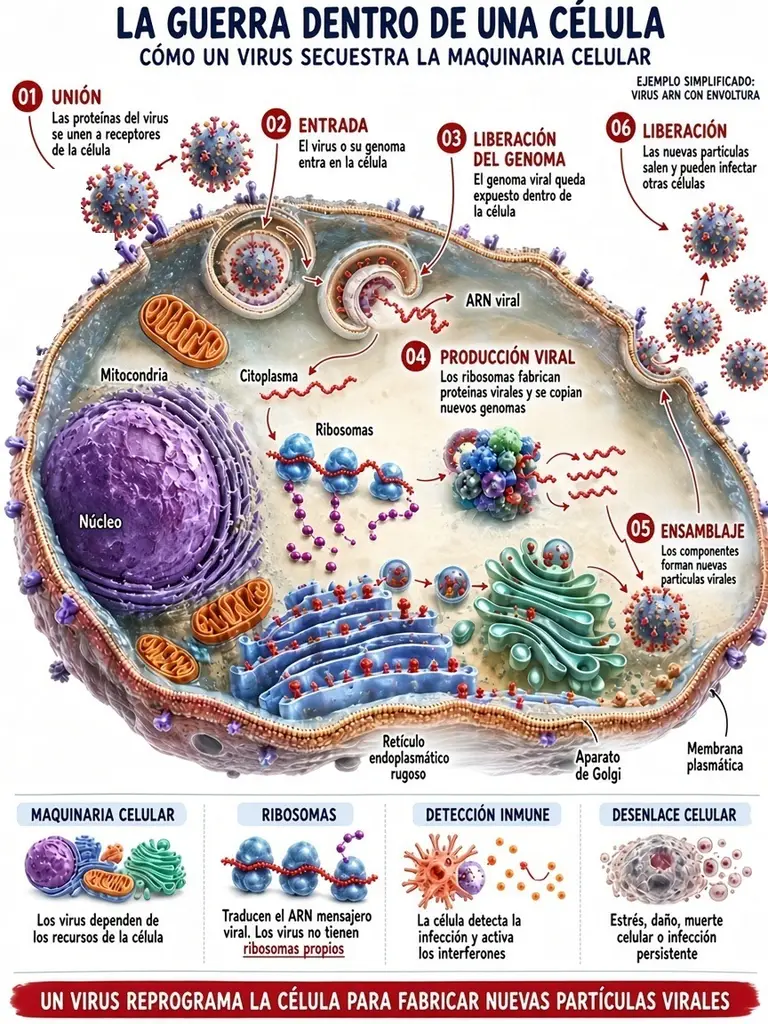
How a Virus Infects a Cell and How the Body Defends
Step by step: how a virus hijacks a cell to multiply, and the defenses your body uses—interferons, sensors, and apoptosis.
5 min readRead more
Did you like this article?
Discover how you can optimize your health with a personalized nutrigenetic test