
Back to blog
Wellness
Genetics for Weight Management: What Can It Tell You?
7 min read
Ajolote Azul Team
weight management genetics
nutrigenetics
appetite and satiety
body composition
personalized nutrition
Two people can follow the same eating plan, train with the same discipline, and sleep a similar number of hours, yet see very different results. Genetics for weight management helps explain part of that difference: how your body may respond to certain nutrients, to appetite, to exercise, and to other factors that influence weight over the long term.
This is not about finding an "obesity gene" or receiving a diet written into your DNA. It is about using personal biological information to leave generic recommendations behind and make decisions that are more precise, realistic, and sustainable.
Weight does not depend on a single variable
Body weight is built in several layers. Diet, physical activity, sleep, stress, age, hormonal health, medications, and environment all matter. Genetics influences weight too, but it does not act alone and it does not set your destiny.
Genetic variants linked to metabolism and weight usually have small effects when they are studied one by one. Their value appears when they are read together and related to your clinical history, your habits, your goals, and your current results.
For example, one person may be more predisposed to feel less fullness in response to certain food cues. Another may show a less favorable metabolic response to a pattern high in saturated fat. Someone else may need an especially steady training strategy to see changes in body composition. No result replaces action, but it can show where to put attention first.
What genetics for weight management looks at
A nutrigenetic test studies specific variants through targeted genotyping. These variants have been studied for their link to processes such as appetite regulation, use of macronutrients, caffeine sensitivity, vitamin metabolism, and a tendency toward certain metabolic patterns.
Useful information is not a list of letters and genetic codes. It is the translation of those codes into practical questions. What kind of macronutrient split is worth trying? Are there signals to watch the quality of fats in the diet? How relevant might it be to prioritize fiber, protein, or meal timing? How should training and recovery be adjusted?
Areas that can be part of a personalized reading include:
- Predisposition related to appetite, fullness, and eating behavior.
- Individual response to fats, carbohydrates, and diet quality.
- Tendencies linked to energy metabolism and body composition.
- Processing of micronutrients that matter for metabolic health.
- Sensitivity to compounds such as caffeine, when that is relevant for energy, sleep, and performance.
These findings should not be read as absolute orders. Having a variant linked to a given predisposition does not mean you will develop a problem, and not having it does not guarantee an outcome. Genetics describes probabilities, not verdicts.
From a genetic result to a plan you can keep
The greatest advantage of knowing your genetic information shows up when it becomes a concrete plan. If the report ends up in a digital folder, its usefulness will be limited. If it is used to design habits you can measure, and to review them with professional support, it can change the quality of your decisions.
Picture someone who has tried very restrictive diets and always regains the weight. Their result can open a more precise conversation about fullness, adherence, food quality, rest, and stress, instead of repeating a restriction that gets stricter each time. The goal is not to eat in a "perfect" way. It is to create conditions that fit their biology and their everyday life.
In another case, an athlete who wants to reduce body fat without losing performance needs a different approach. The priority might be protecting muscle, placing carbohydrates around training, reviewing recovery, and avoiding energy cuts that compromise strength, sleep, or focus. The scale does not tell the whole story.
A well-designed strategy usually sets an initial goal, chooses two or three high-impact changes, and gives them enough time to produce data. Body measurements, energy, fullness, physical performance, sleep quality, and clinical tests, when they apply, offer a fuller picture than weight on its own.
What a genetic test can do, and what it cannot
Genomics can help you ask better questions. It can add context so decisions fit you, and it can support adherence because it explains the reason behind certain recommendations. It can also lower the frustration of using popular strategies that do not fit your needs.
What it cannot do is predict exactly how many kilograms you will lose, replace a medical visit, or diagnose a metabolic condition by itself. If weight is rising quickly, fatigue will not lift, menstrual patterns change, appetite shifts sharply, or there is sleep apnea, diabetes, thyroid disease, or use of medications that affect weight, you need a full clinical evaluation.
It is also wise to question exaggerated promises. Be skeptical of any service that treats one genetic variant as the only explanation for your weight, or that hands out extreme recommendations without looking at personal history. Useful science admits uncertainty and works with follow-up.
The role of epigenetics and habits
Your genes do not change with an eight-week diet, but the way your body expresses and regulates biological processes does respond to the environment. Epigenetics studies, among other things, how diet, exercise, stress, and sleep can modulate that expression.
That offers a strong perspective: a predisposition is not a sentence. Regular physical activity can improve metabolic markers even when weight loss is gradual. Sleeping better can make food choices more stable. Raising fiber, prioritizing enough protein, and cutting back ultra-processed foods can influence fullness and glucose without chasing rules that are impossible to keep.
The best plan is not always the strictest one. It is the plan you can repeat when you travel, when the week is demanding, or when motivation drops. Genetic information should help you build that plan, not make it harder.
How to use a nutrigenetic test with judgment
Before you take a test, define what you want to solve. It might be a stall in body-composition change, frequent hunger, uneven energy, trouble sticking with an eating plan, or a search for a preventive strategy based on data. A clear goal makes the results more useful.
The process can be simple. You receive a kit at home, you collect a buccal swab sample by following the instructions, and you send it for analysis. Quality is not only the convenience of that process. It is the method, the protection of genetic data, the laboratory behind the work and, above all, the professional interpretation that follows.
At Ajolote Azul, the value of the nutrigenetic test is connecting targeted genotyping with a specialized consultation. The report then becomes priorities for food, movement, recovery, and prevention that you can discuss with your health professionals.
Personalization without obsession
Knowing your genetics does not require measuring every food or turning your wellbeing into a spreadsheet. It can serve, in fact, to simplify. If you identify the habits that matter most for your profile, you can stop spending energy on restrictions that do not help you and focus on what actually moves the needle.
Sustainable weight management is not built from guilt. It is built with information, follow-up, and decisions that respect your body. Your DNA can be a valuable starting point. Use it to act with more clarity today and to look after your health with a long view.
A
Ajolote Azul Team
Specialist in wellness, nutrition and holistic health. Passionate about sharing science-based knowledge to improve quality of life.
Keep Reading
Related Articles
Discover more content on this topic that might interest you
Wellness
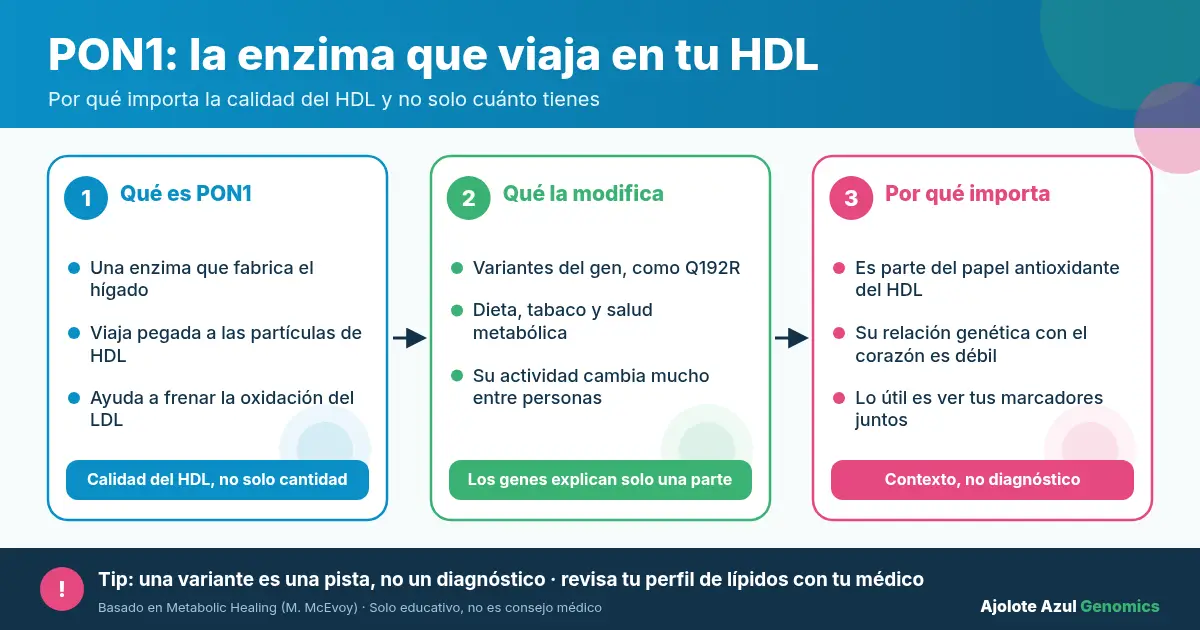
PON1 Gene: Function, HDL, and the Q192R Variant
What does the PON1 gene do? How it relates to paraoxonase, HDL cholesterol, and the Q192R variant—what the evidence shows and its limits.
7 min readRead more
Wellness
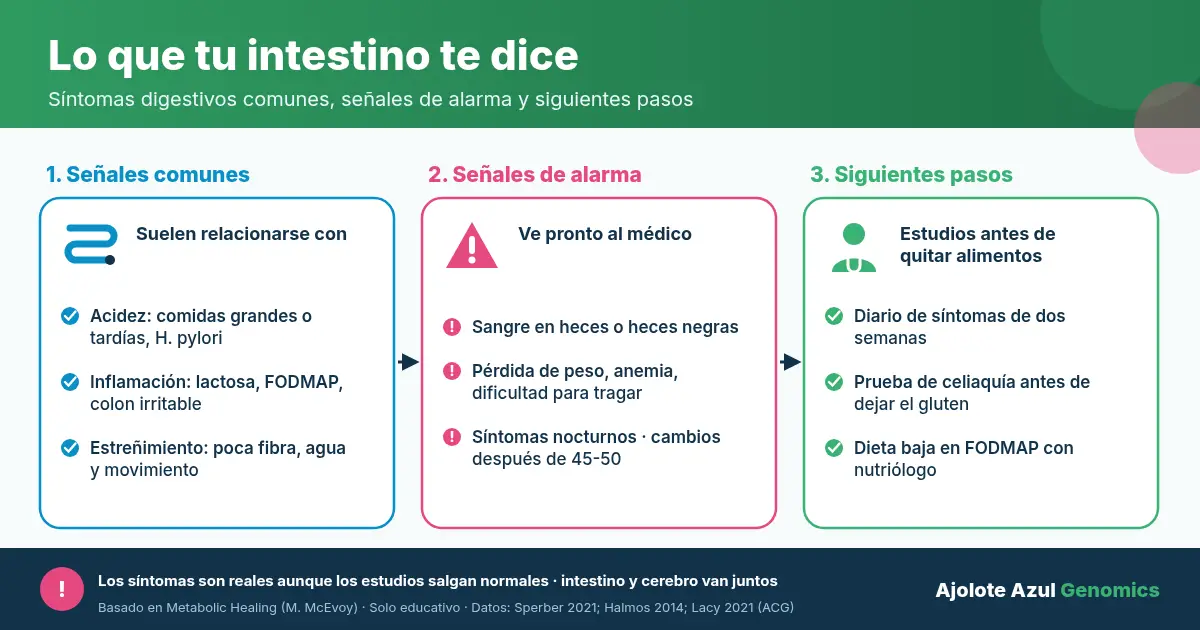
Digestive Symptoms: What Your Gut Is Telling You
Bloating, heartburn, or constipation can have several causes. Learn the warning signs and how a genetic test looks at lactose, gluten, and B12.
8 min readRead more

Wellness
How a Virus Infects a Cell and How the Body Defends
Step by step: how a virus hijacks a cell to multiply, and the defenses your body uses—interferons, sensors, and apoptosis.
5 min readRead more
Did you like this article?
Discover how you can optimize your health with a personalized nutrigenetic test