
Back to blog
Wellness
A Clinical Pharmacogenetics Guide for Better Decisions
7 min read
Ajolote Azul Team
clinical pharmacogenetics
CYP450
medication response
phenoconversion
PGx test
The same dose does not produce the same effect in every person. While one person gets relief from a medication, another may not respond, may experience adverse effects, or may need an adjustment. A clinical pharmacogenetics guide starts from a concrete question: can your genetics help anticipate how you process and respond to certain drugs?
The answer is often yes, but with an essential nuance: genes are a relevant piece of the clinical puzzle, not an automatic prescription. Pharmacogenetics lets you bring biological information into a more precise conversation with your doctor, especially when there are long-term treatments, multiple medications, a history of adverse reactions, or complex diagnoses.
What a clinical pharmacogenetics guide is
Pharmacogenetics studies genetic variations that influence the way the body absorbs, metabolizes, transports, or responds to medications. A clinical pharmacogenetic report translates those variants into findings that can be useful for evaluating specific drugs, starting doses, toxicity risks, or therapeutic alternatives.
Many of these differences are related to liver enzymes of the CYP450 system, such as CYP2D6, CYP2C19, or CYP2C9. These enzymes take part in the metabolism of common medications, including some antidepressants, analgesics, anticoagulants, cardiovascular drugs, and oncology treatments. If an enzyme works more slowly or more quickly because of a genetic variant, the concentration of the medication in the blood can change in a significant way.
A responsible clinical guide, however, does not stop at pointing out a variant. It connects the result with the medication the person uses or might use, the diagnosis, age, kidney and liver function, other treatments, and the symptoms reported. Genetics adds a layer of personalization; the medical context determines how to apply it.
Why genetics should not be used to self-medicate
A pharmacogenetic result can suggest that a person metabolizes a given drug in a reduced, normal, or accelerated way. That does not mean they should stop it, double the dose, or switch it on their own. The decision depends on the clinical indication, the individual response, and supervision by the treating professional.
There is also a phenomenon called phenoconversion. Even if your genes indicate usual metabolism, another medication, a supplement, smoking, inflammation, or liver disease can temporarily change the activity of certain enzymes. That is why results should be reviewed together with your full list of medications, over-the-counter products, and supplements.
The best use of pharmacogenetics does not replace clinical medicine: it improves the quality of the conversation. Instead of arriving at a visit with the feeling that a treatment does not sit well with you, you can arrive with data that help investigate why and which options are worth considering.
What a pharmacogenetic test can reveal
The scope depends on the panel analyzed and on the evidence available for each gene–drug relationship. A well-designed test can identify variants associated with differences in metabolism, lower expected efficacy, a higher likelihood of adverse effects, or a need for closer monitoring of particular treatments.
Therapeutic areas that often have pharmacogenetic applications include mental health, pain, cardiology, anticoagulation, gastroenterology, neurology, oncology, and some inflammatory diseases. For example, certain variants can be relevant before or during the use of medications for depression, anxiety, postoperative pain, cholesterol control, or prevention of cardiovascular events.
It helps to understand what a result can and cannot say. It can guide the choice or the follow-up of a specific medication when there is solid clinical evidence. It does not diagnose a disease, it does not predict every side effect, and it does not guarantee that a treatment will work. The response to a drug also depends on adherence, diet, the microbiota, lifestyle, interactions, and how the condition evolves.
Who may benefit most
Pharmacogenetics can be valuable for anyone interested in preventive decisions, but it becomes especially relevant in situations where trying treatments by trial and error has physical, emotional, or financial costs.
It can be worth considering an evaluation if you have had unexpected side effects, if a medication has not worked as expected, or if you have been through several treatment adjustments. It is also especially useful for people with chronic illnesses, older adults on several medications, patients in pain management, people in psychiatric treatment, or those preparing for more complex clinical therapies.
In oncology, pharmacogenetic information can help discuss risks associated with certain drugs and the need for monitoring protocols. In these cases, the result should always be integrated with the oncologist and the medical team, because decisions depend on the tumor type, stage, biomarkers, previous treatments, and overall health.
For a person focused on longevity and prevention, the value is in building a smarter health record. Your DNA does not change, so an analysis can remain useful over time when new medical needs arise, as long as it is reinterpreted according to the current evidence and the specific treatment.
How to choose a test with clinical value
Not every genetic report has the same usefulness. A clinically actionable result requires validated methodology, selection of relevant variants, rigorous interpretation, and professional support. Before choosing a test, check whether it states which genes and medications it evaluates, how it processes the sample, and what kind of laboratory stands behind the analysis.
Targeted genotyping makes it possible to analyze specific variants with high precision when the goal is pharmacogenetic. Platforms such as Agena/Sequenom MassARRAY are used to identify concrete genetic changes in defined panels. In a health-oriented service, it also matters that the laboratory operates under recognized quality standards, such as CLIA and CAP certifications when applicable.
Genetic privacy deserves the same attention. Your biological data are sensitive: ask how the information is protected, who can access it, whether the sample is retained and under what conditions, and what control you have over your consent. The convenience of receiving a kit at home should come with clear protocols for confidentiality and data handling.
From the sample to an action plan
The experience should be simple, but the interpretation should not be oversimplified. The process usually starts with a kit for collecting a sample by buccal swab. After you follow the collection instructions and send the sample to the laboratory, the analysis identifies the variants included in the panel and generates a digital report.
The decisive step comes afterward: interpreting the results with a professional who knows your clinical history. At Ajolote Azul, the included specialized consultation aims to turn the report into concrete questions for your doctor and into better-grounded everyday decisions. The point is not to receive a list of genes, but to understand which findings matter now, which might matter in the future, and which require no action.
A quality consultation reviews why you sought the evaluation, your current medications, and your history of response. It then prioritizes the findings by level of evidence and clinical usefulness. If there is a possibly relevant genetic interaction, the next step may be to share the report with the treating specialist to consider alternatives, monitoring, or adjustments under supervision.
Questions worth taking to your appointment
When you receive a report, avoid stopping at labels such as slow or rapid metabolizer. Ask them to explain exactly which medications that result applies to and how strong the evidence is. Also ask whether any current drugs deserve review, whether other medications or supplements could modify the expected effect, and which symptoms would justify an immediate visit.
If the report suggests a therapeutic alternative, ask about its benefits, risks, availability, and whether it fits your diagnosis. Sometimes the genetic recommendation matches the most suitable clinical option; other times there are medical reasons to keep a treatment and watch it closely. The right decision is not always the one that looks most obvious on paper.
Pharmacogenetics works best when it becomes a follow-up tool. Keep the report, keep it current in your personal record, and share it with the relevant professionals when you receive a new prescription. Acting years earlier does not mean anticipating problems with fear: it means arriving at each treatment decision with more context, better questions, and an active role in your health.
A
Ajolote Azul Team
Specialist in wellness, nutrition and holistic health. Passionate about sharing science-based knowledge to improve quality of life.
Keep Reading
Related Articles
Discover more content on this topic that might interest you
Wellness
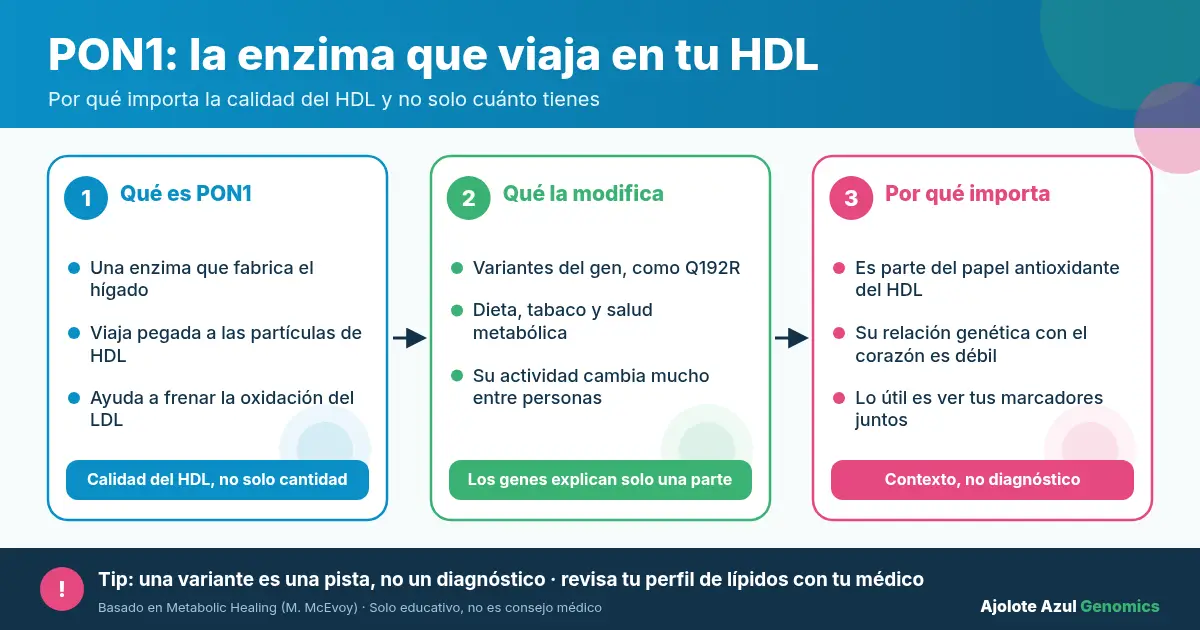
PON1 Gene: Function, HDL, and the Q192R Variant
What does the PON1 gene do? How it relates to paraoxonase, HDL cholesterol, and the Q192R variant—what the evidence shows and its limits.
7 min readRead more
Wellness
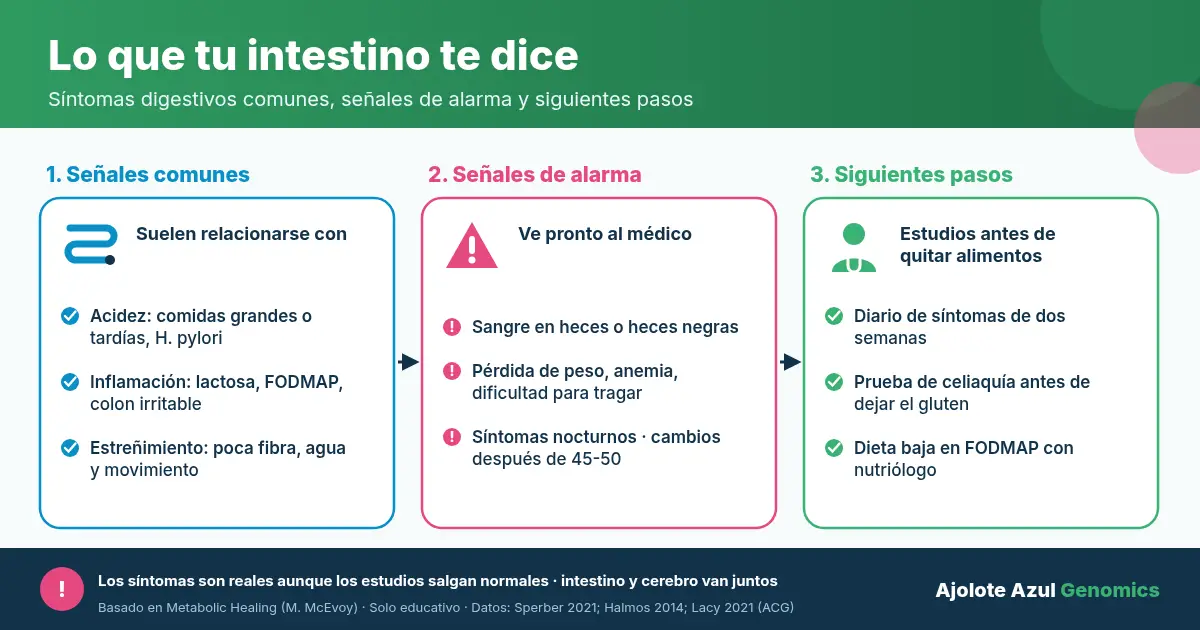
Digestive Symptoms: What Your Gut Is Telling You
Bloating, heartburn, or constipation can have several causes. Learn the warning signs and how a genetic test looks at lactose, gluten, and B12.
8 min readRead more

Wellness
How a Virus Infects a Cell and How the Body Defends
Step by step: how a virus hijacks a cell to multiply, and the defenses your body uses—interferons, sensors, and apoptosis.
5 min readRead more
Did you like this article?
Discover how you can optimize your health with a personalized nutrigenetic test