
Back to blog
Wellness
Nutrigenomics: What It Is and How It Differs from Nutrigenetics
9 min read
Ajolote Azul Team
nutrigenomics
nutrigenetics
gene expression
personalized nutrition
epigenetics
By the Ajolote Azul Team · Updated October 19, 2026
Direct answer: nutrigenomics is the science that studies how foods and their nutrients influence the activity of your genes—that is, which genes "switch on" or "switch off" depending on what you eat. Nutrigenetics looks at the same relationship from the other side: how variants in your DNA change your response to foods. In short, nutrigenomics runs from food toward genes, and nutrigenetics runs from genes toward food.
30-second summary
- Nutrigenomics: how diet modifies gene expression. It is mainly a research field.
- Nutrigenetics: how your genetic variants, which do not change over your lifetime, influence your response to nutrients such as caffeine, lactose, or folate. You can learn this today with a nutrigenetic test.
- Epigenetics: chemical marks on DNA that regulate which genes are active. Diet is one of the factors that can influence them.
- The practical point: a nutrigenetic test tells you your tendencies; nutrigenomics explains why what you eat every day also matters.
What is nutrigenomics?
The word comes from "nutrition" and "genomics," the study of the complete set of genes. Nutrigenomics investigates how compounds in food act as signals for your cells: some bind to receptors that activate or slow certain genes, and others take part in the chemical reactions that regulate that activity. The same person, with the same DNA, can therefore have different patterns of gene expression depending on diet (Mutch, Wahli and Williamson, 2005).
It helps to think of your DNA as a recipe book that does not change. Nutrigenomics studies which recipes are opened and how often they are used depending on what you eat. Nutrigenetics, by contrast, studies the small differences in wording between your book and someone else's.
The International Society of Nutrigenetics and Nutrigenomics considers both fields pillars of precision nutrition: adapting recommendations to each person instead of using only population averages (Fenech et al., 2011; Ferguson et al., 2016).
What is the difference between nutrigenomics and nutrigenetics?
The difference is the direction of the question. Nutrigenetics starts from your genes and asks how you will respond to a food. Nutrigenomics starts from the food and asks what it does to your genes.
| Nutrigenetics | Nutrigenomics | |
|---|---|---|
| Central question | How do my genes influence my response to food? | How does food influence the activity of my genes? |
| What is examined | DNA variants (polymorphisms or SNPs) | Gene expression, proteins, and metabolites |
| Does it change over time? | No: your variants stay the same throughout life | Yes: it changes with diet, age, and environment |
| Example | A CYP1A2 variant and the speed of caffeine metabolism | Broccoli compounds that activate the NRF2 antioxidant pathway |
| Current use | A direct-to-consumer nutrigenetic test, interpreted by a professional | Mainly scientific research |
| How it is known | A single sample with a buccal swab | Specialized laboratory studies |
The two complement each other. Knowing that you have a variant that slows a pathway (nutrigenetics) gives context for why certain foods that stimulate that pathway (nutrigenomics) might be more relevant for you. If you want to go deeper on the first, read what nutrigenetics is used for.
What examples of nutrigenomics show up in everyday eating?
Nutrigenomics research has described several interactions between foods and genes. Some well-known examples:
- Broccoli and the NRF2 pathway. Sulforaphane, a compound in cruciferous vegetables, has been studied as an activator of NRF2, a gene that regulates antioxidant and detoxification enzymes. We explain this in the NRF2 gene and sulforaphane.
- Folate and methylation. Folate and other B vitamins supply the chemical groups the body uses to "mark" DNA (methylation), a mechanism that regulates which genes are active. Nutrigenomics and nutrigenetics meet here: the MTHFR variant influences how you process folate.
- Omega-3 fats. Fatty acids from fish and seeds act on nuclear receptors (such as the PPARs) that regulate genes involved in fat metabolism (Mutch, Wahli and Williamson, 2005).
- The overall eating pattern. More than any isolated nutrient, research looks at how the diet as a whole (fiber, fats, sugars, alcohol) modifies the expression of many genes at once.
These findings come largely from laboratory and population studies. They do not mean a specific food will have the same effect in you, and they do not replace guidance from a health professional.
Is nutrigenomics the same as epigenetics?
No, but they are closely related. Epigenetics studies chemical modifications placed on DNA, without changing its "letters," that regulate whether a gene is switched on or off (NHGRI). MedlinePlus explains that environmental factors, such as diet, can influence those epigenetic marks (MedlinePlus Genetics).
Nutrigenomics uses epigenetics as one of its mechanisms, along with others such as the direct action of nutrients on cell receptors. That is why people sometimes speak of "nutritional epigenetics."
An important clarification: a nutrigenetic test is not an epigenetic analysis. The NGx test reads variants in your DNA, which are stable, and it does not measure epigenetic marks or the expression of your genes at this moment. If you are looking for an epigenetic analysis, on your free call we can walk you through what each type of test can and cannot tell you.
Can you take a nutrigenomics test?
Today, what has the strongest support for practical use is nutrigenetics: a test that analyzes known variants in genes related to nutrients, metabolism, habits, and exercise. Measurements of gene expression or epigenetic marks change over time, depend on the tissue analyzed, and are used mainly in research.
The NGx nutrigenetic test from Ajolote Azul, exclusive distributor of Nutrigenomix in México, analyzes 70 genetic markers in 59 genes and organizes them into 36 reports across six areas: nutrient metabolism, intolerances and sensitivities, cardiometabolic health, weight management, dietary habits, and exercise. Here is how it works:
- You buy online and receive the kit at home in 3–5 business days.
- You collect the sample with a buccal swab, with no needles, in about 2 minutes, and send it back with the prepaid FedEx label.
- A high-precision genetics laboratory in Canada, with CLIA and CAP certifications and more than 99% analytical accuracy, analyzes your sample.
- You have your results in 2–3 weeks from your purchase, with a 60-minute one-to-one consultation to turn them into concrete changes.
The test costs $9,880 MXN. If you also want information on how you respond to medications, the NGx + PGx Combo costs $15,750 MXN. See the details in nutrigenetic test pricing.
What can you do today with this information?
- Think in patterns, not in "superfoods." Nutrigenomics shows that the diet as a whole influences many genes at once.
- Know your tendencies. A nutrigenetic test helps you see which nutrients or habits deserve more attention.
- Combine genetics and clinical labs. Your genes show tendencies; your blood tests show how you are doing today.
- Decide with a professional. Any important change in your diet or your supplements is worth reviewing with your nutritionist or physician.
Know your nutrigenetics with the NGx test
$9,880 MXN · 70 markers in 59 genes · At-home buccal swab · Results in 2–3 weeks · 60-minute one-to-one consultation included. See pricing and buy the NGx test → Questions? Book a free 15-minute call.
Frequently asked questions
What is nutrigenomics in plain words? It is the study of how what you eat influences the activity of your genes. Nutrients can act as signals that activate or slow certain genes, without changing your DNA.
What is the difference between nutrigenetics and nutrigenomics? Nutrigenetics studies how your genes influence your response to foods; nutrigenomics studies how foods influence your genes. The first can be known today with a test; the second is mainly a research field.
Can food change my DNA? It does not change the sequence of your DNA. What diet can influence is the activity of some genes and certain epigenetic marks that regulate that activity.
Does a nutrigenetic test measure my epigenetics? No. The NGx test analyzes variants in your DNA, which are stable throughout your life. It does not measure epigenetic marks or the expression of your genes at a given moment.
How much does a nutrigenetic test cost in México? At Ajolote Azul, the NGx test costs $9,880 MXN and includes the buccal swab kit, analysis of 70 markers in 59 genes, the report, and a 60-minute one-to-one consultation. See pricing and what is included.
Keep reading
- What is nutrigenetics used for? A complete guide to the nutrigenetic test
- Nutrigenetic test price in México: what is included
- The NRF2 gene: your body's antioxidant switch
Sources
- Mutch DM, Wahli W, Williamson G. Nutrigenomics and nutrigenetics: the emerging faces of nutrition. FASEB J. 2005;19(12):1602-1616. https://pubmed.ncbi.nlm.nih.gov/16195369/
- Fenech M, El-Sohemy A, Cahill L, et al. Nutrigenetics and nutrigenomics: viewpoints on the current status and applications in nutrition research and practice. J Nutrigenet Nutrigenomics. 2011;4(2):69-89. https://pmc.ncbi.nlm.nih.gov/articles/PMC3121546/
- Ferguson LR, De Caterina R, Görman U, et al. Guide and Position of the International Society of Nutrigenetics/Nutrigenomics on Personalised Nutrition: Part 1 – Fields of Precision Nutrition. J Nutrigenet Nutrigenomics. 2016;9(1):12-27. https://pubmed.ncbi.nlm.nih.gov/27169401/
- MedlinePlus Genetics (National Library of Medicine, NIH). What is epigenetics? https://medlineplus.gov/genetics/understanding/howgeneswork/epigenome/
- National Human Genome Research Institute (NIH). Epigenetics (glossary). https://www.genome.gov/es/genetics-glossary/Epigenetica
Educational information; it does not diagnose, treat, or replace a medical consultation. Talk with your physician or nutritionist before making changes to your diet or your supplements.
A
Ajolote Azul Team
Specialist in wellness, nutrition and holistic health. Passionate about sharing science-based knowledge to improve quality of life.
Keep Reading
Related Articles
Discover more content on this topic that might interest you
Wellness
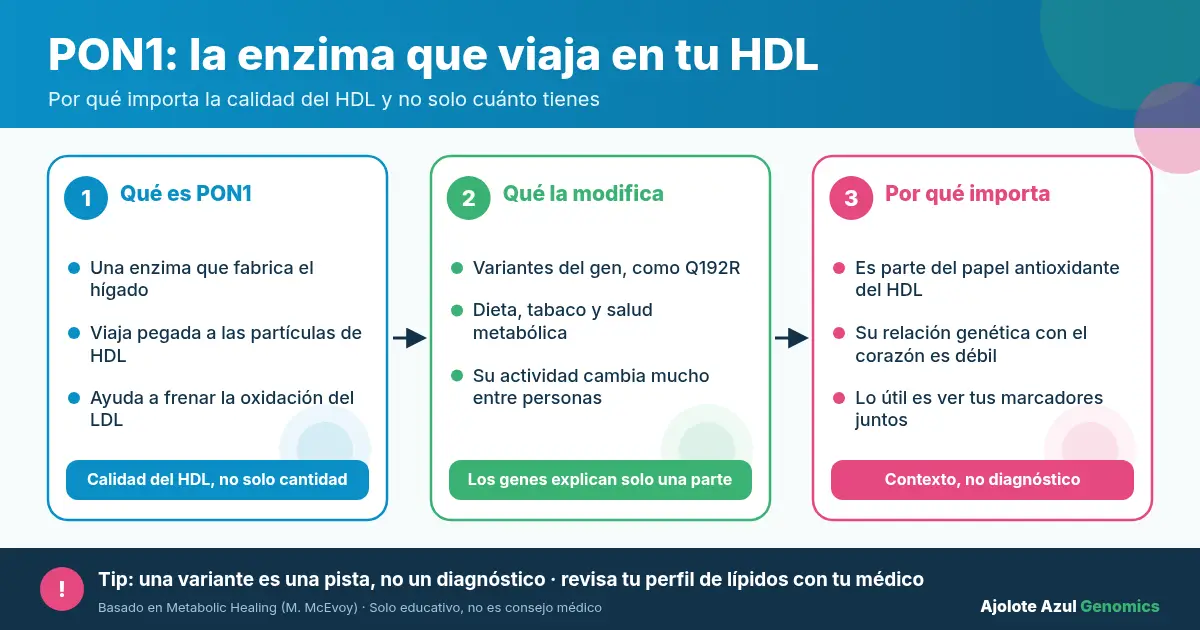
PON1 Gene: Function, HDL, and the Q192R Variant
What does the PON1 gene do? How it relates to paraoxonase, HDL cholesterol, and the Q192R variant—what the evidence shows and its limits.
7 min readRead more
Wellness
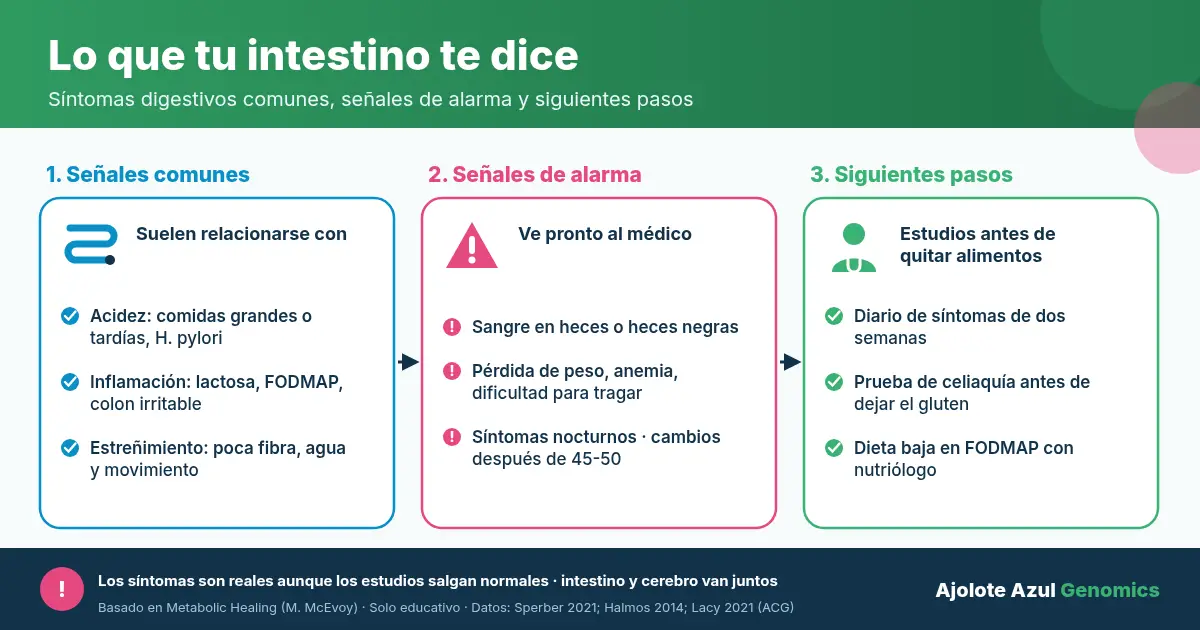
Digestive Symptoms: What Your Gut Is Telling You
Bloating, heartburn, or constipation can have several causes. Learn the warning signs and how a genetic test looks at lactose, gluten, and B12.
8 min readRead more
Wellness
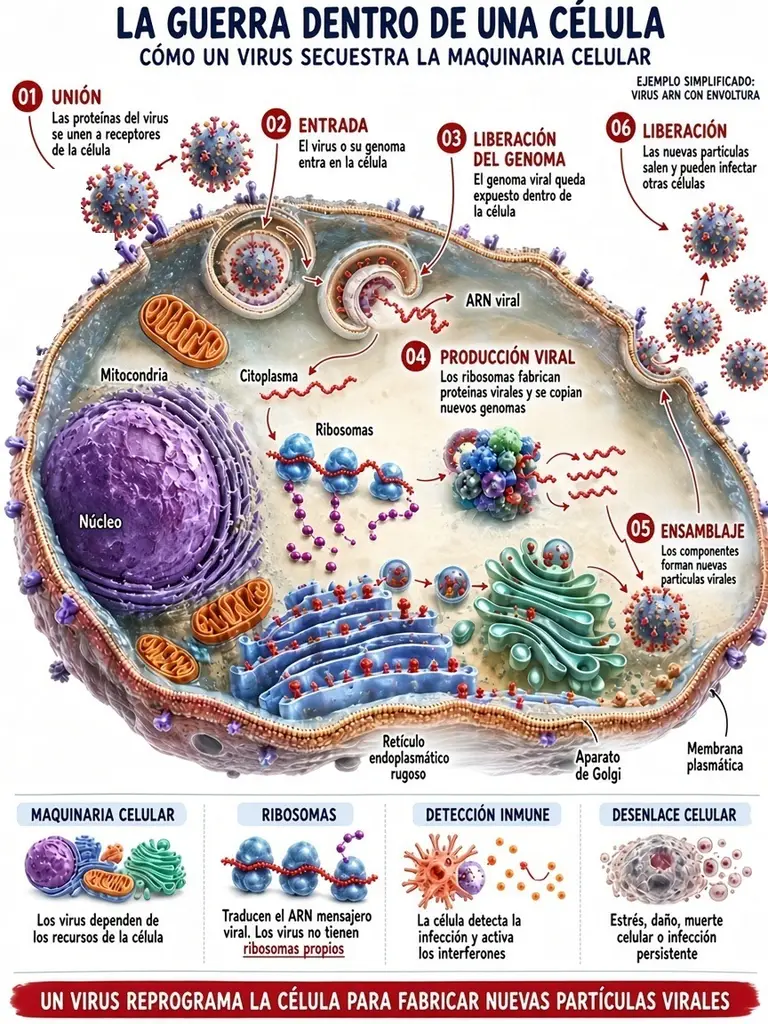
How a Virus Infects a Cell and How the Body Defends
Step by step: how a virus hijacks a cell to multiply, and the defenses your body uses—interferons, sensors, and apoptosis.
5 min readRead more
Did you like this article?
Discover how you can optimize your health with a personalized nutrigenetic test