Back to blog
Wellness
The NRF2 Gene: What It Is, Glutathione, and Sulforaphane
9 min read
Ajolote Azul Team
NRF2
glutathione
sulforaphane
antioxidant genes
broccoli sprouts
nutrigenetics
Based on the work of our partners at Metabolic Healing (Michael McEvoy). Read the original article: The NRF2 Gene: Glutathione, Sulforaphane & Beyond
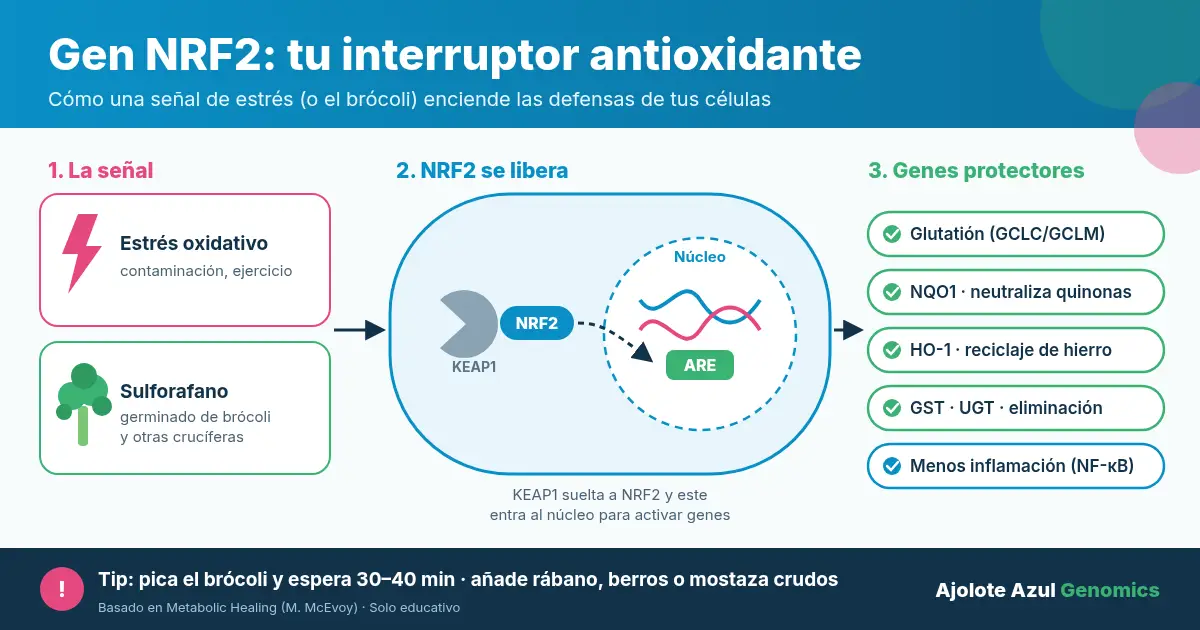
Pollution, late nights, heavy workouts, a few beers too many: your cells face stress every day. To defend themselves they have a central coordinator: a protein called NRF2. Picture it as the master switch that turns on, all at once, dozens of antioxidant and cellular-defense genes.
Here we explain what NRF2 does, how your DNA variants influence it, and which foods support it (spoiler: broccoli).
What is NRF2, and which gene produces it?
NRF2 is a transcription factor, that is, a protein that controls other genes. The NFE2L2 gene produces it.
Under normal conditions, NRF2 is "sequestered" outside the nucleus by another protein, KEAP1, which constantly sends it off to be recycled. When the cell detects oxidative stress (or certain plant compounds), KEAP1 releases it. NRF2 then enters the nucleus and binds to DNA sequences called antioxidant response elements (ARE).
That is how a whole program of cellular protection switches on.
The genes NRF2 puts to work
Among the genes that respond to NRF2 are:
- GCLC and GCLM: they make glutathione, the most important antioxidant inside the cell.
- NQO1: it neutralizes reactive compounds called quinones.
- HMOX1 (HO-1): it breaks down the heme group and takes part in iron recycling.
- GST and UGT enzymes: they put a kind of "tag" on toxins and on some medications so the body can clear them.
- Thioredoxin and sulfiredoxin systems: they repair proteins damaged by oxidation.
- Transporters (MRP): they move waste out of the cell.
NRF2 also helps slow NF-κB, one of the main "accelerators" of inflammation.
Do NRF2 gene variants matter?
Some common variants (SNPs) sit in the gene promoter, which works like the volume knob that decides how much NRF2 the cell can produce. The most studied are rs6721961, rs6706649, and rs35652124.
In laboratory experiments, the A allele of rs6721961 (also called the −617 variant) reduced promoter activity and its binding capacity, compared with the C allele, which is the most common 1. In the body, that could translate into a somewhat weaker antioxidant response.
These variants have been studied in relation to several conditions, including type 2 diabetes. But the results do not always agree. An example that hits home: in a study of more than 2,000 adults in China, people with the AA genotype of rs6721961 had lower antioxidant markers and a higher risk of newly diagnosed type 2 diabetes 2. By contrast, in a study of about 1,650 Mexican mestizo adults, the same variant was associated with a lower risk of diabetes in men, and those with the AA genotype had lower glucose 3.
The takeaway: a single variant is never a diagnosis. Your ancestry, your sex, your environment, and many other genes change what a result means. That is why it is worth interpreting them in context and, preferably, with a specialist.
Want to know how your body handles oxidative stress? Ajolote Azul's NGx nutrigenetic test analyzes 70 markers, including a section on endogenous antioxidant capacity and inflammatory response. It includes a 1-to-1 consultation to turn your results into concrete food and lifestyle decisions. The panel includes NRF2 (in the resistance report) and antioxidant markers such as SOD2 and NOS3. Questions? Book a free 15-minute orientation call.
Sulforaphane: the best-studied NRF2 activator
The natural NRF2 activator with the strongest scientific support comes from cruciferous vegetables: sulforaphane.
Broccoli, and especially broccoli sprouts, contains a precursor called glucoraphanin. On its own it does not do much: it needs the enzyme myrosinase to convert it into sulforaphane, and that enzyme is released when you chop or chew the plant. In a small study in people, sprouts and seeds that kept their active myrosinase provided 3 to 4 times more sulforaphane than glucoraphanin without the active enzyme 4.
Once formed, sulforaphane reacts with KEAP1 and makes it release NRF2. It is like a small "workout" for your cells: a mild, passing stress that pushes them to strengthen their own defenses. This phenomenon is called hormesis.
Cooking tips to get more from sulforaphane
- Heat inactivates myrosinase. Boiling broccoli for a long time, or putting it in the microwave, reduces the sulforaphane that forms 4.
- Chop and wait. Cut the broccoli and let it rest about 30–40 minutes before cooking it lightly (steamed or stir-fried).
- Add a raw "boost." A little radish, watercress, arugula, mustard powder, or wasabi on cooked broccoli can bring back some of the myrosinase.
- Try the sprouts. They are an especially concentrated source of glucoraphanin. Add them to salads, tacos, or Mexican-style sandwiches.
- Use what the market offers. Radish, cabbage, cauliflower, kale, and watercress are cruciferous vegetables too, and you can find them at any market or open-air market in Mexico.
Other habits associated with NRF2 activation
The research (much of it still in animals or in small studies in people) suggests that these play a role as well:
- Regular exercise, especially short, intense efforts.
- Curcumin from turmeric, studied in people with type 2 diabetes.
- Alpha-lipoic acid, with data mainly in animals.
- Ketogenic-style eating, with data mainly in animals as well.
The idea underneath: small, temporary challenges train the system. A caution: more is not always better. Having NRF2 switched "on" all the time is not desirable in every context. That is why it is worth putting food ahead of high-dose supplements, unless a professional indicates otherwise.
What about the thyroid?
Cruciferous vegetables have a reputation as "goitrogens," meaning they can affect the thyroid. In a 12-week randomized trial, 45 women in China drank a broccoli-sprout beverage rich in sulforaphane and its precursor every day, and there was no effect on TSH, free T4, thyroglobulin, or thyroid autoimmunity 5. The authors consider this evidence in favor of thyroid safety. Even so, it was a small study and included only women.
If you have hypothyroidism or Hashimoto's, eating cruciferous vegetables in usual amounts is not generally a problem. Even so, talk with your physician before taking concentrated supplements.
Where does a genetic test fit?
A nutrigenetic test will not tell you that you are "short on NRF2," but it can show whether you have variants that make antioxidant support, your food choices, and your environmental exposure more relevant for you.
If you take medications, keep in mind that some enzymes NRF2 controls (such as UGT and GST) also take part in drug processing. A pharmacogenetic test (PGx) reviews the main drug-metabolism genes, such as CYP2D6, CYP2C19, and UGT1A1. At Ajolote Azul you can also take both tests together as a combo.
You can compare the genetic tests available and their prices.
Frequently asked questions
What is the NRF2 gene for?
The NFE2L2 gene produces NRF2, a protein that switches on dozens of protective genes when the cell is under stress. Among them are the genes that make glutathione, neutralize reactive compounds, and take part in the body's natural processing of substances foreign to it.
Can I have a "weak" NRF2 gene?
Some common variants in the gene promoter, such as rs6721961, can reduce how much NRF2 is produced. Their effect on health changes with the population and the context, so a single variant does not mean you have a problem.
Which food activates NRF2 the most?
Broccoli sprouts are the best-studied source, because they are rich in glucoraphanin, which is converted into sulforaphane. Eating them raw and well chewed, or adding raw radish or mustard to cooked cruciferous vegetables, supports that conversion.
Does a nutrigenetic test analyze NRF2?
Yes. Ajolote Azul's NGx test includes NRF2 (in the resistance report) and indicators of antioxidant capacity such as SOD2 and NOS3. On the free orientation call we explain what your results mean.
Turn your genes into a practical plan
- NGx nutrigenetic test: 70 markers covering nutrition, vitamins, intolerances, and antioxidant capacity, with a 1-to-1 consultation included. $9,880 MXN.
- PGx pharmacogenetic test: how you process more than 200 medications. $9,800 MXN.
- NGx + PGx combo: $15,750 MXN. See the tests · Book your free 15-min call · Message us on WhatsApp
References
- Marzec JM, Christie JD, Reddy SP, et al. Functional polymorphisms in the transcription factor NRF2 in humans increase the risk of acute lung injury. FASEB J. 2007;21(9):2237-2246. doi:10.1096/fj.06-7759com. PubMed 17384144 · doi:10.1096/fj.06-7759com
- Wang X, Chen H, Liu J, et al. Association between the NF-E2 Related Factor 2 Gene Polymorphism and Oxidative Stress, Anti-Oxidative Status, and Newly-Diagnosed Type 2 Diabetes Mellitus in a Chinese Population. Int J Mol Sci. 2015;16(7):16483-16496. doi:10.3390/ijms160716483. PubMed 26204833 · Free full text (PMC) · doi:10.3390/ijms160716483
- Jiménez-Osorio AS, González-Reyes S, García-Niño WR, et al. Association of Nuclear Factor-Erythroid 2-Related Factor 2, Thioredoxin Interacting Protein, and Heme Oxygenase-1 Gene Polymorphisms with Diabetes and Obesity in Mexican Patients. Oxid Med Cell Longev. 2016;2016:7367641. doi:10.1155/2016/7367641. PubMed 27274779 · Free full text (PMC) · doi:10.1155/2016/7367641
- Fahey JW, Holtzclaw WD, Wehage SL, Wade KL, Stephenson KK, Talalay P. Sulforaphane Bioavailability from Glucoraphanin-Rich Broccoli: Control by Active Endogenous Myrosinase. PLoS One. 2015;10(11):e0140963. doi:10.1371/journal.pone.0140963. PubMed 26524341 · Free full text (PMC) · doi:10.1371/journal.pone.0140963
- Chartoumpekis DV, Ziros PG, Chen JG, Groopman JD, Kensler TW, Sykiotis GP. Broccoli sprout beverage is safe for thyroid hormonal and autoimmune status: Results of a 12-week randomized trial. Food Chem Toxicol. 2019;126:1-6. doi:10.1016/j.fct.2019.02.004. PubMed 30735751 · Free full text (PMC) · doi:10.1016/j.fct.2019.02.004
This article is for information and education only; it does not replace consultation, diagnosis, or treatment by a health professional. Talk with your physician before changing your diet, your medications, or your supplements.
Based on the work of our partners at Metabolic Healing (Michael McEvoy). Read the original article: Metabolic Healing
A
Ajolote Azul Team
Specialist in wellness, nutrition and holistic health. Passionate about sharing science-based knowledge to improve quality of life.
Keep Reading
Related Articles
Discover more content on this topic that might interest you
Wellness
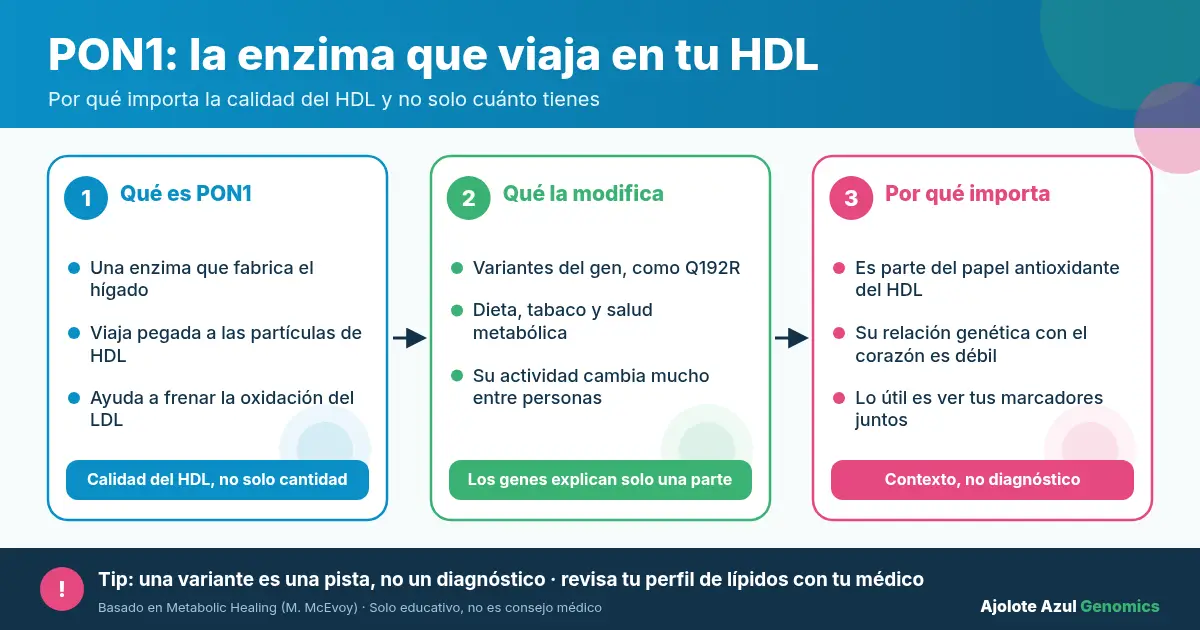
PON1 Gene: Function, HDL, and the Q192R Variant
What does the PON1 gene do? How it relates to paraoxonase, HDL cholesterol, and the Q192R variant—what the evidence shows and its limits.
7 min readRead more
Wellness
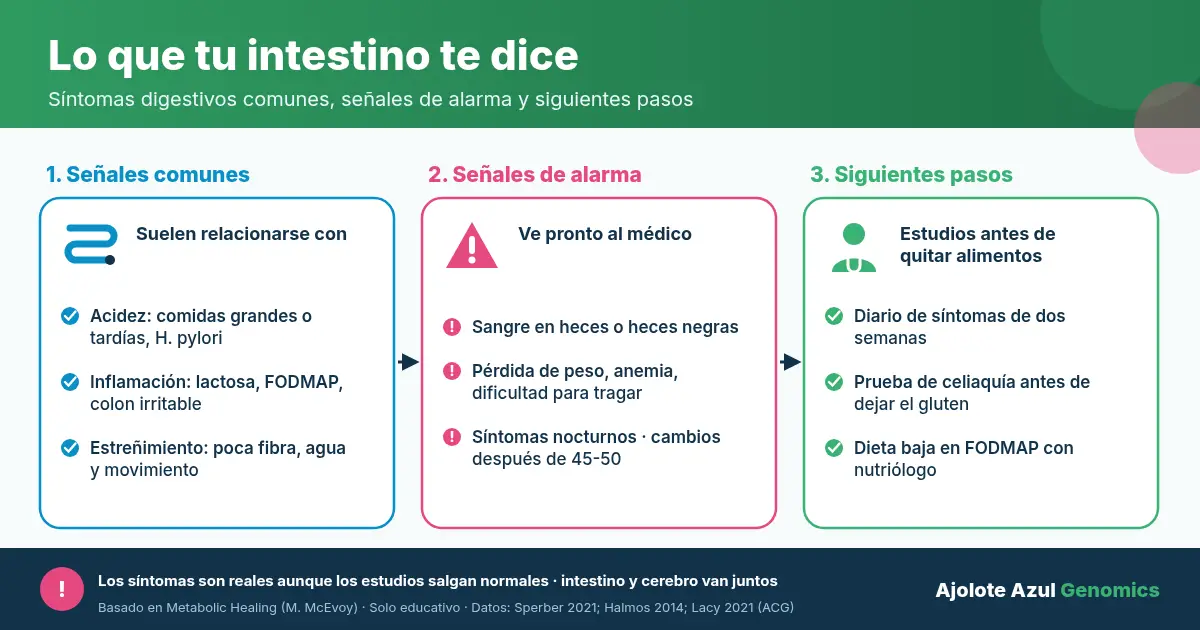
Digestive Symptoms: What Your Gut Is Telling You
Bloating, heartburn, or constipation can have several causes. Learn the warning signs and how a genetic test looks at lactose, gluten, and B12.
8 min readRead more
Wellness
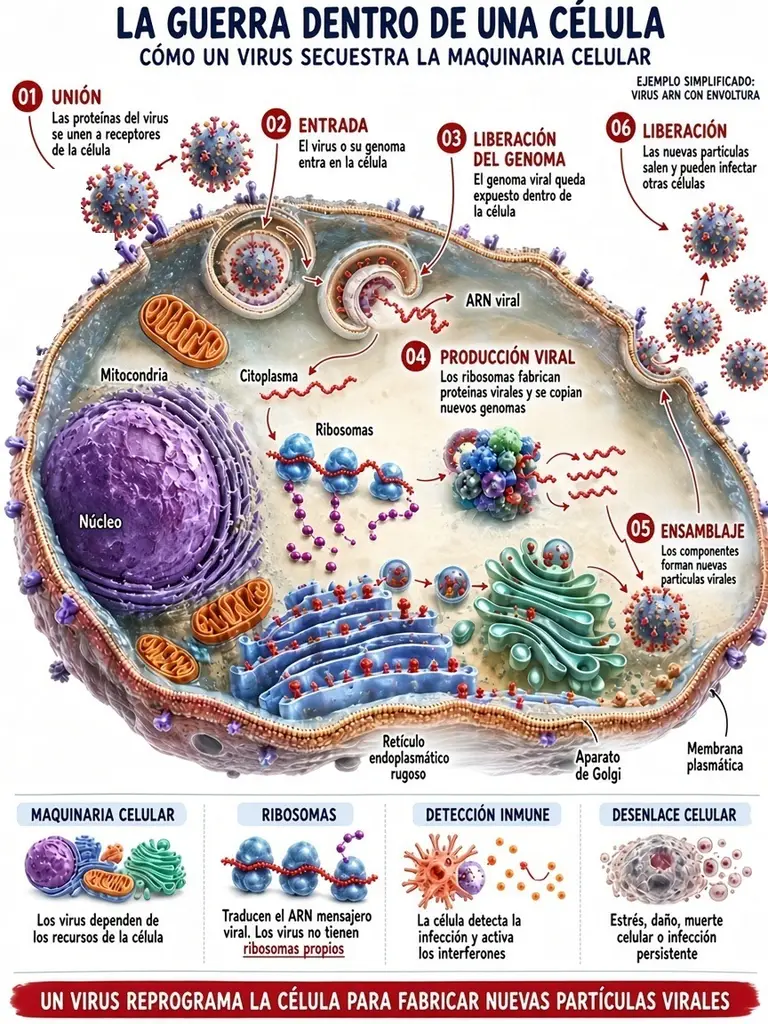
How a Virus Infects a Cell and How the Body Defends
Step by step: how a virus hijacks a cell to multiply, and the defenses your body uses—interferons, sensors, and apoptosis.
5 min readRead more
Did you like this article?
Discover how you can optimize your health with a personalized nutrigenetic test