Back to blog
Wellness
Your Intestinal Barrier: How It Works and What Affects It
7 min read
Ajolote Azul Team
intestinal barrier
leaky gut
tight junctions
BCO1 gene
vitamin A
nutrigenetics
Based on the work of our Metabolic Healing partners (Michael McEvoy). Read the original article: Gut Function: Intestinal Mucosal Barrier
Your intestinal barrier is a three-layer filter (mucus, epithelial cells, and immune cells) that lets nutrients through and limits bacteria and toxins. “Leaky gut” means increased permeability measured in research, not an established diagnosis. Eating fiber, moderating alcohol, and seeing your doctor for persistent symptoms can help support digestive health.
The lining of your intestine covers a surface area far larger than your skin and has a tricky job: admit nutrients while keeping out bacteria, toxins, and undigested food particles. When this barrier works well, you hardly notice it. When it is disturbed, effects can go beyond digestion.
“Leaky gut” has become a popular explanation for many symptoms. Here is what science supports and what it does not.
The three layers of your intestinal barrier
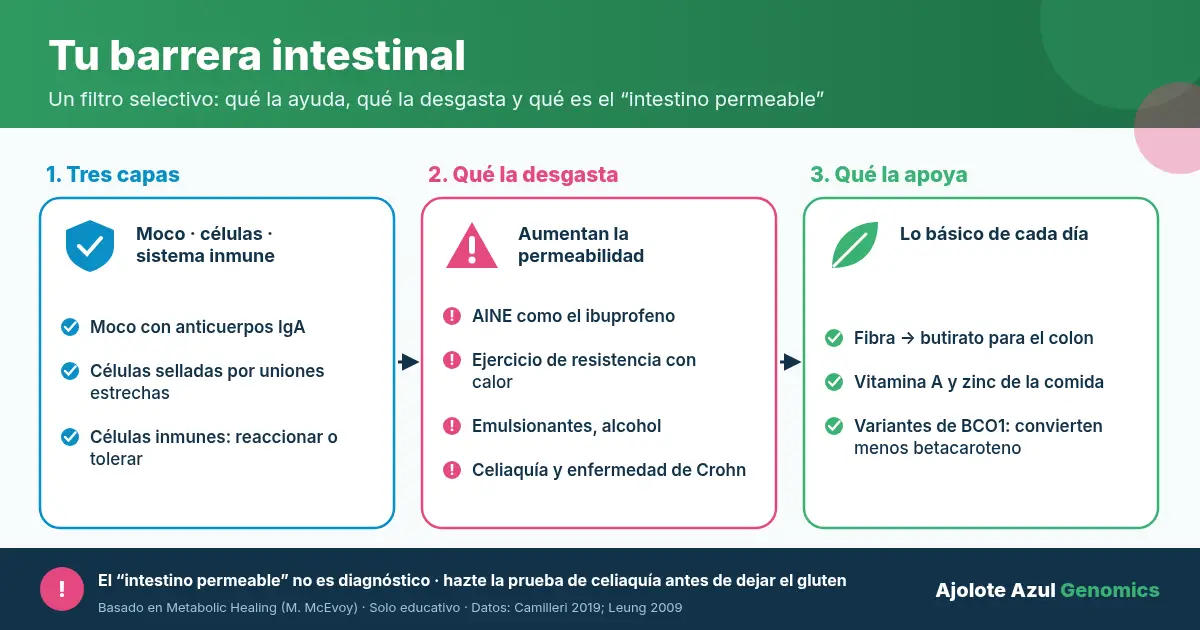
Your barrier is not a wall but a selectively permeable filter 1. It has three main layers:
- Mucus. A gel layer that keeps most bacteria away from cells and holds antimicrobial substances and antibodies, especially secretory IgA.
- Epithelial cells. A single layer of cells joined by tight junctions, protein “seals” that control what slips between cells.
- Immune cells. Just beneath lies the body’s highest concentration of immune cells, checking what crosses and deciding whether to react or tolerate.
Researchers have found that the barrier is actively regulated in response to food, microbes, and immune signals, and that regulation shapes intestinal immune responses. When it fails, it can contribute to disease 1.
What “leaky gut” really is
Scientists call it increased intestinal permeability. It is real and can be measured in research, for example with test sugars taken orally and later measured in urine.
A review written for clinicians lists factors that raise permeability in otherwise healthy people 2:
- Endurance exercise, especially in heat
- Nonsteroidal anti-inflammatory drugs (NSAIDs) such as ibuprofen and naproxen
- Pregnancy
- Surfactants, such as some bile acids and food emulsifiers
Inflammatory diseases, including celiac disease and Crohn’s disease, also come with a more permeable barrier.
The key warning from that review: it is not yet proven that restoring the barrier improves symptoms of digestive or other diseases, and popular “leaky gut” claims need confirmation before recommending restrictive diets or supplements to “fix it” 2. “Leaky gut syndrome” is not an established diagnosis.
Zonulin, gluten, and the autoimmunity hypothesis
One protein that regulates tight junctions is zonulin. Gliadin, a component of gluten, can trigger zonulin release from intestinal cells. Researcher Alessio Fasano proposed that when the zonulin pathway is disturbed in genetically susceptible people, it might contribute to autoimmune and inflammatory disorders 3.
This idea fits celiac disease well, where gluten, specific immune genes (HLA-DQ2/DQ8), and a permeable barrier interact. For other autoimmune diseases it remains a hypothesis under study, not a proven cause. People without celiac disease or diagnosed gluten sensitivity do not need to avoid gluten to “protect” their barrier.
Vitamin A: a quiet guardian of gut immunity
Vitamin A has a special role on the intestinal surface. Gut immune cells convert it to retinoic acid, needed for immune cells to “home” to the intestine, to make IgA antibodies, and to form regulatory T cells that keep the immune system tolerant to food and friendly bacteria 4.
Vitamin A comes in two forms:
- Preformed vitamin A (retinol): liver, egg, dairy, and fish.
- Beta-carotene: carrot, sweet potato, squash, mango, papaya, spinach, and quelites (wild greens). The body must convert it to vitamin A.
Your genes and beta-carotene
That conversion depends on an enzyme encoded by BCO1 (BCMO1). Two common variants, present in 42% and 24% of gene copies in one study, reduced enzyme activity. Women who carried them converted beta-carotene to vitamin A 32% to 69% less efficiently 5.
If you are a low converter, make sure you get some preformed vitamin A from animal foods or a wide variety of colorful vegetables. Ask your doctor before high-dose vitamin A supplements: excess preformed vitamin A can harm liver and bone, and in pregnancy it can cause birth defects.
Do your genes influence your gut?
They can. The NGx nutrigenetic test analyzes 70 markers across 59 genes and includes gluten and lactose sensitivity, FUT2, and inflammation markers. It does not diagnose any disease—it is information to discuss with your doctor or dietitian. Learn about Ajolote Azul genetic testing and read how the FUT2 gene and being a non-secretor relate to your microbiota.
Everyday ways to care for your intestinal barrier
- Eat fiber daily. Gut bacteria ferment it and produce short-chain fatty acids such as butyrate, the colon cells’ main fuel. Beans, oats, nopales (cactus pads), vegetables, and fruit help.
- Choose minimally processed foods when you can to naturally limit added emulsifiers.
- Talk to your doctor if you use NSAIDs often.
- Moderate alcohol, which irritates the intestinal mucosa.
- Cover zinc and vitamin A with food: meat, seafood, egg, beans, pumpkin seeds, and orange and dark green vegetables.
- Hydrate and eat something during long, hot workouts.
- Get a diagnosis, do not guess. If you suspect celiac disease, get tested before removing gluten, because quitting gluten first can yield a false negative.
Frequently asked questions
What is the intestinal barrier?
It is the lining of your gut: a mucus layer, a single layer of cells sealed by tight junctions, and immune cells below. It admits nutrients and limits bacteria, toxins, and food particles.
Does leaky gut exist?
Increased intestinal permeability is real and measurable. It appears in conditions like celiac disease and after NSAIDs or intense exercise. But “leaky gut syndrome” is not an established diagnosis, and fixing permeability has not been proven to help other conditions.
Does vitamin A help the gut?
Vitamin A is converted in the intestine to retinoic acid, which supports IgA production and immune tolerance. Getting enough from food matters; ask your doctor before high-dose supplements.
Do genes affect how I convert beta-carotene?
Yes. Common variants in BCO1 (BCMO1) can substantially reduce how efficiently you convert beta-carotene to vitamin A.
Turn your genes into a practical plan
- NGx nutrigenetic test: 70 markers across 59 genes, with a included 60-minute 1:1 consult. $9,880 MXN.
- PGx pharmacogenetic test: how you process more than 200 medications (51 genes). $9,800 MXN.
- NGx + PGx Combo: $15,750 MXN. Explore the tests
References
- Turner JR. Intestinal mucosal barrier function in health and disease. Nat Rev Immunol. 2009;9(11):799-809. doi:10.1038/nri2653. PubMed 19855405 · doi:10.1038/nri2653
- Camilleri M. Leaky gut: mechanisms, measurement and clinical implications in humans. Gut. 2019;68(8):1516-1526. doi:10.1136/gutjnl-2019-318427. PubMed 31076401 · Free full text (PMC) · doi:10.1136/gutjnl-2019-318427
- Fasano A. Zonulin and its regulation of intestinal barrier function: the biological door to inflammation, autoimmunity, and cancer. Physiol Rev. 2011;91(1):151-175. doi:10.1152/physrev.00003.2008. PubMed 21248165 · doi:10.1152/physrev.00003.2008
- Cassani B, Villablanca EJ, De Calisto J, Wang S, Mora JR. Vitamin A and immune regulation: role of retinoic acid in gut-associated dendritic cell education, immune protection and tolerance. Mol Aspects Med. 2012;33(1):63-76. doi:10.1016/j.mam.2011.11.001. PubMed 22120429 · Free full text (PMC) · doi:10.1016/j.mam.2011.11.001
- Leung WC, Hessel S, Méplan C, et al. Two common single nucleotide polymorphisms in the gene encoding beta-carotene 15,15'-monoxygenase alter beta-carotene metabolism in female volunteers. FASEB J. 2009;23(4):1041-1053. doi:10.1096/fj.08-121962. PubMed 19103647 · doi:10.1096/fj.08-121962
This article is for education and information only; it does not replace medical advice, diagnosis, or treatment. Talk to your doctor before changing your diet, medications, or supplements.
Based on the work of our Metabolic Healing partners (Michael McEvoy). Read the original article: Metabolic Healing
A
Ajolote Azul Team
Specialist in wellness, nutrition and holistic health. Passionate about sharing science-based knowledge to improve quality of life.
Keep Reading
Related Articles
Discover more content on this topic that might interest you
Wellness
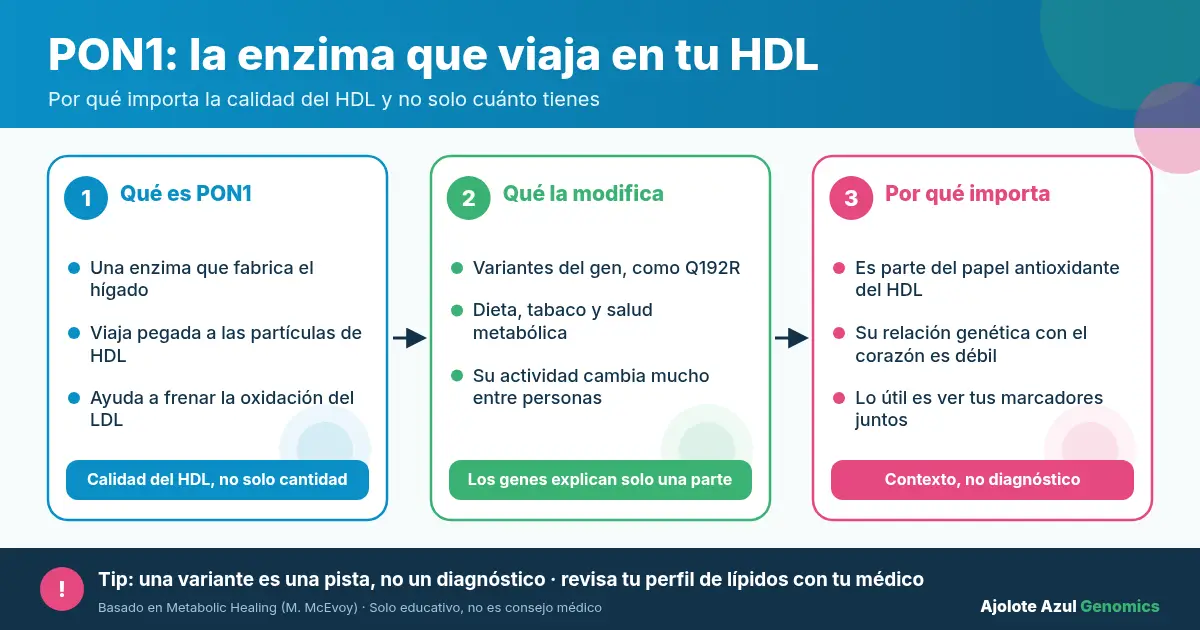
PON1 Gene: Function, HDL, and the Q192R Variant
What does the PON1 gene do? How it relates to paraoxonase, HDL cholesterol, and the Q192R variant—what the evidence shows and its limits.
7 min readRead more
Wellness
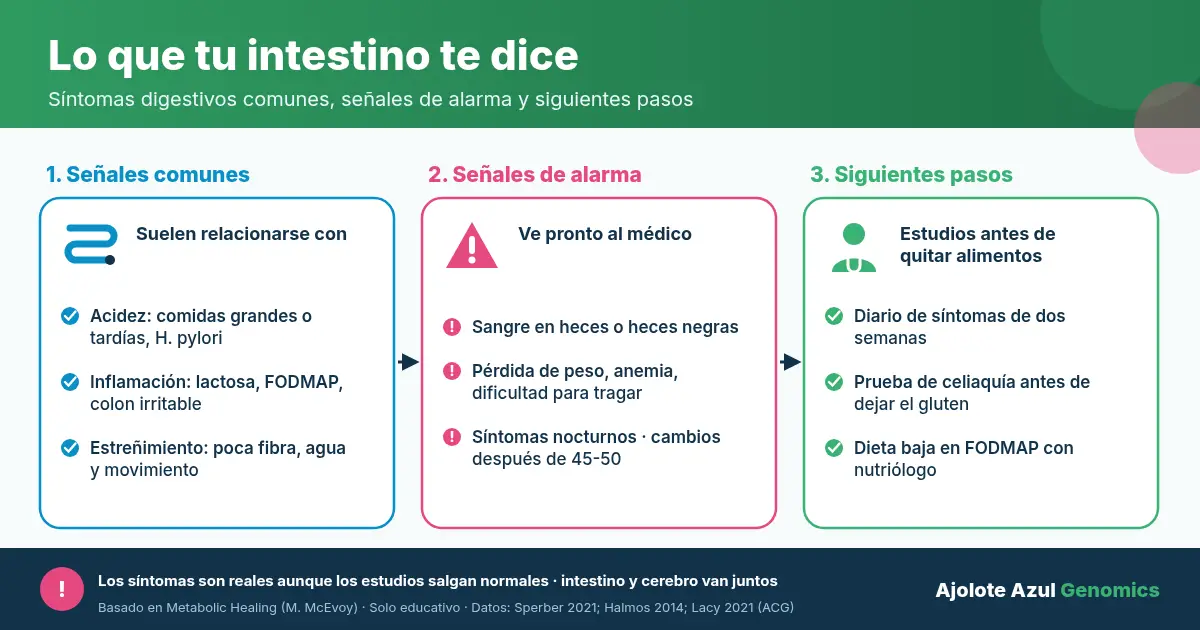
Digestive Symptoms: What Your Gut Is Telling You
Bloating, heartburn, or constipation can have several causes. Learn the warning signs and how a genetic test looks at lactose, gluten, and B12.
8 min readRead more
Wellness
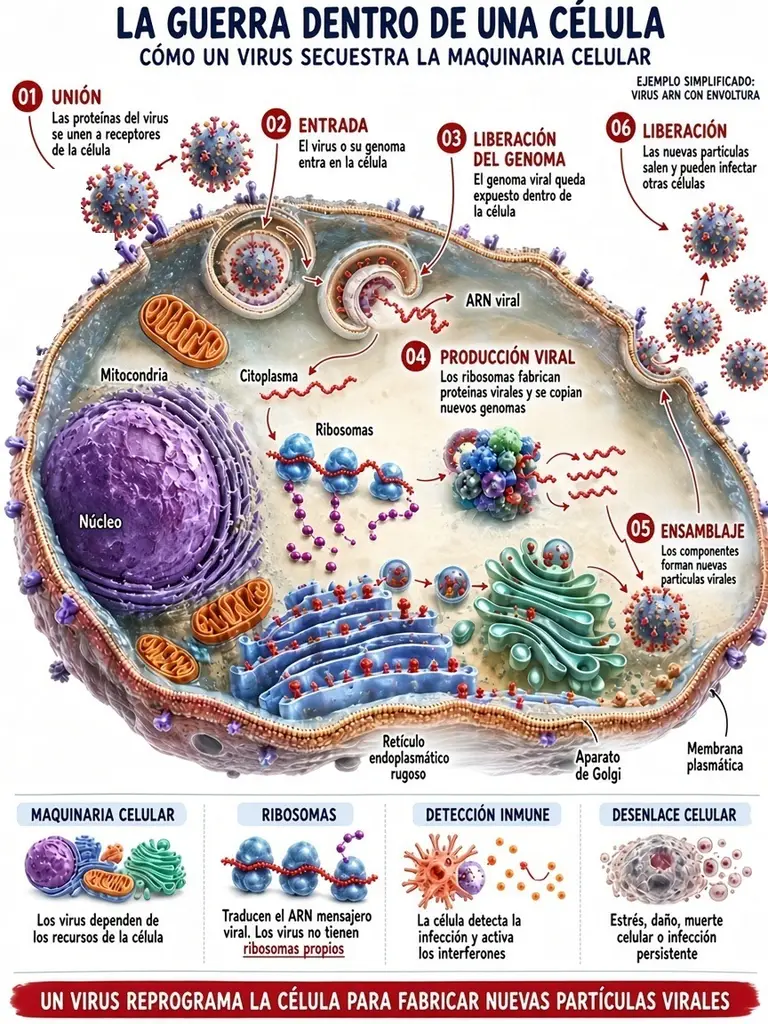
How a Virus Infects a Cell and How the Body Defends
Step by step: how a virus hijacks a cell to multiply, and the defenses your body uses—interferons, sensors, and apoptosis.
5 min readRead more
Did you like this article?
Discover how you can optimize your health with a personalized nutrigenetic test