Back to blog
Wellness
How to Improve Digestion: 7 Habits and What Your Genes Say
8 min read
Ajolote Azul Team
seven habits that support digestion
fiber, chewing, and unhurried meals
lactose tolerance and the LCT gene
heartburn, dyspepsia, and H. pylori
digestive signs that need a doctor
what a nutrigenetic test can show about digestion
Based on the work of our partners at Metabolic Healing (Michael McEvoy). Read the original article: Creating A Healthy Digestive System: Its Importance For Your Health
How can you improve digestion? Eat without rushing and chew well, increase fiber gradually with enough water, and feed your microbiota with a varied diet. Stay active, manage stress, and if you have frequent symptoms, talk with your doctor.
We take for granted that we digest well until something goes wrong: bloating after a meal, heartburn at night, irregular trips to the bathroom. Digestion is how you turn food into energy and nutrients, and a large share of your immune system, along with trillions of microbes, also lives in your intestine.
The good news is that a few steady habits can help you feel better. Here are seven, along with the signs that it is time to see a doctor.
How digestion works, in brief
Digestion starts before the first bite. Smelling and seeing food prepares saliva and stomach juices. After that:
- Mouth. Chewing breaks food up, and saliva starts digesting starches.
- Stomach. Acid and enzymes begin breaking down proteins; the acid also helps neutralize microbes from food.
- Pancreas and gallbladder. They release enzymes and bile into the small intestine to digest fats, proteins, and carbohydrates.
- Small intestine. This is where most nutrients are absorbed.
- Large intestine. Gut bacteria ferment fiber and produce beneficial compounds, and water is reabsorbed.
Each stage depends on the one before it. That is why small habits at the beginning, such as chewing, can make the work of what follows easier.
1. Listen to your body and take notes
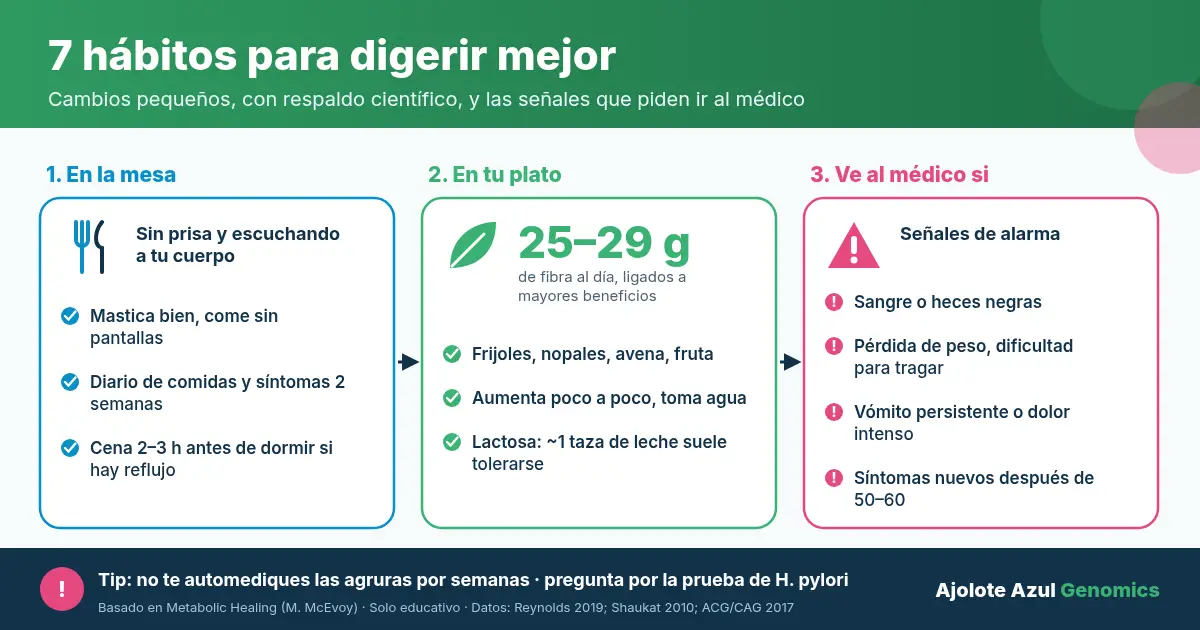
Your symptoms are information. If something bothers you often, a food and symptom diary for two weeks can reveal patterns: specific foods, portion sizes, eating late, stress, or poor sleep. Take it to your doctor or nutritionist. It is much more useful than guessing.
2. Eat without rushing and chew well
Eating in a rush, standing up, or in front of a screen usually means bigger bites and swallowing more air. Chewing better gives enzymes more surface to work on and helps you notice when you are already satisfied. Try setting your utensils down between bites, and make the meal a real pause.
3. Eat more fiber, little by little
Fiber feeds your gut bacteria and keeps things moving. A large analysis published in The Lancet, with 185 prospective studies and 58 clinical trials, found that eating more fiber was associated with 15 to 30% lower overall mortality and heart-disease mortality, as well as with fewer cases of stroke, type 2 diabetes, and colorectal cancer. These are observed associations, not a promise of outcomes. The most favorable associations appeared at 25 to 29 grams of fiber a day 1.
Mexican food makes this easy: beans, lentils, nopales, chayote, corn tortillas, oats, fruit with the peel, chia, and vegetables. Increase fiber gradually and drink enough water; otherwise you may feel more bloated at first.
4. Feed your microbiota with variety
Your gut bacteria respond to what you eat faster than you might think. In one study, switching people to an all-animal or an all-plant diet changed their microbial community within a matter of days 2. A varied diet with plenty of plants favors a more diverse community. Fermented foods, such as yogurt, kefir, or tepache, add to it as well.
5. Know your history with lactose
Most adults in the world gradually lose the ability to produce lactase, the enzyme that digests milk sugar. Whether you keep producing it depends in large part on your genes: a variant near the LCT gene (called C/T-13910) is strongly associated with lactase persistence in people of European ancestry 3. Other variants explain persistence in parts of Africa and the Middle East, and lack of lactase in adulthood is common in many populations, including the population of México.
Having little lactase does not mean you must give up dairy. A systematic review found that most adults with lactose intolerance tolerate about 12 to 15 grams of lactose, roughly one cup of milk, especially if it is spread through the day or taken with food 4. Yogurt and aged cheeses naturally contain less lactose, and lactose-free milk is available at any store.
Do your genes influence your digestion?
Yes, in part. Ajolote Azul’s NGx nutrigenetic test analyzes 70 markers in 59 genes and, among them, reviews your sensitivity to lactose and gluten, your vitamin B12 (including the FUT2 gene), and other nutrition markers. If you want to know more about FUT2, read what being a FUT2 “non-secretor” means for your microbiota. The results do not diagnose any disease: they are information for adjusting your diet with a professional, with a 1-on-1 consult included.
6. Handle heartburn and indigestion with care
Frequent heartburn, burning, or fullness in the upper abdomen (dyspepsia) are very common, and it is tempting to self-treat. Medical guidelines recommend an orderly approach. In people under 60 without alarm features, the doctor usually starts with a noninvasive test for Helicobacter pylori and, if it is positive, indicates the appropriate management; if symptoms continue, other options can be considered. From age 60 onward, endoscopy is generally offered 5.
Do not start acid supplements or change prescribed medications on your own: see your doctor so they can review your symptoms and your medications.
7. Look after the rest of your routine
- Move. Regular activity supports regular bowel movements.
- Manage stress. The gut and the brain are closely connected; stress can encourage cramps and changes in bowel movements.
- Leave 2 to 3 hours between dinner and bed if you have reflux.
- Go easy on alcohol, tobacco, and very fatty or spicy meals if they trigger symptoms.
- Use pain relievers such as ibuprofen with care. Frequent use can irritate the stomach.
Gut health and the immune system
A large part of the immune system sits along the intestine. Researchers are studying how the intestinal barrier and the microbiota relate to inflammatory and autoimmune diseases, but a cause-and-effect relationship has not been shown, and having digestive symptoms does not mean that you have, or will develop, an autoimmune disease. Digesting well is worthwhile on its own.
When to see a doctor
Seek medical care promptly if you notice:
- Blood in the stool, or black stools, like tar
- Weight loss you were not trying for
- Difficulty or pain when swallowing, or persistent vomiting
- Severe abdominal pain, or pain that is getting worse
- Symptoms that wake you at night, or new symptoms after age 50–60
- Anemia, or a family history of colon cancer, celiac disease, or inflammatory bowel disease
Frequently asked questions
What is the fastest way to improve digestion?
There is no magic fix, but eating without rushing, chewing well, drinking enough water, and moving after you eat can help. Increasing fiber little by little can support gut health over the long term.
How much fiber should I eat in a day?
Research links 25 to 29 grams a day with the greatest benefits. Beans, lentils, oats, nopales, vegetables, and fruit with the peel are easy ways to get there. Increase it slowly to avoid bloating.
Is lactose intolerance genetic?
In large part, yes. Whether you keep producing lactase as an adult depends above all on variants near the LCT gene. Even so, most people with intolerance can consume small amounts of dairy, especially with meals.
When is indigestion serious?
See a doctor if indigestion comes with weight loss, difficulty swallowing, vomiting, black stools, or anemia, or if it starts after age 60. Persistent symptoms also deserve a review, including an H. pylori test.
Turn your genes into a practical plan
- Nutrigenetic test NGx: 70 markers in 59 genes, with a 60-minute 1-on-1 consult included. $9,880 MXN.
- Pharmacogenetic test PGx: how you process more than 200 medications (51 genes). $9,800 MXN.
- NGx + PGx combo: $15,750 MXN. See the tests
References
- Reynolds A, Mann J, Cummings J, Winter N, Mete E, Te Morenga L. Carbohydrate quality and human health: a series of systematic reviews and meta-analyses. Lancet. 2019;393(10170):434-445. doi:10.1016/S0140-6736(18)31809-9. PubMed 30638909 · doi:10.1016/S0140-6736(18)31809-9 · Erratum published: Lancet. 2019 Feb 2;393(10170):406.
- David LA, Maurice CF, Carmody RN, et al. Diet rapidly and reproducibly alters the human gut microbiome. Nature. 2014;505(7484):559-563. doi:10.1038/nature12820. PubMed 24336217 · Free full text (PMC) · doi:10.1038/nature12820
- Enattah NS, Sahi T, Savilahti E, Terwilliger JD, Peltonen L, Järvelä I. Identification of a variant associated with adult-type hypolactasia. Nat Genet. 2002;30(2):233-237. doi:10.1038/ng826. PubMed 11788828 · doi:10.1038/ng826
- Shaukat A, Levitt MD, Taylor BC, et al. Systematic review: effective management strategies for lactose intolerance. Ann Intern Med. 2010;152(12):797-803. doi:10.7326/0003-4819-152-12-201006150-00241. PubMed 20404262 · doi:10.7326/0003-4819-152-12-201006150-00241
- Moayyedi P, Lacy BE, Andrews CN, Enns RA, Howden CW, Vakil N. ACG and CAG Clinical Guideline: Management of Dyspepsia. Am J Gastroenterol. 2017;112(7):988-1013. doi:10.1038/ajg.2017.154. PubMed 28631728 · doi:10.1038/ajg.2017.154 · Erratum published: Am J Gastroenterol. 2017 Sep;112(9):1484.
This article is for information and education only; it does not replace consultation, diagnosis, or treatment by a health professional. Talk with your doctor before changing your diet, medications, or supplements.
Based on the work of our partners at Metabolic Healing (Michael McEvoy). Read the original article: Metabolic Healing
A
Ajolote Azul Team
Specialist in wellness, nutrition and holistic health. Passionate about sharing science-based knowledge to improve quality of life.
Keep Reading
Related Articles
Discover more content on this topic that might interest you
Wellness
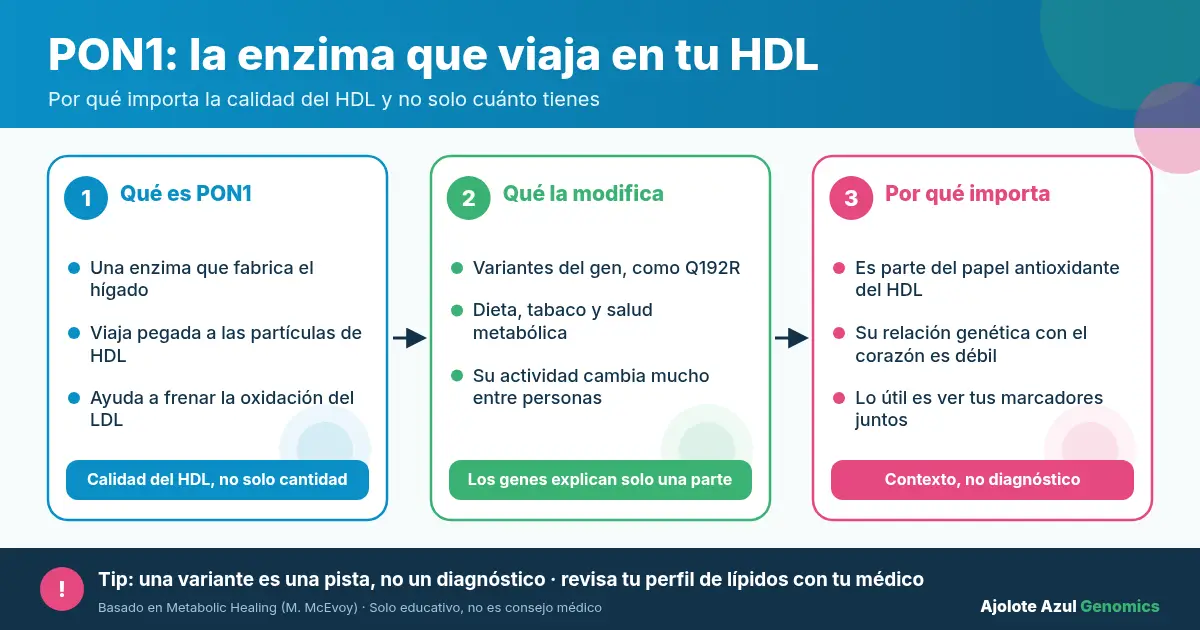
PON1 Gene: Function, HDL, and the Q192R Variant
What does the PON1 gene do? How it relates to paraoxonase, HDL cholesterol, and the Q192R variant—what the evidence shows and its limits.
7 min readRead more
Wellness
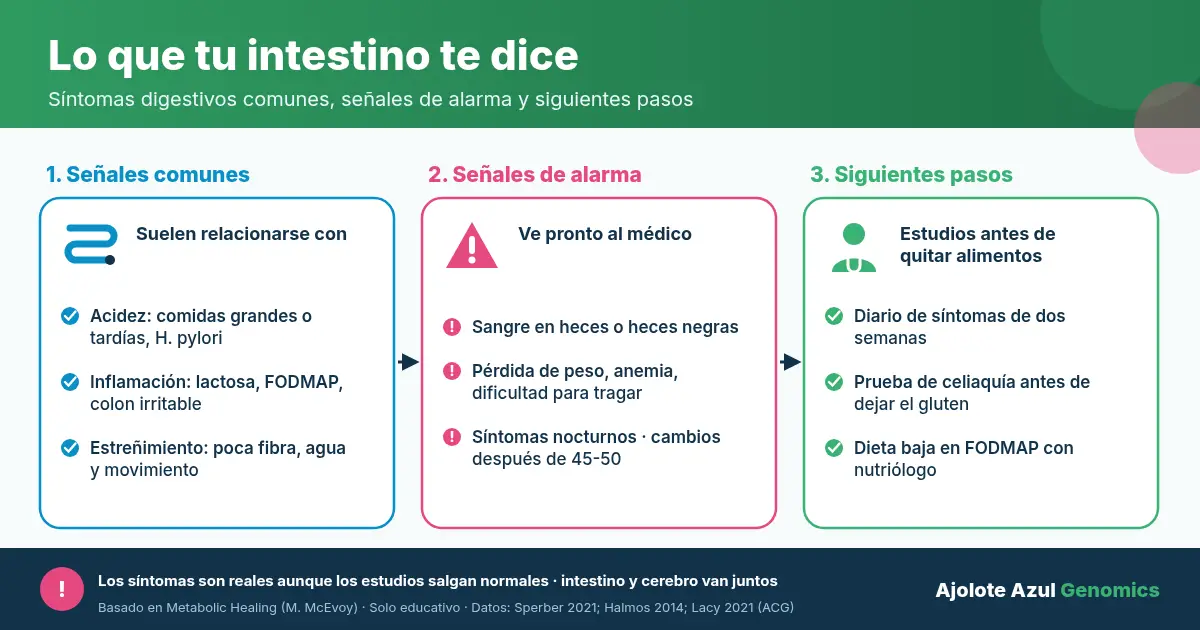
Digestive Symptoms: What Your Gut Is Telling You
Bloating, heartburn, or constipation can have several causes. Learn the warning signs and how a genetic test looks at lactose, gluten, and B12.
8 min readRead more
Wellness
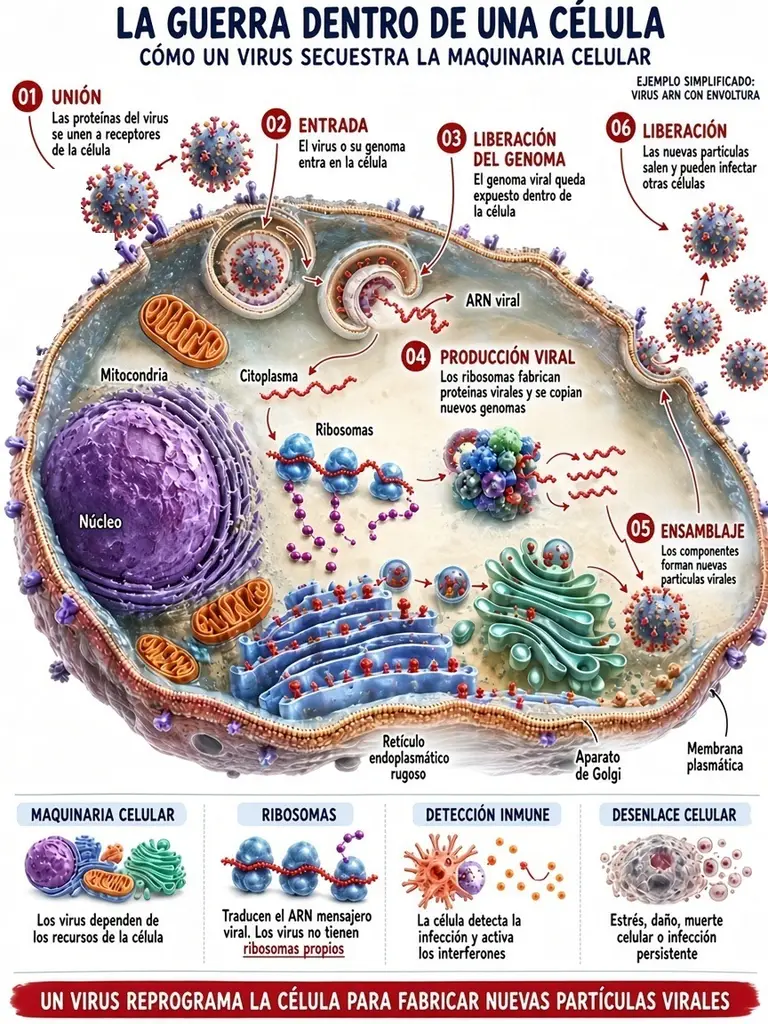
How a Virus Infects a Cell and How the Body Defends
Step by step: how a virus hijacks a cell to multiply, and the defenses your body uses—interferons, sensors, and apoptosis.
5 min readRead more
Did you like this article?
Discover how you can optimize your health with a personalized nutrigenetic test