Back to blog
Wellness
Steroid Hormones: From Cholesterol to Cortisol and Your Genes
8 min read
Ajolote Azul Team
how steroid hormones are produced
from cholesterol to cortisol and sex hormones
CYP enzymes shared by hormones and drugs
adrenal fatigue and what the evidence shows
why pregnenolone steal does not fit
genes, nutrients, and hormone pathways
Based on the work of our partners at Metabolic Healing (Michael McEvoy). Read the original article: The Endocrine Journey: Steroidal Hormones & Their Pathways
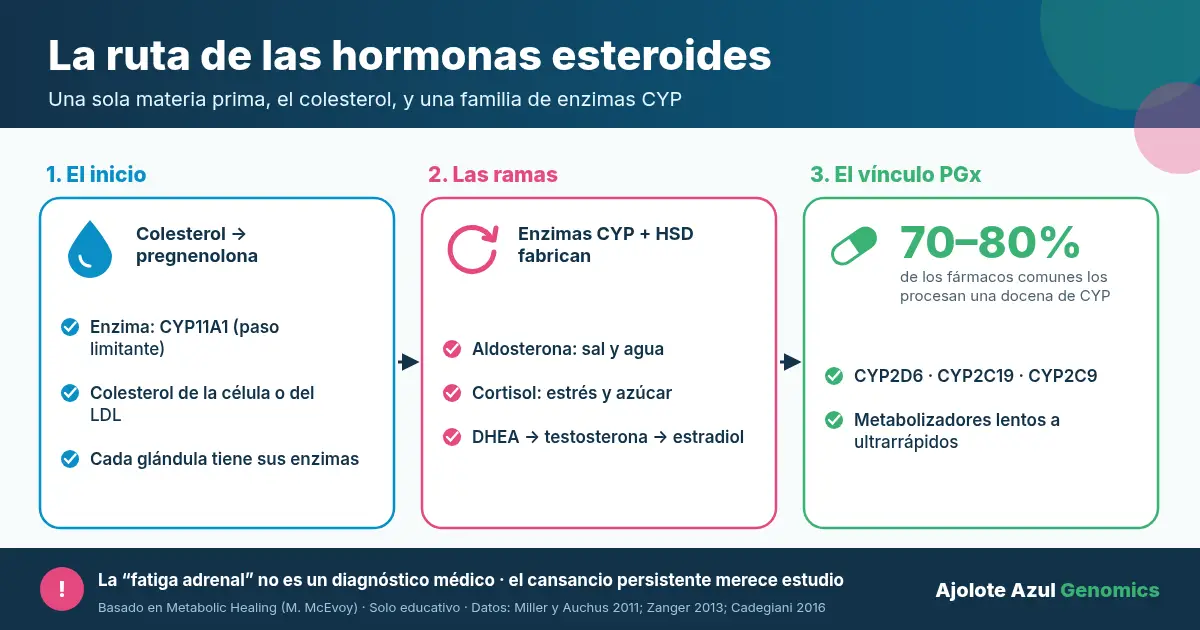
Steroid hormones —such as cortisol, aldosterone, progesterone, testosterone, and estrogens— are made from cholesterol. The enzyme CYP11A1 starts the pathway by converting cholesterol into pregnenolone; after that, other enzymes produce each hormone according to the tissue, and some genetic variants can influence those enzymes.
Cortisol, aldosterone, testosterone, estrogens, and progesterone do very different jobs, but they share a family tree. All of them are steroid hormones, and all of them start from the same raw material: cholesterol.
Understanding this pathway helps make sense of laboratory tests, of popular claims about “adrenal fatigue,” and of why the enzymes involved matter for your response to medications.
The five families of steroid hormones
- Glucocorticoids, especially cortisol: they help regulate blood sugar, blood pressure, the stress response, and inflammation.
- Mineralocorticoids, especially aldosterone: they control sodium, potassium, and fluid balance.
- Progestogens, especially progesterone: they regulate the menstrual cycle and support pregnancy.
- Androgens, such as DHEA and testosterone: important for muscle, bone, sexual desire, and sperm production, in women as well.
- Estrogens, such as estradiol: key for sexual development, the menstrual cycle, bones, and the brain, in men as well.
Vitamin D, although technically a secosteroid, also comes from a molecule related to cholesterol and acts as a hormone.
First step: cholesterol becomes pregnenolone
Every steroid hormone begins when cholesterol enters the mitochondria of a hormone-producing cell and the enzyme CYP11A1 (also called P450scc) converts it into pregnenolone. It is the first step, and the one that limits the speed of the entire process 1.
That cholesterol can come from the cell itself or from LDL particles in the blood, one more reason cholesterol is not simply a “bad” molecule.
From pregnenolone to everything else
From pregnenolone, two kinds of enzymes do almost all the work: cytochrome P450 enzymes (CYP) and hydroxysteroid dehydrogenases (HSD) 1. In simplified form:
- Pregnenolone → progesterone (by 3β-HSD).
- Progesterone → aldosterone in the outer layer of the adrenal gland (CYP21A2 and then CYP11B2).
- Progesterone or pregnenolone → cortisol in the middle layer of the adrenal gland (CYP17A1, CYP21A2, CYP11B1).
- Pregnenolone → DHEA (CYP17A1) → androstenedione → testosterone (17β-HSD).
- Testosterone → estradiol (CYP19A1, aromatase) or → DHT (5α-reductase).
A key point: this is not a single shared pool. The same basic process is repeated in each gland, with variations specific to each cell type: the zones of the adrenal gland, the ovaries, and the testes each have their own set of enzymes 1. That is why the popular idea of “pregnenolone steal,” in which stress takes pregnenolone away from sex hormones throughout the body, does not match how steroids are actually produced.
CYP enzymes: hormones and medications share the machinery
The CYP enzymes that make steroid hormones belong to a large family. Other members, especially in the liver and the intestine, process external substances, including medications. About a dozen CYP enzymes handle 70 to 80% of commonly used drugs 2.
Several of them, such as CYP2D6, CYP2C19, and CYP2C9, differ a great deal from person to person because of common genetic variants. Depending on your genes, you can be a poor, intermediate, normal, or ultrarapid metabolizer of certain drugs, which can influence side effects, effectiveness, and dose 2. That is the basis of pharmacogenetics.
What about “adrenal fatigue”?
Online, the term “adrenal fatigue” is widely used to describe exhaustion supposedly caused by adrenal glands worn out by chronic stress. A systematic review of 58 studies found no support for adrenal fatigue as a real medical condition. Cortisol test results were contradictory, and many of the tests used to “diagnose it” are not validated 3. Endocrinology societies do not recognize it as a diagnosis.
That does not mean your tiredness is not real. Persistent fatigue deserves a serious medical evaluation, because it can come from anemia, thyroid problems, depression, sleep apnea, diabetes, effects of medications, and many other causes.
Real adrenal disorders do exist, and they have specific tests:
- Too much cortisol (Cushing's syndrome). After ruling out the use of steroid medications, the doctor uses tests such as 24-hour urinary cortisol, late-night salivary cortisol, or a dexamethasone suppression test, and an endocrinologist then confirms it 4.
- Too little cortisol (adrenal insufficiency, such as Addison's disease). The guidelines recommend evaluating anyone with suggestive symptoms and signs, such as weight loss, low blood pressure, salt craving, or darkening of the skin 5.
Both are serious and require medical care, which is exactly why they should not be confused with vague labels.
How to support healthy hormone production
No supplement “rebalances” the whole pathway, but some basic habits can help support it:
- Eat enough. Diets very low in calories or in fat can alter reproductive hormones.
- Sleep 7 to 9 hours on a regular schedule; cortisol follows a daily rhythm.
- Move regularly, including strength exercise, without falling into chronic overtraining.
- Manage chronic stress with whatever works for you.
- Cover key nutrients, such as zinc (meat, shellfish, pumpkin seeds, beans), vitamin D, and enough protein.
- Limit alcohol and avoid tobacco.
A note on hormone therapy
Hormone therapy, including products sold as “bioidentical,” can be appropriate in specific situations, such as menopause symptoms. But hormones are powerful medications. “Natural” does not mean free of risk, and compounded preparations may not have the same quality controls as approved products. Before you start, change, or stop any hormone or any supplement such as DHEA or pregnenolone, talk with your doctor.
Do your genes influence your hormones?
Steroid hormones depend on enzymes, and genetics influences how many metabolic enzymes work. The NGx nutrigenetic test analyzes 70 markers in 59 genes related to nutrition and metabolism, such as fat metabolism, caffeine, and vitamins. It does not measure hormones or diagnose any condition, but it can help you understand better how your body uses nutrients. If you are interested in the link between nutrients and hormones, also read about choline, estrogens, and the PEMT gene.
Frequently asked questions
Are all steroid hormones made from cholesterol?
Yes. The enzyme CYP11A1 converts cholesterol into pregnenolone, and from there every other steroid hormone is made, including cortisol, aldosterone, testosterone, and estradiol.
Does adrenal fatigue exist?
It is not a recognized medical diagnosis. A systematic review found no evidence that it exists as a condition of its own. Tiredness is real and deserves evaluation, and true adrenal disorders, such as Cushing's syndrome and Addison's disease, have specific tests.
What is “pregnenolone steal”?
It is a popular theory in which stress diverts pregnenolone toward cortisol at the expense of sex hormones. It does not fit the way steroids are produced, because each gland and each zone of the adrenal gland makes its hormones with its own set of enzymes.
How are steroid hormones related to pharmacogenetics?
Steroid hormones are made by CYP enzymes, and related CYP enzymes process most medications. Genetic variants in drug-processing CYP enzymes, such as CYP2D6 and CYP2C19, can change your response to many medications.
Turn your genes into a practical plan
- Nutrigenetic test NGx: 70 markers in 59 genes, with a 60-minute 1-on-1 consult included. $9,880 MXN.
- Pharmacogenetic test PGx: how you process more than 200 medications (51 genes). $9,800 MXN.
- NGx + PGx combo: $15,750 MXN. See the tests
References
- Miller WL, Auchus RJ. The molecular biology, biochemistry, and physiology of human steroidogenesis and its disorders. Endocr Rev. 2011;32(1):81-151. doi:10.1210/er.2010-0013. PubMed 21051590 · Free full text (PMC) · doi:10.1210/er.2010-0013 · Erratum published: Endocr Rev. 2011 Aug;32(4):579
- Zanger UM, Schwab M. Cytochrome P450 enzymes in drug metabolism: regulation of gene expression, enzyme activities, and impact of genetic variation. Pharmacol Ther. 2013;138(1):103-141. doi:10.1016/j.pharmthera.2012.12.007. PubMed 23333322 · doi:10.1016/j.pharmthera.2012.12.007
- Cadegiani FA, Kater CE. Adrenal fatigue does not exist: a systematic review. BMC Endocr Disord. 2016;16(1):48. doi:10.1186/s12902-016-0128-4. PubMed 27557747 · Free full text (PMC) · doi:10.1186/s12902-016-0128-4 · Erratum published: BMC Endocr Disord. 2016 Nov 16;16(1):63.
- Nieman LK, Biller BM, Findling JW, et al. The diagnosis of Cushing's syndrome: an Endocrine Society Clinical Practice Guideline. J Clin Endocrinol Metab. 2008;93(5):1526-1540. doi:10.1210/jc.2008-0125. PubMed 18334580 · Free full text (PMC) · doi:10.1210/jc.2008-0125
- Bornstein SR, Allolio B, Arlt W, et al. Diagnosis and Treatment of Primary Adrenal Insufficiency: An Endocrine Society Clinical Practice Guideline. J Clin Endocrinol Metab. 2016;101(2):364-389. doi:10.1210/jc.2015-1710. PubMed 26760044 · doi:10.1210/jc.2015-1710
This article is for information and education only; it does not replace consultation, diagnosis, or treatment by a health professional. Talk with your doctor before changing your diet, medications, or supplements.
Based on the work of our partners at Metabolic Healing (Michael McEvoy). Read the original article: Metabolic Healing
A
Ajolote Azul Team
Specialist in wellness, nutrition and holistic health. Passionate about sharing science-based knowledge to improve quality of life.
Keep Reading
Related Articles
Discover more content on this topic that might interest you
Wellness
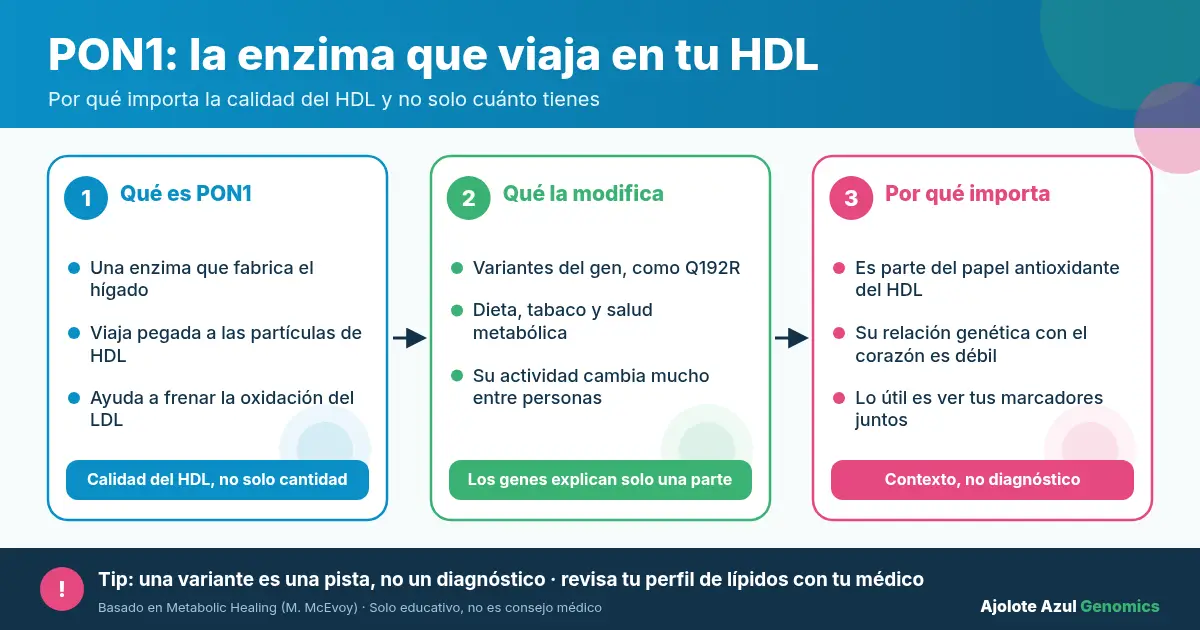
PON1 Gene: Function, HDL, and the Q192R Variant
What does the PON1 gene do? How it relates to paraoxonase, HDL cholesterol, and the Q192R variant—what the evidence shows and its limits.
7 min readRead more
Wellness
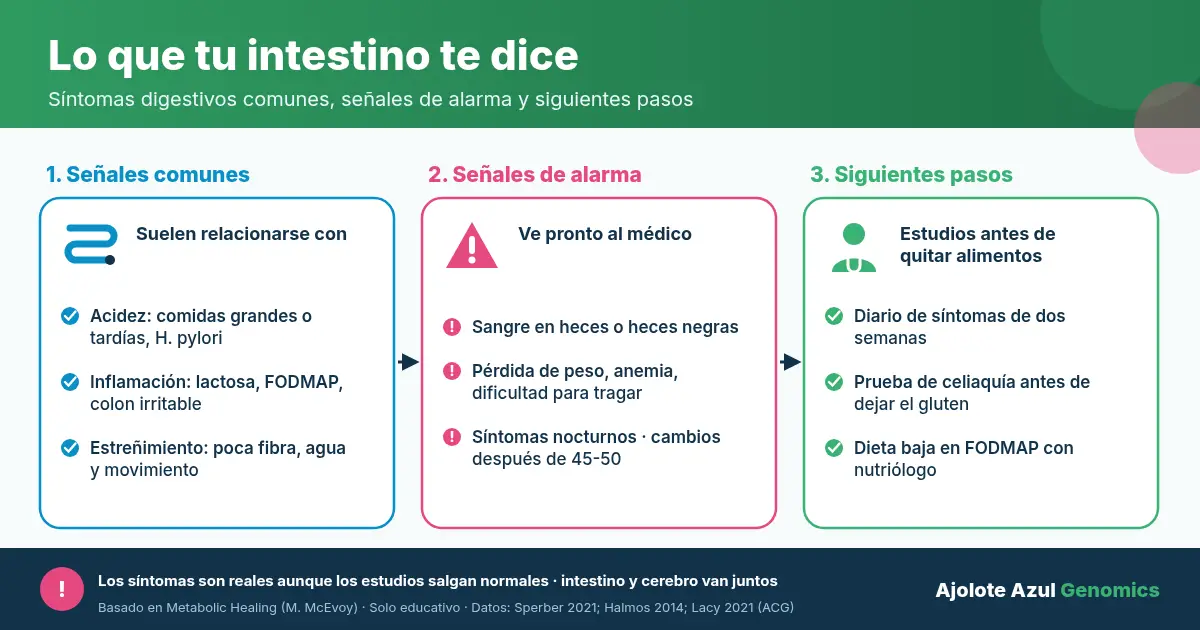
Digestive Symptoms: What Your Gut Is Telling You
Bloating, heartburn, or constipation can have several causes. Learn the warning signs and how a genetic test looks at lactose, gluten, and B12.
8 min readRead more
Wellness
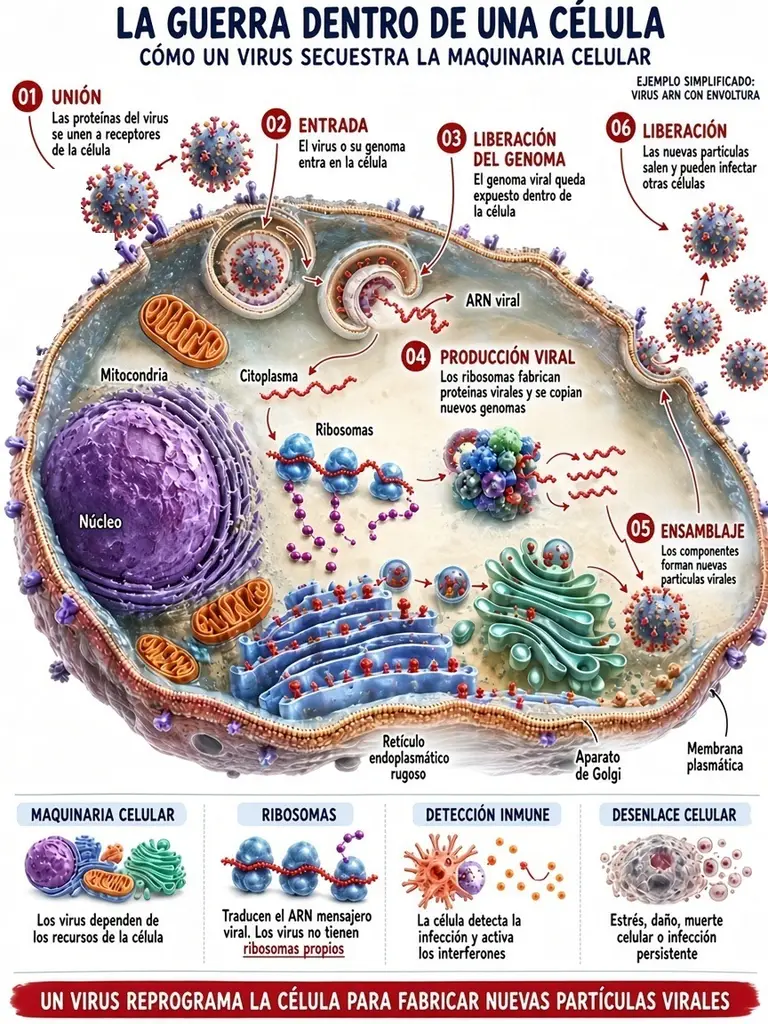
How a Virus Infects a Cell and How the Body Defends
Step by step: how a virus hijacks a cell to multiply, and the defenses your body uses—interferons, sensors, and apoptosis.
5 min readRead more
Did you like this article?
Discover how you can optimize your health with a personalized nutrigenetic test