Back to blog
Wellness
Digestive Enzymes: What They Do and When They Help
8 min read
Ajolote Azul Team
what digestive enzymes break down
lactase deficiency and lactose intolerance
prescription pancreatic enzyme therapy
alpha-galactosidase and bean gas
genes that affect lactose and gluten
when enzyme supplements make sense
Based on the work of our partners at Metabolic Healing (Michael McEvoy). Read the original article: Digestive Enzymes: What They Do, Why They’re Important & Which To Take
Digestive enzymes break food down into parts your intestine can absorb, and some people produce less of certain enzymes, such as lactase. Supplements can help in specific cases, but they do not replace a medical evaluation. Your genes also influence how you tolerate lactose and gluten.
Pharmacy shelves are full of digestive enzyme blends that promise less bloating and better absorption. Some enzyme products are used under medical supervision; others have little evidence behind them. To tell them apart, it helps to know what your own enzymes do and where they can fall short.
What are digestive enzymes?
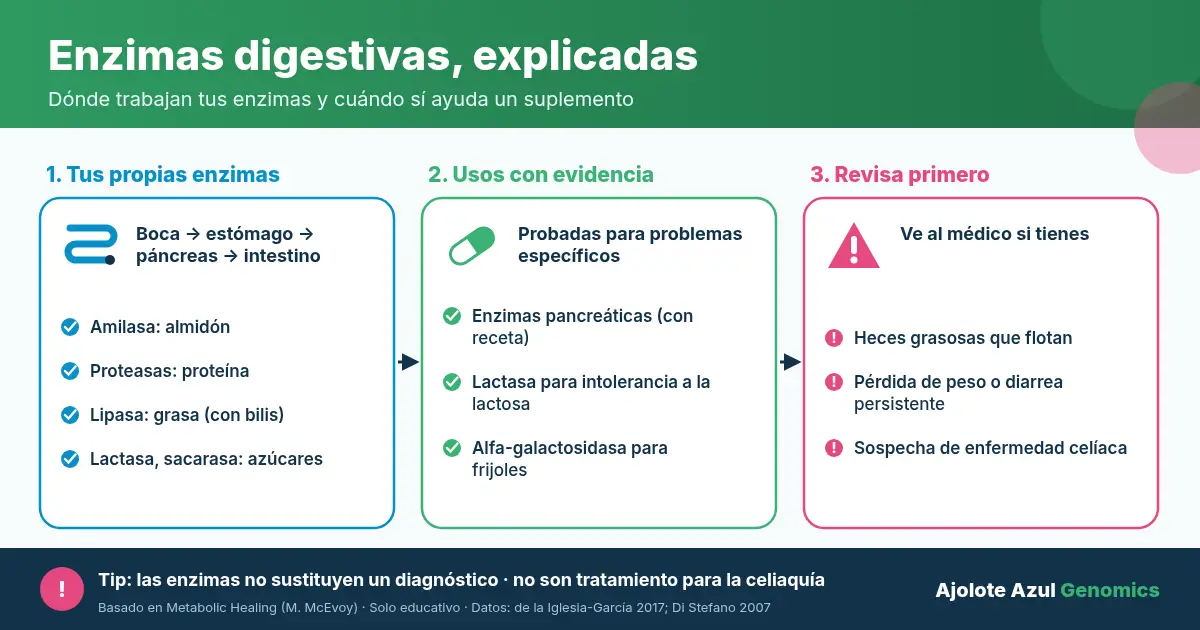
Enzymes are proteins that speed up chemical reactions. Digestive enzymes cut the large molecules in food into pieces small enough to be absorbed. Your body produces them in several places:
| Where | Main enzymes | What they digest |
|---|---|---|
| Mouth | Salivary amylase | Starch (begins) |
| Stomach | Pepsin (activated by acid) | Protein (begins) |
| Pancreas | Amylase, lipase, proteases (trypsin, chymotrypsin) | Starch, fat, protein |
| Small intestine lining | Lactase, sucrase-isomaltase, maltase, peptidases | Milk sugar, table sugar, starch fragments, small proteins |
Bile from the gallbladder is not an enzyme, but it is essential: it emulsifies fat so that lipase can reach it. After that, gut bacteria ferment what we cannot digest, such as fiber, and produce gas and beneficial compounds.
When enzyme production falls short
Lactase: the most common deficiency
Most adults produce less and less lactase. Whether you keep producing it depends largely on your genes: in people of European ancestry, especially on a variant near the LCT gene (−13910 C>T). Lactase can also drop temporarily after intestinal infections or with diseases that damage the intestinal lining 1.
Doctors distinguish lactose malabsorption (lactose is not fully digested) from lactose intolerance (when that causes symptoms such as pain, bloating, or diarrhea). Not everyone who malabsorbs it has symptoms. The amount of lactose, how much lactase you still produce, and your gut bacteria all play a role, and people with irritable bowel syndrome (IBS) are more sensitive 1.
Lactase supplements and lactose-free products can help (check with your doctor before using them), although the benefit is often modest, because lactose is only one of several carbohydrates that are poorly absorbed and cause similar symptoms 1.
Pancreatic enzymes: prescription medical support
When the pancreas does not produce enough enzymes, which is called exocrine pancreatic insufficiency, fat and protein pass through undigested. Signs include greasy, foul-smelling stools that float, weight loss, and deficiency of fat-soluble vitamins. It occurs in chronic pancreatitis, cystic fibrosis, after some pancreatic surgeries, and in other conditions.
In these cases, prescription pancreatic enzyme replacement therapy can help. A meta-analysis of 17 randomized trials in people with chronic pancreatitis found that it improved fat absorption, reduced fat in the stool, and relieved abdominal pain, without major adverse effects 2. A doctor prescribes and doses them; over-the-counter blends do not replace them.
Do your genes influence how you digest lactose and gluten?
They can. The NGx nutrigenetic test analyzes 70 markers in 59 genes and includes lactose sensitivity, gluten sensitivity, and vitamin B12/FUT2. It does not diagnose any disease: it is information to discuss with your doctor or nutritionist. Learn about the Ajolote Azul genetic test and read more in how to improve digestion.
Alpha-galactosidase: help with beans
Beans, lentils, and some vegetables contain sugars (oligosaccharides) that humans cannot break down, so gut bacteria ferment them and produce gas. Alpha-galactosidase, an enzyme we do not have, can break them down beforehand. In a small placebo-controlled study, eight volunteers ate a large serving of cooked beans; the highest dose of the enzyme reduced gas production and flatulence, and both doses reduced symptoms overall 3. Soaking the beans and discarding the water also helps.
Sucrase-isomaltase: an emerging relationship
The enzyme sucrase-isomaltase digests table sugar and a large share of the starch we eat. Certain rare genetic variants that reduce its activity cause congenital sucrase-isomaltase deficiency. Research has found those rare variants more often in people with IBS than in the general population, which suggests that in a subgroup of patients poor digestion of sugars could contribute to symptoms 4. It is a field of research, not yet a routine test.
Enzymes that break down gluten
Some enzymes are being studied to break down gluten. In a randomized crossover study, 18 people sensitive to gluten (without celiac disease) ate a porridge with a small amount of gluten. An enzyme derived from Aspergillus niger degraded most of the gluten in the stomach before it reached the intestine 5.
Important: these enzymes are not a treatment for celiac disease. People with celiac disease need a strict gluten-free diet under medical supervision.
Should you take a digestive enzyme supplement?
It depends on the problem:
- Clear evidence: prescription pancreatic enzymes for diagnosed pancreatic insufficiency; lactase for lactose intolerance; alpha-galactosidase for gas from beans.
- Limited evidence: “full-spectrum” blends for bloating in general or to “absorb better” in healthy people.
- They do not replace a diagnosis. Bloating, diarrhea, weight loss, or persistent greasy stools need a medical evaluation to rule out celiac disease, pancreatic problems, infections, IBS, or inflammatory bowel disease.
Tell your doctor or pharmacist about any supplement you take, especially if you are pregnant, take anticoagulants, or have a disease of the pancreas or gallbladder.
Habits that support your own enzymes
- Chew well so the enzymes have more surface to work on.
- Eat calmly; stress pulls the body away from “rest and digest” mode.
- Split large, fatty meals if they feel heavy.
- Try small servings of dairy with a meal, or yogurt and aged cheeses, if lactose bothers you.
- Soak and cook beans well, and increase how much you eat little by little.
Frequently asked questions
What do digestive enzymes do?
They break carbohydrates, proteins, and fats into small molecules the intestine can absorb. Amylase digests starch, proteases digest protein, lipase digests fat, and lactase digests milk sugar.
Do digestive enzyme supplements work?
Some do, for specific problems: prescription pancreatic enzymes for pancreatic insufficiency, lactase for lactose intolerance, and alpha-galactosidase for gas from beans. Evidence for general-use blends in healthy people is limited.
Is lactose intolerance genetic?
In large part. Whether you keep producing lactase as an adult depends mainly on variants near the LCT gene. Intestinal infections and damage to the intestine can also lower it temporarily.
Do enzymes allow people with celiac disease to eat gluten?
No. Enzymes that break down gluten have been studied in people sensitive to gluten, but they do not replace a strict gluten-free diet in celiac disease.
Turn your genes into a practical plan
- Nutrigenetic test NGx: 70 markers in 59 genes, with a 60-minute 1-on-1 consult included. $9,880 MXN.
- Pharmacogenetic test PGx: how you process more than 200 medications (51 genes). $9,800 MXN.
- NGx + PGx combo: $15,750 MXN. See the tests
References
- Misselwitz B, Butter M, Verbeke K, Fox MR. Update on lactose malabsorption and intolerance: pathogenesis, diagnosis and clinical management. Gut. 2019;68(11):2080-2091. doi:10.1136/gutjnl-2019-318404. PubMed 31427404 · Free full text (PMC) · doi:10.1136/gutjnl-2019-318404
- de la Iglesia-García D, Huang W, Szatmary P, et al. Efficacy of pancreatic enzyme replacement therapy in chronic pancreatitis: systematic review and meta-analysis. Gut. 2017;66(8):1354-1355. doi:10.1136/gutjnl-2016-312529. PubMed 27941156 · Free full text (PMC) · doi:10.1136/gutjnl-2016-312529
- Di Stefano M, Miceli E, Gotti S, Missanelli A, Mazzocchi S, Corazza GR. The effect of oral alpha-galactosidase on intestinal gas production and gas-related symptoms. Dig Dis Sci. 2007;52(1):78-83. doi:10.1007/s10620-006-9296-9. PubMed 17151807 · doi:10.1007/s10620-006-9296-9
- Garcia-Etxebarria K, Zheng T, Bonfiglio F, et al. Increased Prevalence of Rare Sucrase-isomaltase Pathogenic Variants in Irritable Bowel Syndrome Patients. Clin Gastroenterol Hepatol. 2018;16(10):1673-1676. doi:10.1016/j.cgh.2018.01.047. PubMed 29408290 · Free full text (PMC) · doi:10.1016/j.cgh.2018.01.047
- König J, Holster S, Bruins MJ, Brummer RJ. Randomized clinical trial: Effective gluten degradation by Aspergillus niger-derived enzyme in a complex meal setting. Sci Rep. 2017;7(1):13100. doi:10.1038/s41598-017-13587-7. PubMed 29026170 · Free full text (PMC) · doi:10.1038/s41598-017-13587-7
This article is for information and education only; it does not replace consultation, diagnosis, or treatment by a health professional. Talk with your doctor before changing your diet, medications, or supplements.
Based on the work of our partners at Metabolic Healing (Michael McEvoy). Read the original article: Metabolic Healing
A
Ajolote Azul Team
Specialist in wellness, nutrition and holistic health. Passionate about sharing science-based knowledge to improve quality of life.
Keep Reading
Related Articles
Discover more content on this topic that might interest you
Wellness
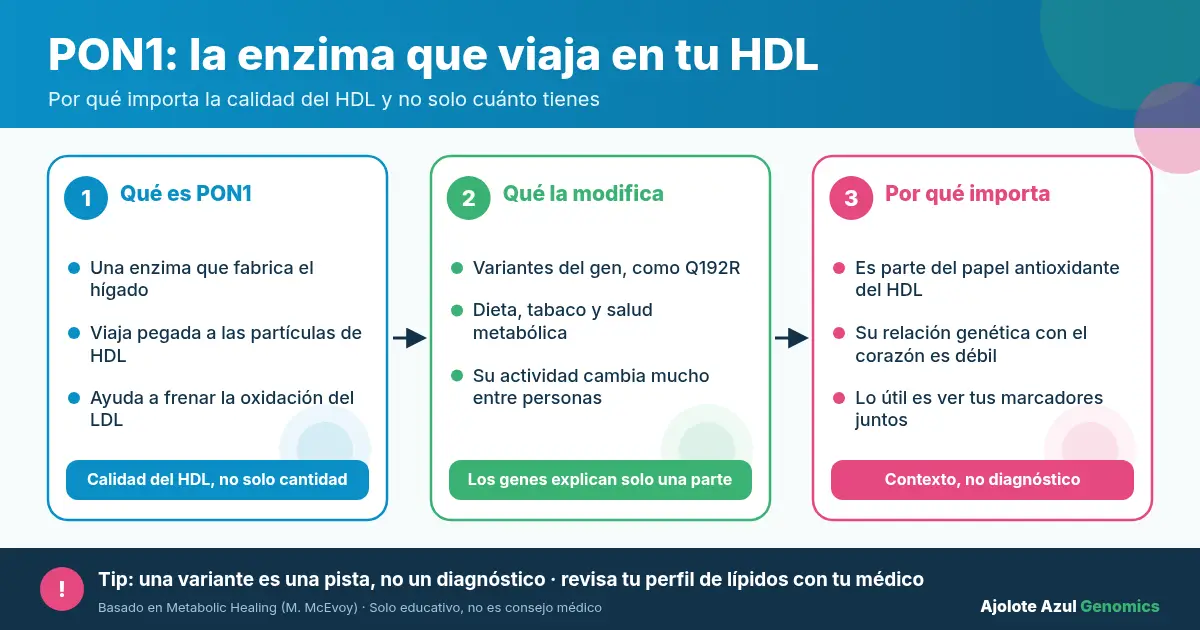
PON1 Gene: Function, HDL, and the Q192R Variant
What does the PON1 gene do? How it relates to paraoxonase, HDL cholesterol, and the Q192R variant—what the evidence shows and its limits.
7 min readRead more
Wellness
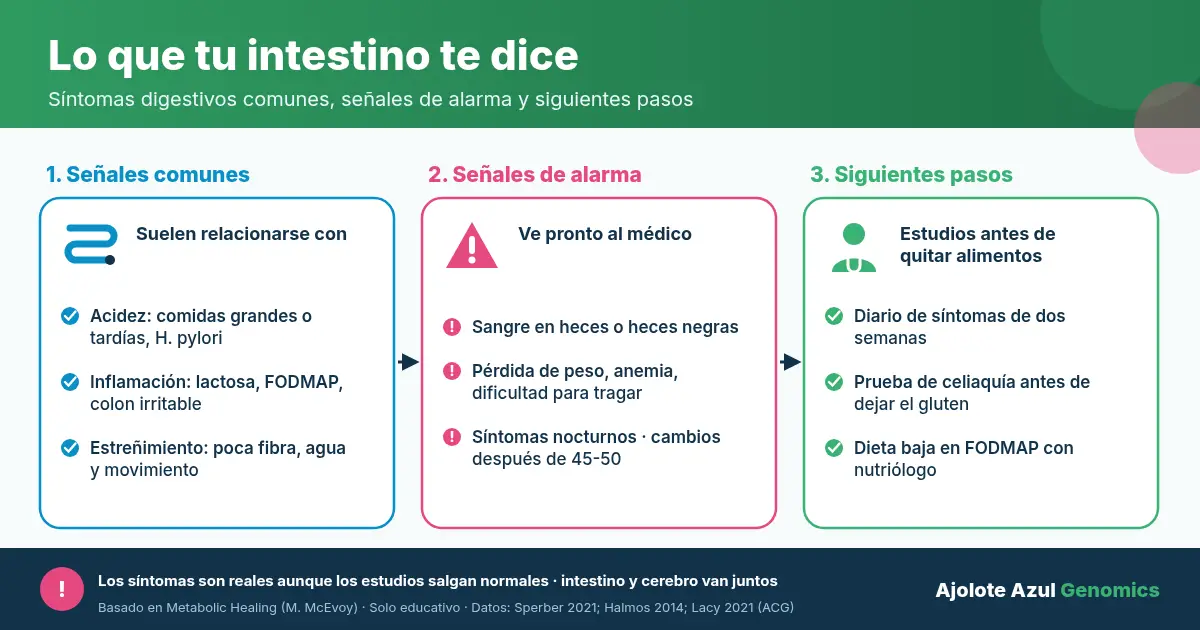
Digestive Symptoms: What Your Gut Is Telling You
Bloating, heartburn, or constipation can have several causes. Learn the warning signs and how a genetic test looks at lactose, gluten, and B12.
8 min readRead more
Wellness
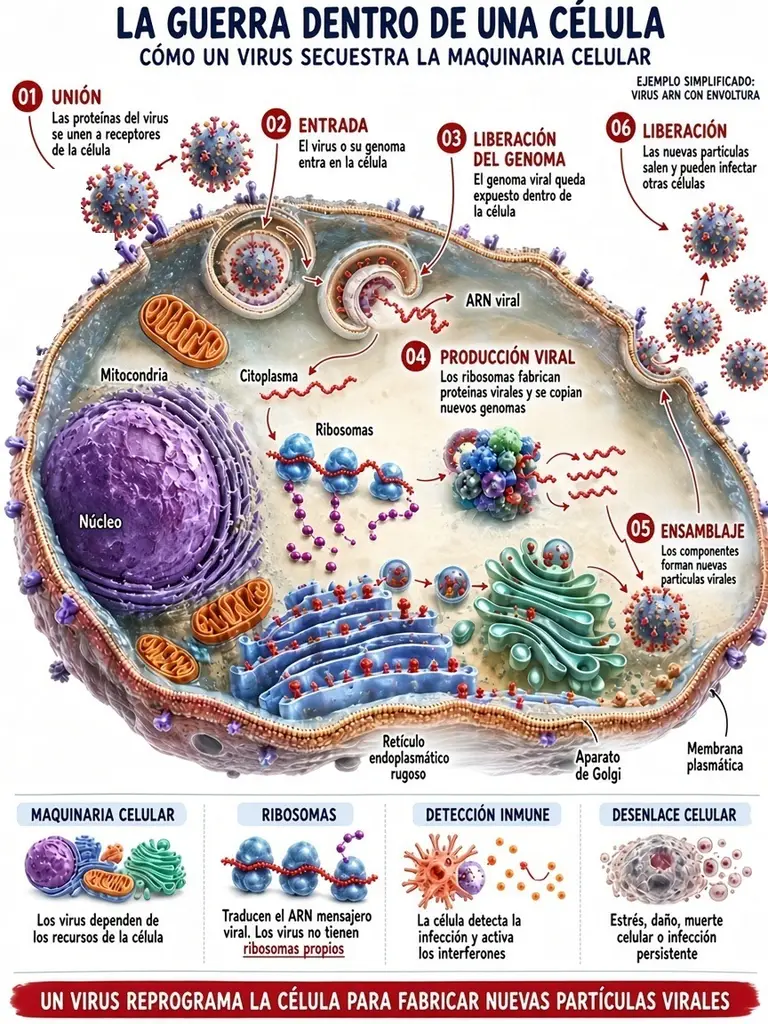
How a Virus Infects a Cell and How the Body Defends
Step by step: how a virus hijacks a cell to multiply, and the defenses your body uses—interferons, sensors, and apoptosis.
5 min readRead more
Did you like this article?
Discover how you can optimize your health with a personalized nutrigenetic test