Back to blog
Wellness
Cravings and Blood Sugar: Why Hunger Comes Back
7 min read
Ajolote Azul Team
blood sugar
cravings
glucose dips
FTO gene
satiety
nutrigenetics
Based on the work of our Metabolic Healing partners (Michael McEvoy). Read the original article: What Your Excessive Appetite is Telling You: Getting Off the Blood Sugar Roller Coaster
You feel hungry two hours later because blood sugar often rises fast and then falls below where it started, which triggers appetite and cravings. What you eat and your genes, including FTO, shape that response. Combining protein, fiber, and some healthy fat can help you stay satisfied longer.
You eat well at 8 a.m. and by 10:30 you are hunting for something to snack on at the office. Sound familiar? Constant hunger is not just willpower. How glucose rises and falls after meals, what was on the plate, and even your genes influence when hunger returns.
Why your brain cares so much about blood sugar
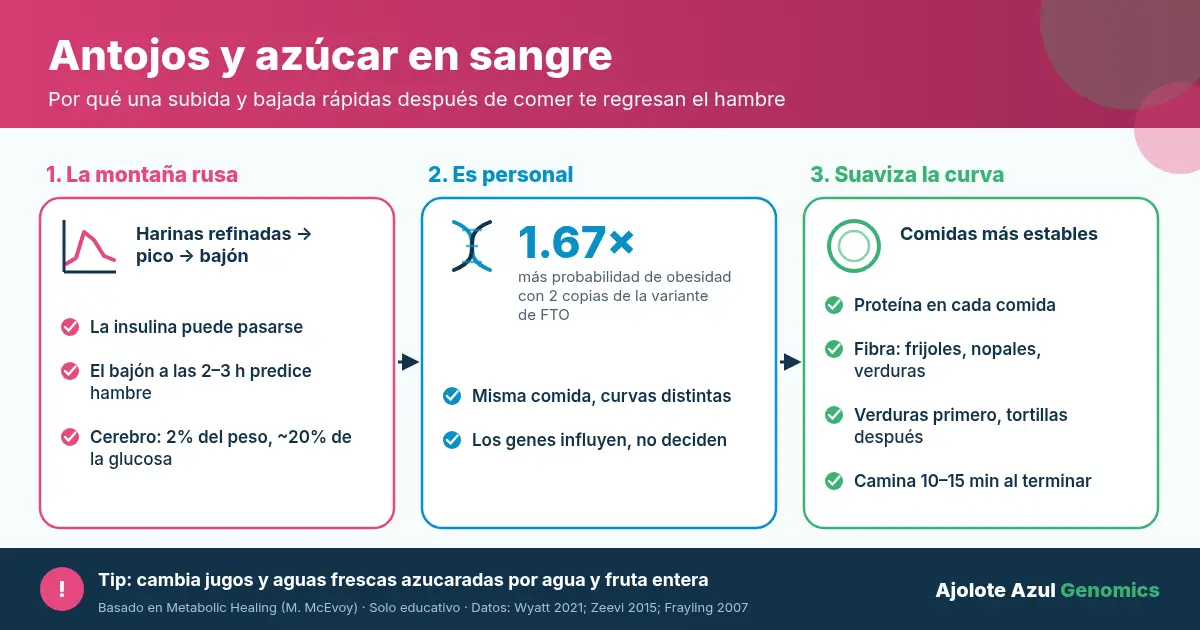
Glucose is the brain’s main fuel. Your brain is only about 2% of body weight but uses roughly 20% of the energy your body gets from glucose 1. It stores almost none, so it depends on a steady supply from blood.
When sugar drops quickly, the brain notices. Typical signs: hunger, trouble concentrating, irritability (“I get hangry if I do not eat”), and cravings for something sweet or starchy—the fastest fix.
The blood sugar roller coaster
After a meal heavy in refined carbs (white bread, sweet rolls, soda), glucose shoots up. The body answers with a surge of insulin to move glucose into cells. Sometimes the response overshoots, and two or three hours later glucose sits below where it started.
That dip matters. In a study of more than 1,000 people using continuous glucose monitors, the size of the glucose dip 2 to 3 hours after eating predicted more hunger, less time until the next meal, and more calories eaten in the following hours and over the rest of the day. The dip predicted better than peak glucose 2.
Not everyone responds the same
Two people can eat the same meal and have very different glucose curves. In a study of 800 people who logged nearly 47,000 meals, responses to identical meals varied hugely from person to person. A model using blood tests, habits, body measures, activity, and gut bacteria predicted personal responses, and personalized diets linked to lower post-meal glucose 3.
So the banana that leaves your partner satisfied might put you on the roller coaster, and vice versa.
What about hypoglycemia?
True hypoglycemia means glucose falls abnormally low, usually with shaking, sweating, palpitations, confusion, and relief when you eat. It is common in people using insulin or some diabetes pills but uncommon in those without diabetes.
Feeling hungry or tired a few hours after eating is usually a normal dip, not dangerous hypoglycemia. If symptoms are severe—especially fainting, confusion, or if you have diabetes—see a doctor. Diagnosis requires measuring low glucose when symptoms occur.
How to get off the roller coaster
These are general eating habits; if you take medications or have diabetes, talk to your doctor before changing your diet.
Build meals around protein
Protein slows digestion and supports satiety. A review found that higher-protein diets during weight loss achieved more fat loss and better muscle retention, and protein has a modest effect on fullness: it raises the sense of fullness and satiety hormones 4. Egg, beans, fish, chicken, yogurt, cheese, and lentils all count.
Add fiber and fat
Fiber from vegetables, nopales (cactus pads), beans, and whole grains slows how fast sugar enters blood. A bit of healthy fat—avocado, nuts, seeds, or olive oil—slows stomach emptying.
Swap refined for whole
Choose corn tortillas, oats, or whole-grain bread instead of white bread and sweet rolls. Whole fruit beats juice. Sugared drinks and sodas are among the fastest sugar sources.
Mind the order
Starting a meal with vegetables and protein and leaving tortillas, rice, or bread for later can soften the glucose spike in some people.
Do not skip meals then overeat
Going many hours without eating then bingeing on carbs produces a bigger spike and dip. Eating at regular times, with a planned snack if needed, keeps things steadier.
Move after eating
A 10- to 15-minute walk after meals helps muscles take up glucose.
Sleep and stress
Short sleep raises hunger hormones and cravings, and chronic stress pushes you toward comfort food.
Your genes and appetite
Appetite has a genetic side too. The best-known example is FTO. In a study of nearly 39,000 people, the 16% who carried two copies of the common risk variant weighed about 3 kg more and had 1.67-fold higher odds of obesity than those with no copies 5. Scientists are still studying exactly how FTO variants act.
Genes are not destiny and lifestyle still weighs heavily. But knowing you tend toward stronger appetite helps you plan meals that leave you satisfied.
Do your genes influence cravings and appetite?
They can. The NGx nutrigenetic test analyzes 70 markers across 59 genes and includes appetite and satiety, FTO, sugar preference, and carbohydrate metabolism. It does not diagnose disease—it is information to discuss with your doctor or dietitian. Learn about Ajolote Azul genetic testing and see the glucose tolerance curve and how to read your results.
Frequently asked questions
Why am I hungry two hours after eating?
Often because glucose rose quickly and then fell below its starting level, which triggers hunger. Meals low in protein and fiber and high in refined carbs make that more likely.
Can a blood sugar dip cause hunger and cravings?
Yes. When glucose drops quickly, the brain sends hunger signals and you tend to seek fast sugar. In a large study, the size of the post-meal glucose dip predicted how hungry people felt and how much they ate.
What should I eat to stay full longer?
Combine protein, fiber, and some healthy fat every meal—for example, eggs with beans and vegetables, or chicken with salad and a corn tortilla. Limit sugary drinks and refined flour.
Does the FTO gene affect weight?
Common FTO variants associate with higher body weight and more obesity risk, and researchers are still clarifying how they work. A healthy lifestyle remains the main tool.
Turn your genes into a practical plan
- NGx nutrigenetic test: 70 markers across 59 genes, with a included 60-minute 1:1 consult. $9,880 MXN.
- PGx pharmacogenetic test: how you process more than 200 medications (51 genes). $9,800 MXN.
- NGx + PGx Combo: $15,750 MXN. Explore the tests
References
- Mergenthaler P, Lindauer U, Dienel GA, Meisel A. Sugar for the brain: the role of glucose in physiological and pathological brain function. Trends Neurosci. 2013;36(10):587-597. doi:10.1016/j.tins.2013.07.001. PubMed 23968694 · Free full text (PMC) · doi:10.1016/j.tins.2013.07.001
- Wyatt P, Berry SE, Finlayson G, et al. Postprandial glycaemic dips predict appetite and energy intake in healthy individuals. Nat Metab. 2021;3(4):523-529. doi:10.1038/s42255-021-00383-x. PubMed 33846643 · Free full text (PMC) · doi:10.1038/s42255-021-00383-x · Erratum published: Nat Metab. 2021 Jul;3(7):1032.
- Zeevi D, Korem T, Zmora N, et al. Personalized Nutrition by Prediction of Glycemic Responses. Cell. 2015;163(5):1079-1094. doi:10.1016/j.cell.2015.11.001. PubMed 26590418 · doi:10.1016/j.cell.2015.11.001
- Leidy HJ, Clifton PM, Astrup A, et al. The role of protein in weight loss and maintenance. Am J Clin Nutr. 2015;101(6):1320S-1329S. doi:10.3945/ajcn.114.084038. PubMed 25926512 · doi:10.3945/ajcn.114.084038
- Frayling TM, Timpson NJ, Weedon MN, et al. A common variant in the FTO gene is associated with body mass index and predisposes to childhood and adult obesity. Science. 2007;316(5826):889-894. doi:10.1126/science.1141634. PubMed 17434869 · Free full text (PMC) · doi:10.1126/science.1141634
This article is for education and information only; it does not replace medical advice, diagnosis, or treatment. Talk to your doctor before changing your diet, medications, or supplements.
Based on the work of our Metabolic Healing partners (Michael McEvoy). Read the original article: Metabolic Healing
A
Ajolote Azul Team
Specialist in wellness, nutrition and holistic health. Passionate about sharing science-based knowledge to improve quality of life.
Keep Reading
Related Articles
Discover more content on this topic that might interest you
Wellness
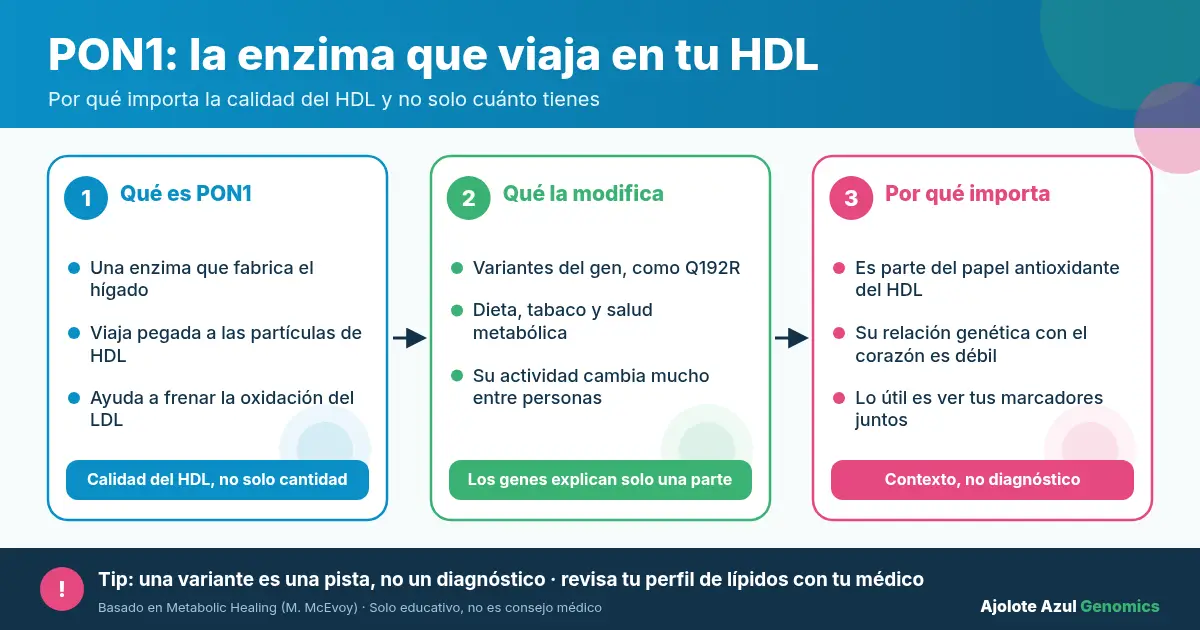
PON1 Gene: Function, HDL, and the Q192R Variant
What does the PON1 gene do? How it relates to paraoxonase, HDL cholesterol, and the Q192R variant—what the evidence shows and its limits.
7 min readRead more
Wellness
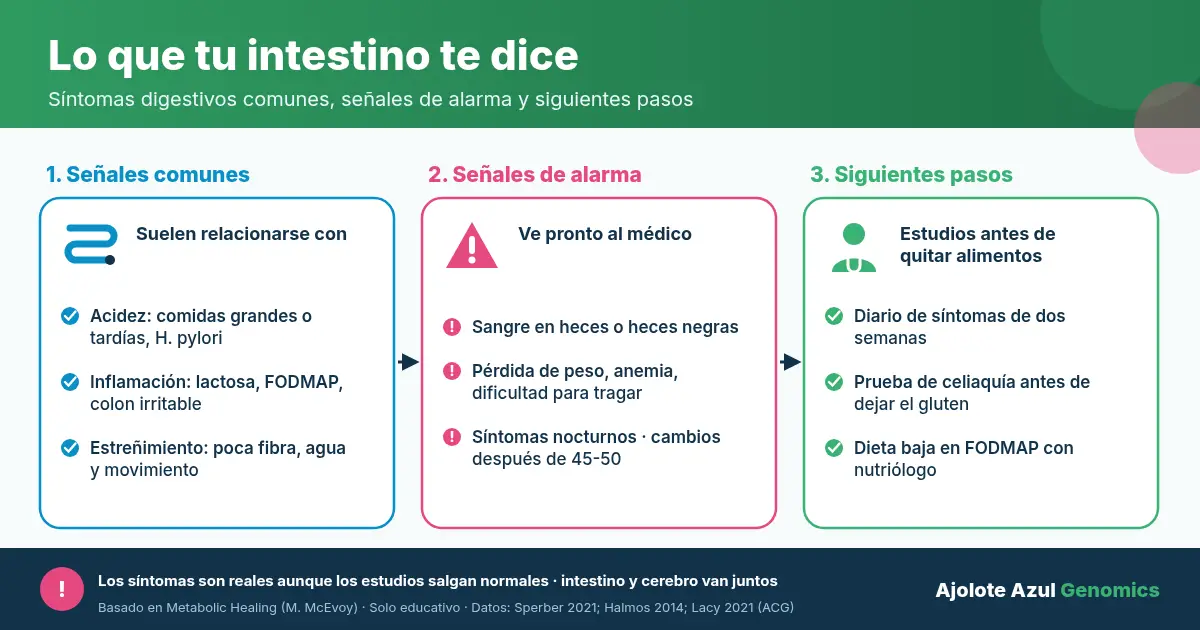
Digestive Symptoms: What Your Gut Is Telling You
Bloating, heartburn, or constipation can have several causes. Learn the warning signs and how a genetic test looks at lactose, gluten, and B12.
8 min readRead more
Wellness
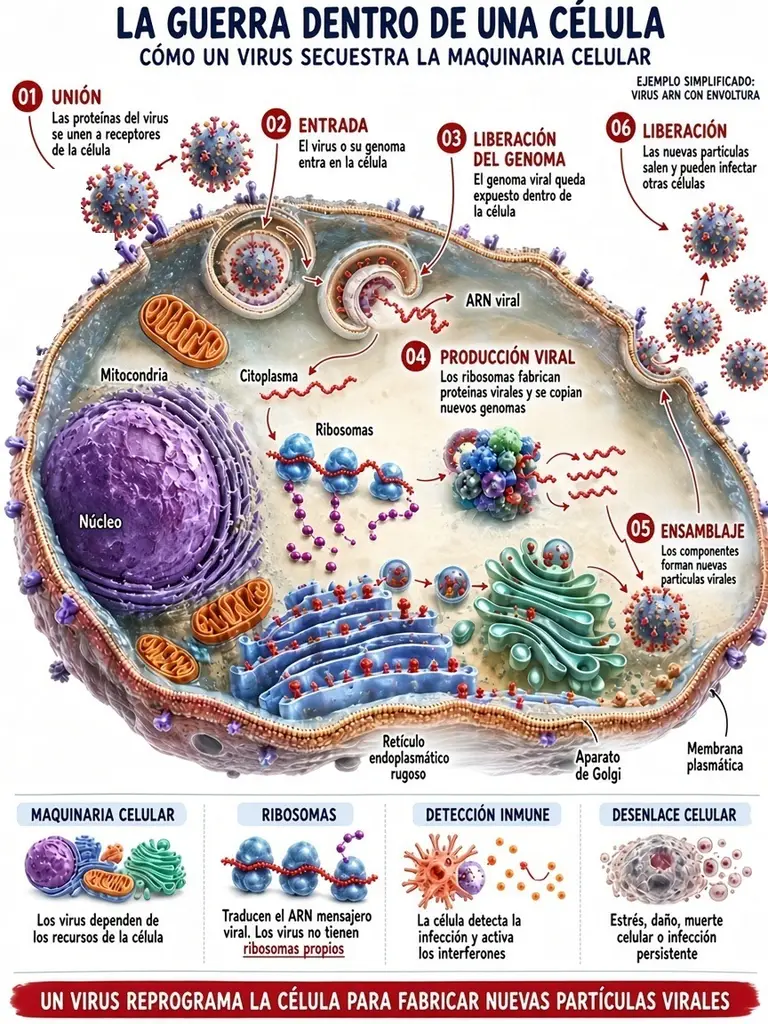
How a Virus Infects a Cell and How the Body Defends
Step by step: how a virus hijacks a cell to multiply, and the defenses your body uses—interferons, sensors, and apoptosis.
5 min readRead more
Did you like this article?
Discover how you can optimize your health with a personalized nutrigenetic test