Back to blog
Wellness
Sepsis: What It Is, Causes, Warning Signs, and Treatment
6 min read
Ajolote Azul Team
sepsis
septic shock
warning signs
emergency treatment
infection
organ failure
Important: if you or someone close to you has an infection and develops confusion, very rapid breathing, mottled or cold skin, low blood pressure, or almost no urine, go to the emergency department right away or call 911. In sepsis, every hour counts.
Sepsis (formerly often called septicemia) is an uncontrolled response of the body to an infection that ends up damaging its own tissues and organs. It is not an infection by itself. It is the body's reaction to one. According to the World Health Organization, sepsis affects millions of people every year and is one of the leading causes of death in the world. Many of those deaths could be prevented with early recognition and timely care.
This article explains, for educational purposes, where the infection usually starts, who is at higher risk, which signs should raise alarm, and how medical teams act under the international guidelines of the Surviving Sepsis Campaign (2021). This information does not replace an evaluation by a health professional.
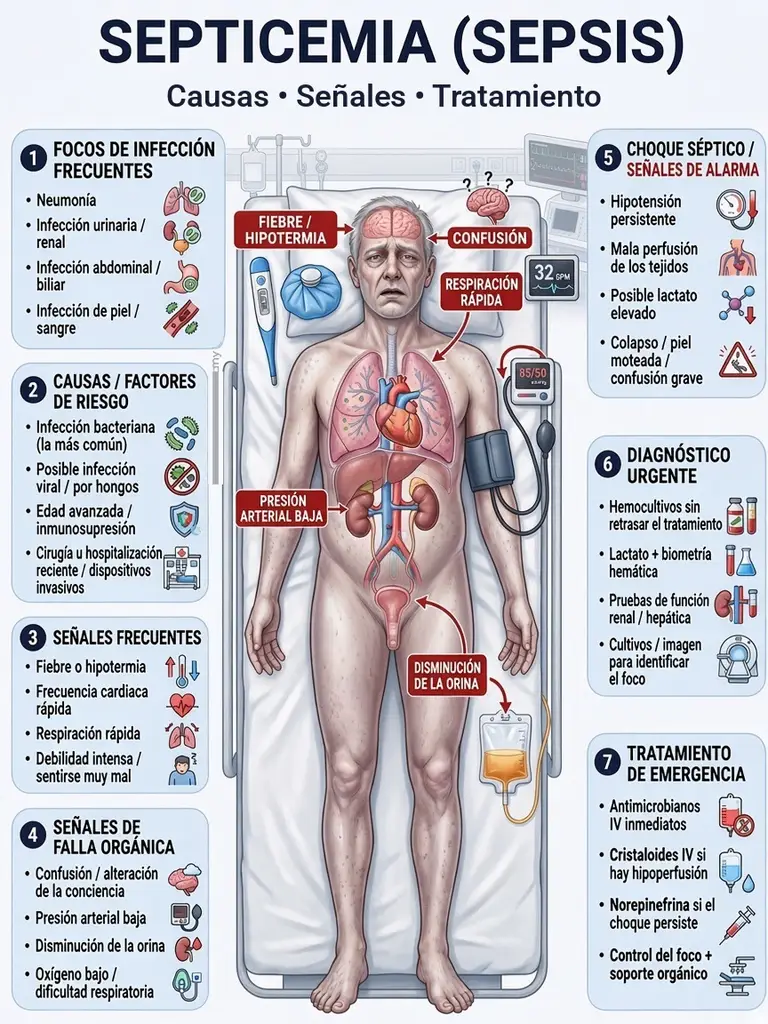
1. Most common sources of infection
Almost any infection can trigger sepsis, but the most common starting points are:
- Pneumonia and respiratory infections.
- Urinary or kidney infections (pyelonephritis).
- Abdominal or biliary-tract infections, such as cholecystitis, cholangitis, appendicitis, or peritonitis.
- Skin and soft-tissue infections, and infections that reach the bloodstream directly, for example through catheters.
2. Causes and risk factors
Most cases are caused by bacteria, although viruses (such as influenza or SARS-CoV-2) and fungi can also take part. Anyone can develop sepsis, but the risk is higher in:
- Older adults, newborns, and babies.
- People with immunosuppression (chemotherapy, transplants, long-term steroid use) or chronic illness such as diabetes, kidney disease, liver disease, lung disease, and cancer.
- People who had recent surgery or a recent hospital stay, or who use invasive devices such as urinary catheters, venous catheters, or mechanical ventilation.
- Pregnancy and the postpartum period.
3. Common signs
The earliest signs can look like those of an ordinary infection, which is why they are easy to brush aside:
- Fever or, the other way around, a low temperature (hypothermia) and chills.
- A fast heart rate.
- Rapid breathing or a feeling of being short of breath.
- Severe weakness, or the sense of "feeling terribly ill, worse than ever before."
4. Signs of organ failure
As sepsis advances, one or more organs begin to fail. Clues include:
- Confusion, drowsiness, or a change in alertness, especially in older people.
- Low blood pressure, dizziness, or fainting.
- Less urine, or not urinating for many hours.
- Low oxygen and difficulty breathing.
Current guidelines recommend against relying on a single score (such as qSOFA) to rule out sepsis: if it is suspected, the person should be assessed fully and quickly.
5. Septic shock: warning signs
Septic shock is the most severe form of sepsis. It is present when blood pressure stays low despite intravenous fluids and the circulation cannot deliver enough oxygen to the tissues. Warning signs:
- Persistent hypotension.
- Poor tissue perfusion: cold hands and feet, slow capillary refill.
- Elevated blood lactate, a marker of cells under strain.
- Collapse, mottled or grayish skin, and severe confusion.
If any of these signs appear, do not wait: call 911 or go to the emergency department immediately.
6. Urgent diagnosis
In the hospital, diagnosis and treatment proceed together, because a delay in starting treatment worsens the outlook. Usual tests include:
- Blood cultures, ideally before antibiotics, as long as drawing them does not delay the antibiotics.
- Lactate and a complete blood count.
- Kidney and liver function tests, coagulation studies, and blood gas analysis.
- Other cultures (urine, sputum, wounds) and imaging (X-ray, ultrasound, or CT) to find the source of the infection.
7. Emergency treatment
Under the Surviving Sepsis Campaign 2021, initial care includes:
- Immediate intravenous antimicrobials: ideally within the first hour when shock is likely or sepsis is very likely.
- Intravenous fluids (crystalloids) when there is hypoperfusion or hypotension. At least 30 mL/kg is suggested in the first 3 hours, with constant reassessment.
- Norepinephrine as the first-choice vasopressor if blood pressure does not recover with fluids, with an initial target mean arterial pressure of 65 mmHg.
- Source control (draining an abscess, removing an infected catheter, or operating) and support for the organs that are failing, such as oxygen, mechanical ventilation, or dialysis, usually in intensive care.
Many people who survive later have fatigue, weakness, memory problems, or anxiety (the so-called post-sepsis syndrome), so medical follow-up after discharge matters as well.
Prevention: what you can do
- Keep recommended vaccines up to date (influenza, pneumococcus, COVID-19, and others).
- Frequent handwashing and proper care of wounds.
- Treat infections promptly and do not self-medicate with antibiotics.
- Keep chronic illnesses such as diabetes under control.
- If an infection gets worse quickly, seek urgent medical care and ask: "Could this be sepsis?"
Frequently asked questions
Is sepsis contagious?
Sepsis itself does not spread from person to person. It is the body's response to an infection. The infection that set it off, such as pneumonia or influenza, can be transmitted.
Who has a higher risk of sepsis?
People older than 65, babies, people living with diabetes, chronic kidney or lung disease, cancer, or weakened defenses, and people who were in the hospital recently.
What should I do if I suspect sepsis?
Go to the emergency department or call 911 right away, and say that you suspect sepsis. Do not wait to see whether the symptoms improve on their own.
Sources
- Evans L, et al. Surviving Sepsis Campaign: International Guidelines for Management of Sepsis and Septic Shock 2021. Critical Care Medicine, 2021. https://journals.lww.com/ccmjournal/fulltext/2021/11000/surviving_sepsis_campaign__international.21.aspx
- World Health Organization. Sepsis (fact sheet). https://www.who.int/news-room/fact-sheets/detail/sepsis
- Singer M, et al. The Third International Consensus Definitions for Sepsis and Septic Shock (Sepsis-3). JAMA, 2016. https://jamanetwork.com/journals/jama/fullarticle/2492881
This content is for information only and does not replace medical care. In an emergency, call 911.
At Ajolote Azul Genomics we share evidence-based health information. If you have questions about our genetic tests, write to us. We are glad to help you find your way. Exclusive Nutrigenomix distributor in Mexico · https://testgenetico-ajoloteazul.com
A
Ajolote Azul Team
Specialist in wellness, nutrition and holistic health. Passionate about sharing science-based knowledge to improve quality of life.
Keep Reading
Related Articles
Discover more content on this topic that might interest you
Wellness
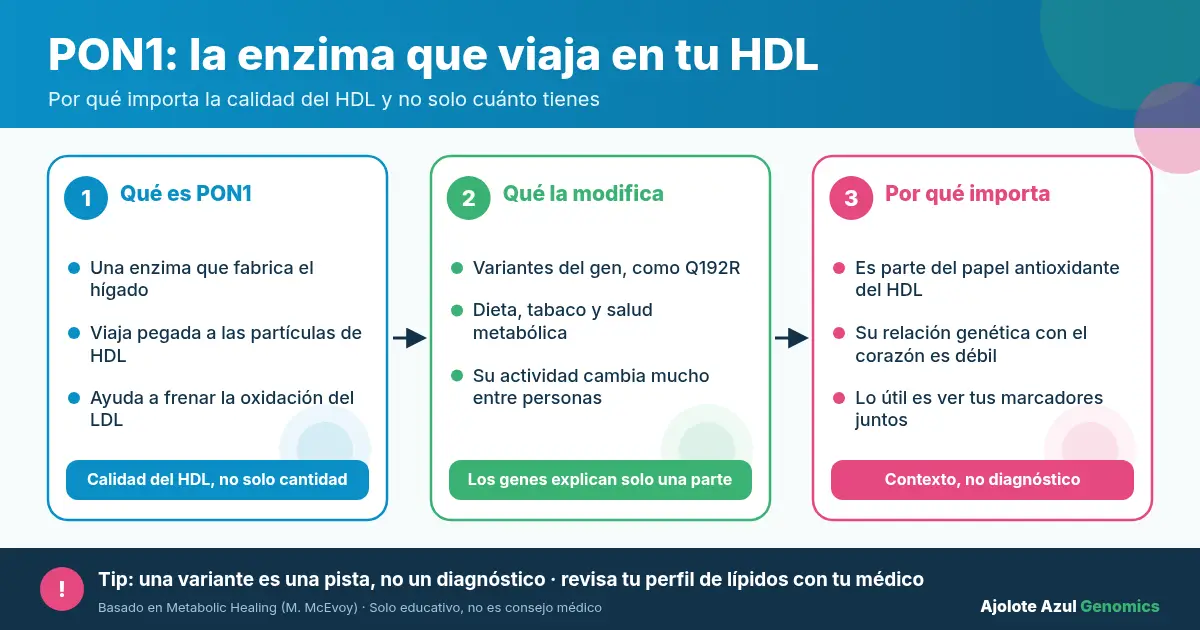
PON1 Gene: Function, HDL, and the Q192R Variant
What does the PON1 gene do? How it relates to paraoxonase, HDL cholesterol, and the Q192R variant—what the evidence shows and its limits.
7 min readRead more
Wellness
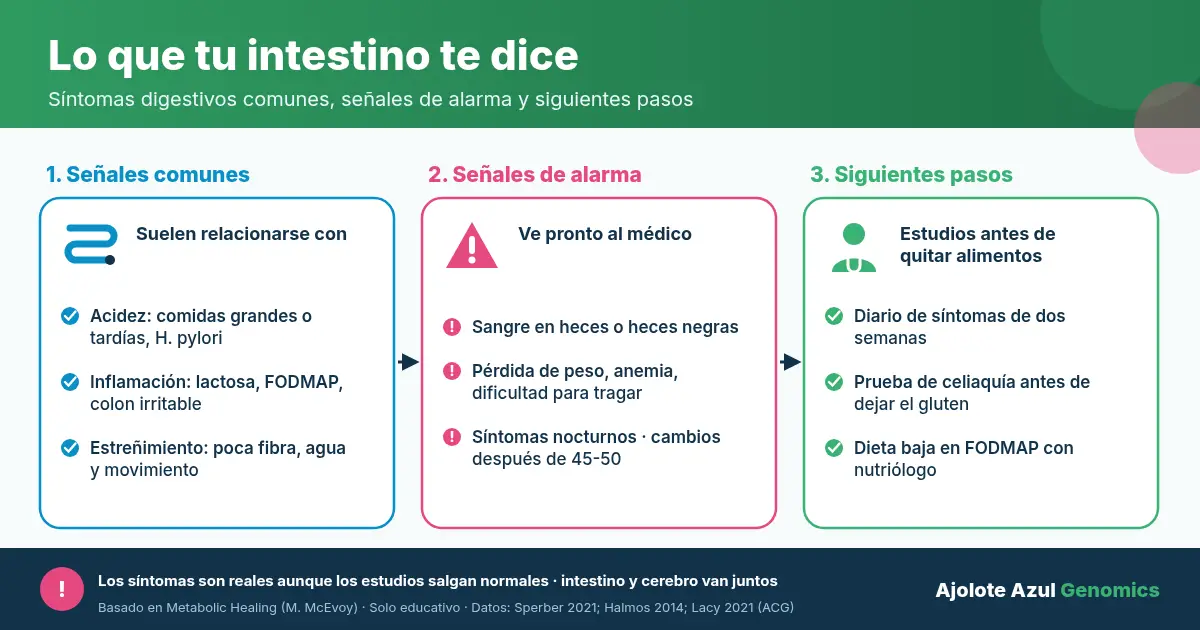
Digestive Symptoms: What Your Gut Is Telling You
Bloating, heartburn, or constipation can have several causes. Learn the warning signs and how a genetic test looks at lactose, gluten, and B12.
8 min readRead more
Wellness
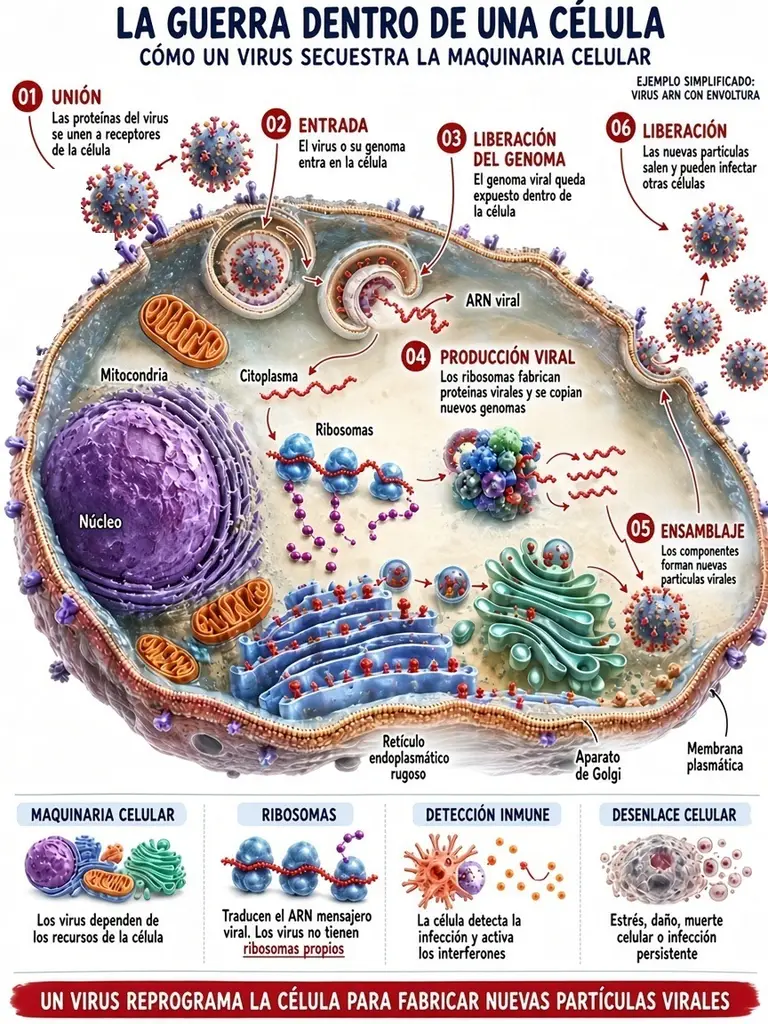
How a Virus Infects a Cell and How the Body Defends
Step by step: how a virus hijacks a cell to multiply, and the defenses your body uses—interferons, sensors, and apoptosis.
5 min readRead more
Did you like this article?
Discover how you can optimize your health with a personalized nutrigenetic test