Back to blog
Wellness
Sports Genetics: Performance With Real Data
6 min read
Ajolote Azul Team
sports genetics
athletic performance
exercise genetics
recovery
nutrigenetics
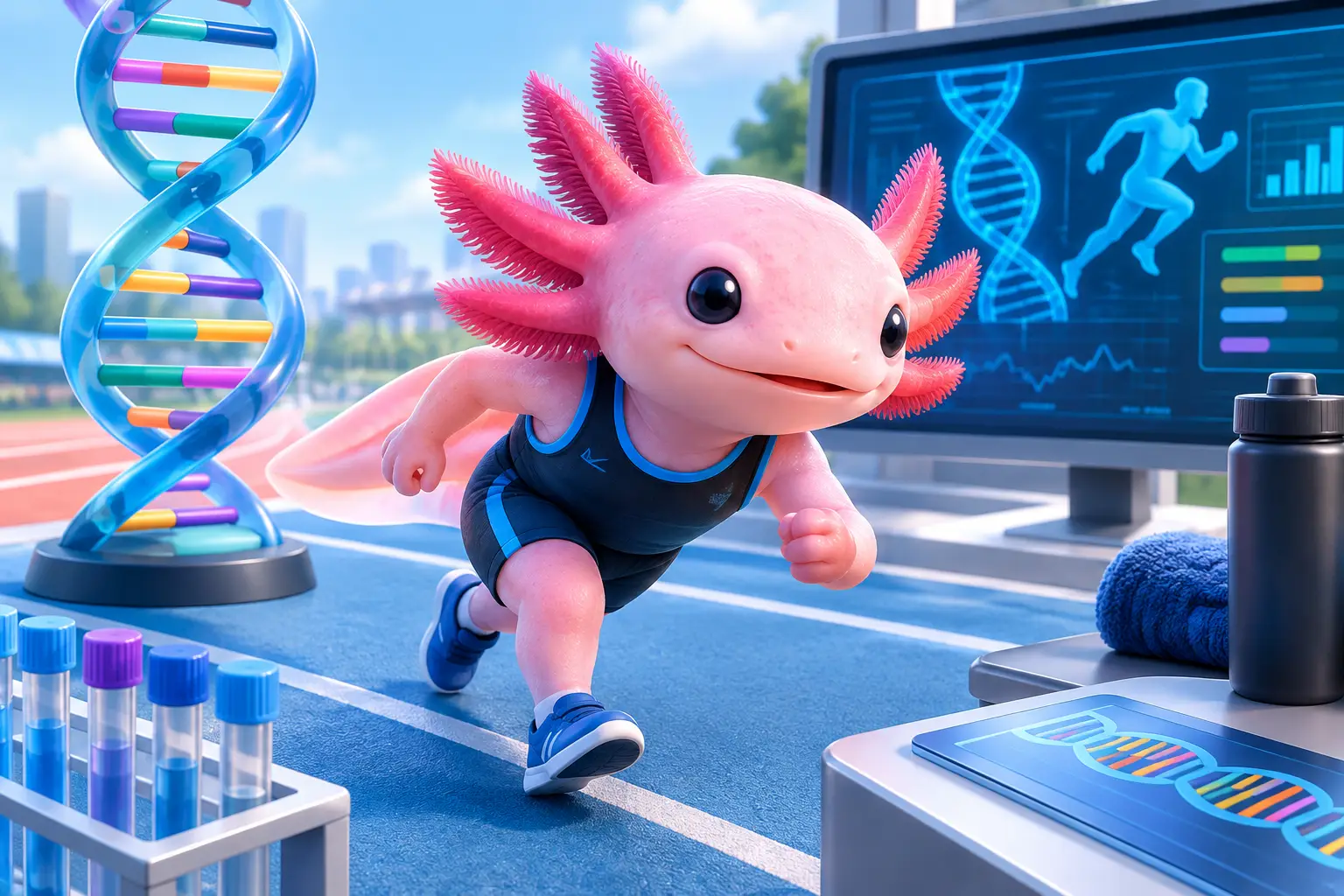
The same routine can produce fast progress in one person and stagnation, injury, or accumulated fatigue in another. It is not lack of discipline: exercise response depends on sleep, training load, nutrition, clinical history, and genetics. Sports genetics and performance is not about finding a “winner gene,” but using biological information for more precise decisions.
For anyone training for health, competing, or supporting others in practice, the value is stopping copy-paste plans designed for an average. Genetics adds context: it indicates tendencies, not destinies. Well interpreted with professional evaluation, it can guide concrete adjustments in nutrition, recovery, and prevention.
What sports genetics analyzes
Genetic studies applied to sport look at variants associated with processes that influence how the body responds to physical load. These include energy metabolism, muscle function, inflammation, oxidative stress, connective tissue health, and handling of certain nutrients.
Some variants have been linked to differences in muscle fiber proportion or response, capacity for explosive efforts, recovery after intense sessions, or susceptibility to tendon discomfort. Others help explain caffeine metabolism, processing of fats and carbohydrates, or need for special attention to nutrients involved in muscle and bone function.
That does not mean a genetic result picks your sport or caps performance. An endurance runner can carry power-related variants; a strength athlete can excel without the genotype often tied to explosiveness. Accumulated training, technique, strategy, rest, and environment still weigh heavily.
The useful question is not “Which sport was I born for?” but “Which areas of my training response deserve closer observation and adjustment?”
From data to plan: where it can help
A sports genetics report makes sense when translated into measurable actions. If someone shows a tendency that warrants more attention to muscle recovery, they do not get a ban on intense training. They get a more informed conversation about load progression, deload days, total protein, sleep, and symptom tracking.
In nutrition, analysis can complement strategy for macronutrients and micronutrients. Some athletes tolerate higher carbohydrate availability around demanding sessions well; others need to watch overall diet quality, body composition, or clinical markers more carefully. Genetics does not replace habit assessment or lab work, but it helps form better hypotheses.
It can also matter for recovery. Persistent muscle soreness, disproportionate fatigue, or recurring injuries are not explained by one gene. Still, knowing predispositions related to inflammation, oxidative stress, or connective tissue can justify preventive intervention before problems become chronic.
For athletes using caffeine as an ergogenic aid, metabolism-related variants are especially practical. Some people clear it quickly; others process it slowly. That can affect timing, dose, and the risk of sacrificing sleep for a pre-workout boost. More caffeine does not always mean better performance.
When a test adds more value
Genetic information is often most useful when there is a real decision to make: someone who trains consistently but does not recover as expected, a person who changes diets monthly without sustainable results, or an athlete whose personal and family history calls for careful prevention.
It also helps wellness professionals, dietitians, and coaches who want to individualize support without universal formulas. The report should be one piece within a complete evaluation—not the full diagnosis or a standalone prescription.
What a genetic test cannot promise
Sports genetics has been marketed with simplified messages: “know your talent,” “avoid all injuries,” or “find the perfect diet.” They are attractive but scientifically weak. Physical performance is complex, shaped by many small-effect variants plus environment and behavior.
A responsible test cannot predict a medal, guarantee body transformation, or replace medical care. It should not be used to slot children into specific sports as if development were fixed in a DNA sample. Early specialization based only on genetics can close opportunities and add unnecessary pressure.
Quality matters. Not all analyses include the same variants, methodology, or interpretation criteria. A useful result should come from validated analytical processes and clear explanation of evidence level. Many data points without guidance are not a plan.
Integrating results intelligently
Start with a concrete goal: improve recovery, gain muscle, prepare for a race, optimize energy, or reduce factors hurting adherence. A defined goal helps separate relevant findings from interesting trivia.
Review findings with someone who understands genetics, nutrition, and clinical context. Interpretation should consider age, sex, injury history, medications, labs, sport type, training volume, and sleep pattern. A variant linked to relative risk may have little practical relevance if other indicators are well controlled.
Then prioritize few changes and measure them. If you adjust carbohydrate distribution, caffeine dose, or recovery between sessions, track performance, digestion, sleep, perceived exertion, and body composition for several weeks. Changing everything at once hides what worked.
A practical path can cover four fronts: nutrition aligned with goal and load, progressive training programming, recovery strategy, and biomarker follow-up when needed. Genetics can refine that path; progress comes from applying it consistently.
The sample is simple; interpretation is the key part
In direct-to-consumer tests, the process usually starts with a buccal swab at home. From it, targeted genotyping analyzes preselected variants. This method answers specific questions efficiently; it is not whole-genome sequencing and does not detect every cause of injury or medical condition.
Genetic confidentiality should also inform your decision. Before testing, review how the sample is processed, where data are analyzed, who can access them, and what happens when the service ends. At-home convenience should come with clear privacy controls and quality lab standards.
At Ajolote Azul, the value of analysis does not end with a digital report. A specialist consult turns variants and percentages into decisions that respect your goal, history, and lifestyle. That is where genomics stops being curiosity and becomes a prevention and performance tool.
Sustainable performance, not genetic perfection
The best sports plan is not the one with the most data, but the one you can sustain without compromising health. If you sleep little, train through pain, or follow a diet that drains energy, no genetic profile fixes that base. If the base is solid, knowing your biology can help fine-tune details that used to feel like trial and error.
Your DNA does not dictate what you can achieve. It offers another perspective to train with judgment, ask sharper questions, and act before fatigue, injury, or frustration become the cost of performing.
A
Ajolote Azul Team
Specialist in wellness, nutrition and holistic health. Passionate about sharing science-based knowledge to improve quality of life.
Keep Reading
Related Articles
Discover more content on this topic that might interest you

Wellness
DNA and Food Sensitivity: What It Reveals
Understand the link between DNA and food sensitivity, its limits, and how personalized nutrition supports informed daily decisions.
6 min readRead more

Wellness
Genetic Prevention for Type 2 Diabetes
Genetic prevention for type 2 diabetes turns your DNA into decisions about food, weight, exercise, and monitoring before risk becomes diagnosis.
6 min readRead more

Wellness
Hereditary Cancer Genes and Your Risk
Learn about genes linked to hereditary cancer, when to evaluate your risk, and how genetic counseling can guide personal prevention decisions.
6 min readRead more
Did you like this article?
Discover how you can optimize your health with a personalized nutrigenetic test