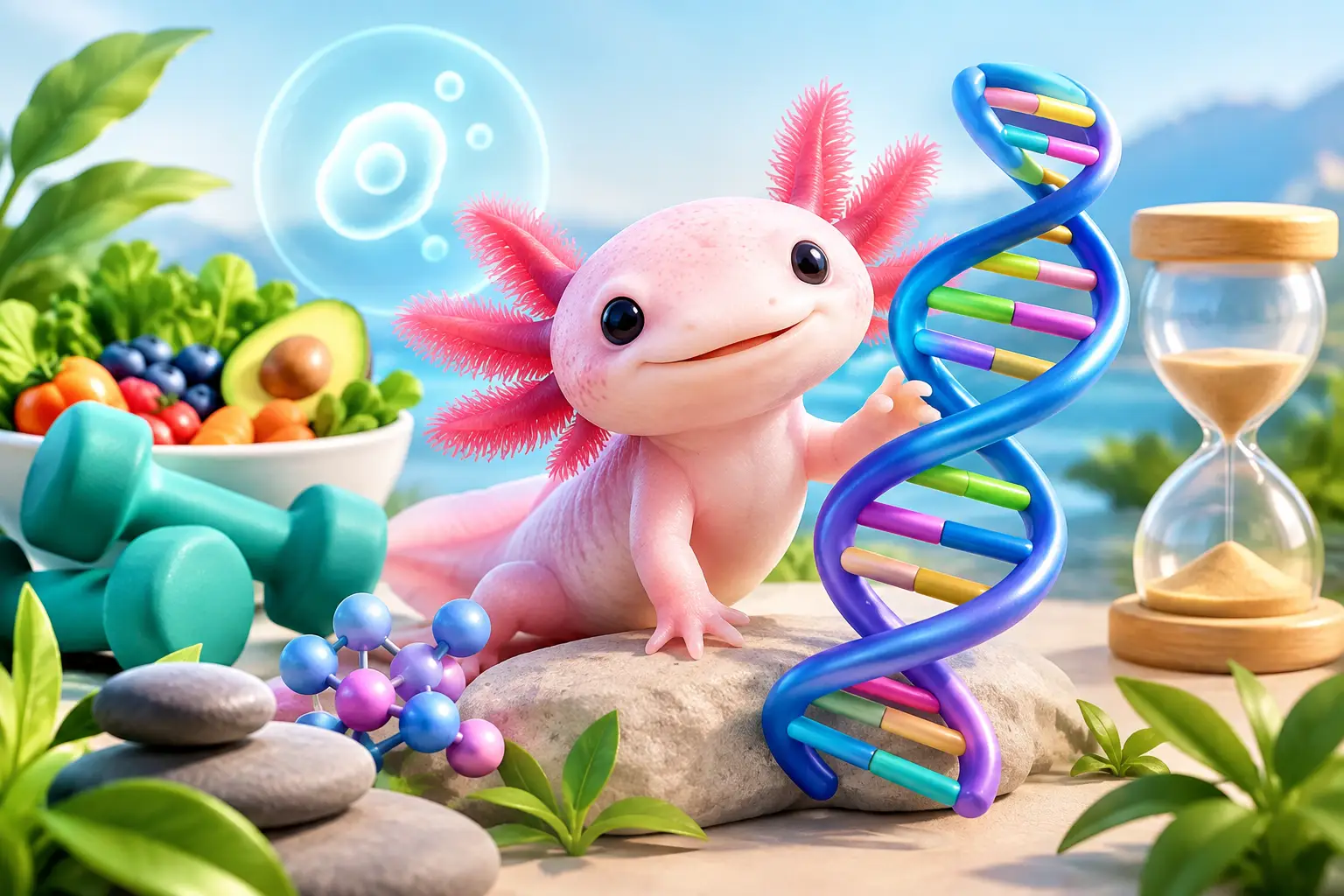
Back to blog
Wellness
Epigenetics and Longevity to Live Longer and Better
6 min read
Ajolote Azul Team
epigenetics
longevity
healthy aging
biological age
nutrigenetics
Your DNA does not change when you choose an earlier dinner, train strength, or sleep eight hours. Your body can still respond differently to those decisions. The relationship between epigenetics and longevity helps explain why two people with similar family histories can age, fall ill, or keep their energy in very different ways.
Genetics provides a biological baseline. Epigenetics studies signals that influence how certain genes are expressed without changing the DNA sequence. It is not a promise to control every aspect of health nor an excuse to ignore a medical diagnosis. It is an opportunity to act earlier with habits and decisions backed by data.
What epigenetics is and why it matters as you age
Imagine your genome as your body’s instruction manual. Epigenetics works like a system of markers that indicate which chapters are read more, which are read less, and in what context. Among the best-studied mechanisms are DNA methylation, histone modifications, and certain non-coding RNAs. Though the names sound technical, the impact is concrete: they participate in inflammation, metabolism, cell repair, stress response, and immune function.
Over the years, some epigenetic patterns change. Part of that change is normal; part can accelerate with smoking, sedentary life, insufficient sleep, chronic stress, environmental exposure, poor diet, or excess alcohol. That is why we talk about chronological age—the years on your ID—and biological age, an estimate of how different body systems are functioning.
Someone aged 50 may have metabolic and cardiovascular status comparable to a younger person, or show signs of accelerated wear. No single marker defines the future, but watching trends allows more useful questions: How is my glucose? Do I recover well after training? Does my diet meet my needs? Is my rest truly restorative?
Epigenetics and longevity: what you can influence
Longevity is not only about adding years. It is about preserving functional years: mobility, mental clarity, independence, strength, metabolic health, and capacity to enjoy life. Available evidence suggests sustained habits have a relevant effect on multiple biological pathways linked to aging.
There is no universal protocol because response to food, exercise, or certain nutrients also depends on clinical context, medications, family history, and genetic variants. Still, some decisions consistently benefit most people.
Nutrition: daily signals for your metabolism
Food does not change your DNA, but it provides molecules involved in cellular regulation. A diet built on vegetables, fruits, legumes, sufficient protein, quality fats, and fiber supports glycemic control, gut health, and a more balanced inflammatory response.
The key is not chasing trendy ingredients or eliminating food groups without a clinical reason. For some people, cutting ultra-processed foods and sugary drinks produces an obvious metabolic shift. For others, the critical point may be increasing protein to preserve muscle mass, correcting a nutritional deficiency, or adjusting meal timing that interferes with sleep.
Nutrigenetics adds precision to this conversation. Analyzing genetic variants can orient how a person metabolizes certain nutrients, responds to caffeine, or shows greater predisposition to lipid, weight, or folate metabolism issues. It does not replace medical evaluation or dictate a rigid diet, but it helps turn general advice into a more personal plan.
Exercise: the signal that protects muscle and brain
Movement is one of the most powerful interventions for active longevity. Strength training is especially relevant because muscle mass is not only for appearance or performance: it participates in glucose control, stability, bone health, and functional reserve during illness or surgery.
Aerobic exercise improves cardiovascular capacity; strength protects muscle and bone. Combining both is usually more useful than choosing only one. Dose depends on your starting point, injuries, age, and medical condition. If you have been inactive for years or have cardiovascular disease, persistent pain, or oncology treatment, progression should be guided by professionals.
Sleep and stress: two often underestimated factors
Recurrent short sleep is not fully compensated by a restful weekend. Lack of sleep alters appetite, insulin sensitivity, muscle recovery, and stress regulation. It can also make it harder to sustain habits you already know help you.
Stress is not a character flaw. It is a necessary biological response, but when it stays activated for months it can affect blood pressure, inflammation, rest, and eating behavior. Real breaks, morning light exposure, consistent sleep schedules, physical activity, and psychological support when needed are concrete measures—not luxuries.
Genetics is not destiny, but it is useful information
Many people seek a genetic test expecting a definitive sentence: which disease they will have, which diet to follow, or which supplement fixes everything. That expectation is understandable but does not match the science. Most longevity-related traits are multifactorial. Dozens or hundreds of variants interact with environment, clinical history, and habits.
The value of knowing your genetics is identifying priorities. A nutrigenetic test can inform conversations about metabolism, nutrition, and wellbeing goals. A pharmacogenetic study can help explain how certain variants influence medication processing—always under your treating physician’s supervision. In both cases, the report makes sense when interpreted in context.
It also helps to distinguish a genetic test from an epigenetic age test. The first analyzes inherited variants in your DNA. The second looks for epigenetic patterns—usually methylation—to estimate aspects of biological aging. They are different technologies answering different questions. They can complement each other, but one does not replace the other.
Turn data into an action plan
Information without follow-up rarely changes a life. If you want to use genetics and epigenetics wisely, start with a baseline: habits, family history, clinical labs, symptoms, goals, and medications. Then prioritize a few actions you can sustain for at least 8 to 12 weeks.
A useful plan can include these five areas:
- Improve diet quality before chasing complex supplements.
- Train strength progressively and maintain weekly cardiovascular activity.
- Protect a consistent sleep schedule and address snoring, insomnia, or persistent fatigue.
- Measure relevant markers with your health professional: glucose, lipids, blood pressure, body composition.
- Review genetic results with a specialist who can translate them into realistic decisions.
This approach avoids two common extremes: believing everything is written in genes, or thinking one isolated habit can fix any risk. Effective prevention combines data, consistency, and clinical judgment.
At Ajolote Azul, a nutrigenetic or pharmacogenetic test can be a starting point to understand predispositions and talk more precisely with health professionals. The goal is not to hand you information that stays in a report, but to turn it into decisions about food, performance, prevention, and treatment.
Longevity does not begin when the first symptoms appear or when you reach a certain age. It begins in the repeated decisions you make now—with humility about what you cannot control and clarity about what you can change.
A
Ajolote Azul Team
Specialist in wellness, nutrition and holistic health. Passionate about sharing science-based knowledge to improve quality of life.
Keep Reading
Related Articles
Discover more content on this topic that might interest you

Wellness
DNA and Food Sensitivity: What It Reveals
Understand the link between DNA and food sensitivity, its limits, and how personalized nutrition supports informed daily decisions.
6 min readRead more
Wellness
Genetic Prevention for Type 2 Diabetes
Genetic prevention for type 2 diabetes turns your DNA into decisions about food, weight, exercise, and monitoring before risk becomes diagnosis.
6 min readRead more
Wellness
Hereditary Cancer Genes and Your Risk
Learn about genes linked to hereditary cancer, when to evaluate your risk, and how genetic counseling can guide personal prevention decisions.
6 min readRead more
Did you like this article?
Discover how you can optimize your health with a personalized nutrigenetic test